


*This article is a reprint of an article published in STARTUPism on June 27, 2019.
Like Pay Inc. Igor Volosiov, Founder

What is commonplace to Japanese people is full of "interesting" from a foreigner's point of view, and it seems that ideas and opportunities for entrepreneurship are everywhere in Japan. Compared to the U.S. and other countries, the environment surrounding entrepreneurs may still be in its infancy, but it is certainly changing, albeit slowly, due to the various measures being promoted by the government these days. For Igor Volosiov, a student entrepreneur from Russia who came to Japan with a longing to live there, Japan seems to be a treasure trove of business ideas.
Mr. Igor is a graduate student at the University of Tokyo! He is a graduate student at the University of Tokyo and a promising new face who founded "LikePay," an app that allows users to pay with their "Like! He majored in Japanese as a second language while a student at Moscow State University, and was fascinated by the unique Japanese culture when he visited Japan to participate in the Japan-Russia Student Forum. Impressed by the livability and hospitality of Japan, Igor's interest in Japan escalated and eventually led to an exchange program. However, he was already so deeply in love with Japan by this time that even though he was about to find a job in Moscow, he could not let go of his passion to learn more about Japan and decided to enroll in the graduate school of the University of Tokyo.
When I actually lived in Japan, I found a series of interesting things. The first thing that struck me as odd throughout my student life was the fact that students spent so much time working part-time instead of doing their main academic work. This is a scene that would be unthinkable in Russia. This may have something to do with the fact that Tokyo is an expensive place to live, even by world standards, but even though students spend many hours a week working part-time, they are not treated very well at all. Therefore, when he saw many students trying their best to accumulate points to obtain discount coupons in order to save a little money, he felt vaguely that this may be the reason why Japan's long working hours have become a common occurrence.
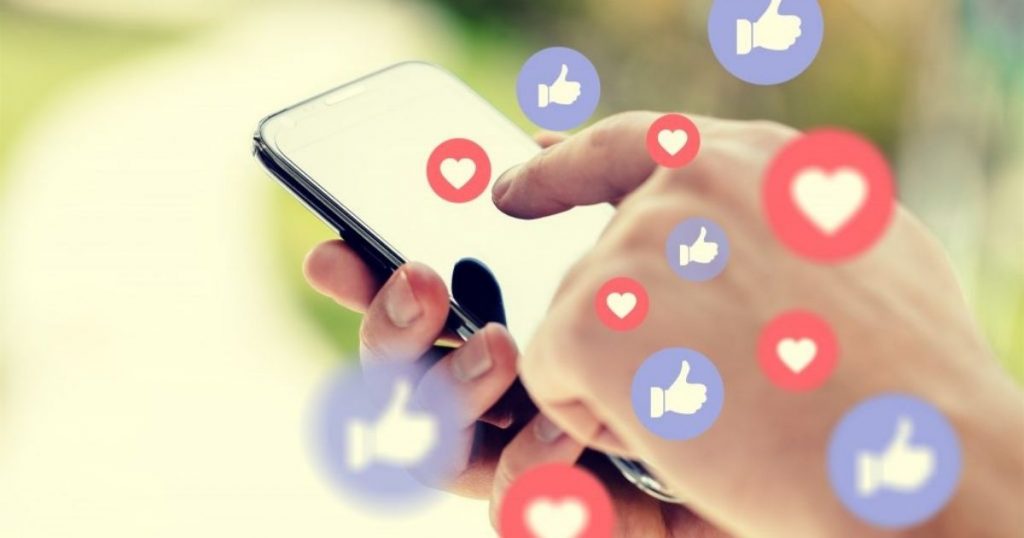
In addition, there were some definite differences from Russia in terms of consumer behavior. The "synchronized behavior" of people behaving the same way as others, such as waiting in line for hours at restaurants popular by word-of-mouth, etc., and the content and use of SNS postings were completely different from those in Russia. Not only Russians but also Westerners post about "themselves" through events and travel, while Japanese post about "products and services they consume on a daily basis" rather than "themselves," such as food at restaurants and the finished products at nail salons. This may be connected to the fact that Japanese people, who are generally reserved and self-controlled, are not as good at asserting themselves and presenting themselves as Westerners, which may lead them to not show their faces on the Internet, which was the inspiration for the current service. That is not all. In the area of business as well, many Westerners separate "business" from "personal" relationships, while Japanese people tend to think of their relationships as a whole, and it seems that they themselves complicate their relationships on social networking sites.

If Japan's unique values are the cause of what is commonly referred to as social networking fatigue, the thought occurred to me that it would be a good idea to embed a social media operation policy in the service that matches the Japanese. It is very wasteful to post attractive photos of products and services that are consumed on a daily basis, such as food, nails, and hair, but more often than not, information such as location and store names are not posted. If anything, the hashtag reveals the name of the restaurant and the quality of the post is based on the number of "likes" to improve the quality of the post, it would be beneficial as an advertisement. It is beginning to be said that self-assertion and self-expression are necessary to survive in the international community, and Mr. Igor created "Like Pay" with the idea of taking advantage of Japan's unique culture and national character, which are internationally considered negative factors. This is truly an innovation born from a change of mindset.
For us Japanese, the uniqueness and trend of social networking sites is something that we do not notice at all. However, it was an eye-opener to realize that new opportunities were lying dormant in this area. The "lost 20 years" of the Heisei era has come to an end, and as a fresh start toward economic recovery, Japan is focusing on accepting foreign workers and supporting entrepreneurial activities. As internationalization and cross-cultural exchange are expected to advance further, foreign entrepreneurs like Mr. Igor are sure to increase their presence in the country. The time has come for Japan, an island nation, to welcome "new perspectives. Can Japan, with the help of these foreign entrepreneurs, carve out a path through an era of intensifying international competition and return to the golden land of ZIPANGU?
| name of company | LikePay Inc. |
| Establishment | August 16, 2018 |
| Location | Shiroyama Trust Tower 4F, 3-1, Toranomon 4-chome, Minato-ku, Tokyo 105-0001, Japan |
| representative | Representative Director Volosiov Igor |
| Business Overview | LikePay Deployment |
| uniform resouce locator | https://www.likepay.co/ |





 JA
 EN
