


*This article is a reprint of an article published in STARTUPism on April 2, 2019.
It has been a long time since people began to talk about the labor shortage caused by the declining birthrate and aging population. This has become a serious problem, especially in the distribution and retail industries, and "unmanned convenience stores" such as "Amazon Go" and "Bingo Box" have been attracting attention as a trump card to solve the labor shortage. In Japan, while major convenience stores are conducting demonstration tests with the aim of commercialization, a new type of "unmanned convenience store" targeting a "50m radius trade area" was born, which is distinctly different from those aimed at solving labor shortages. How will the future of distribution and retailing change?
Concierge service for each and every personThe following is a list of the most common problems with the

Our "600" convenience store is a small refrigerator-type box in the size of a vending machine, a refrigerated showcase found in convenience stores and supermarkets, with a design that allows customers to see products through the glass door.
Although compact and the size of a vending machine, it has a wide range of uses, and can handle up to 600 different products ranging from stationery to food, excluding some products that require a sales license or permit, such as alcoholic beverages, tobacco, dairy products, and meat. The store is equipped with a display terminal exclusively for credit card payment, so customers can easily shop without carrying cash.

All products are fitted with RFID tags embedded with IDs, so when a credit card is passed through the dedicated terminal, the RFID automatically recognizes the product and the charges are automatically calculated.
This means that there is no need to hold up an IC card or take coins in and out, and shopping takes only a few seconds, providing an extremely smooth shopping experience. In addition, one of the greatest features of "600" is the shopping coordinator function that allows users to directly request what they want through social networking services, and the products can be fully customized to provide an assortment of items optimized for each user's needs.
The supply of merchandise is done twice a week by our employees. Some people think it is inefficient for employees to replenish products, and others say there are more rational ways to do it (laugh), but as long as the company does not grow too large to handle the demand, our employees, including myself, will continue to do it. I believe that the 600 has a mission to cover demand that cannot be met by major convenience stores and vending machines, and that is the concierge service that we provide to each and every user.
First, develop office demandThe following is a list of the most common problems with the
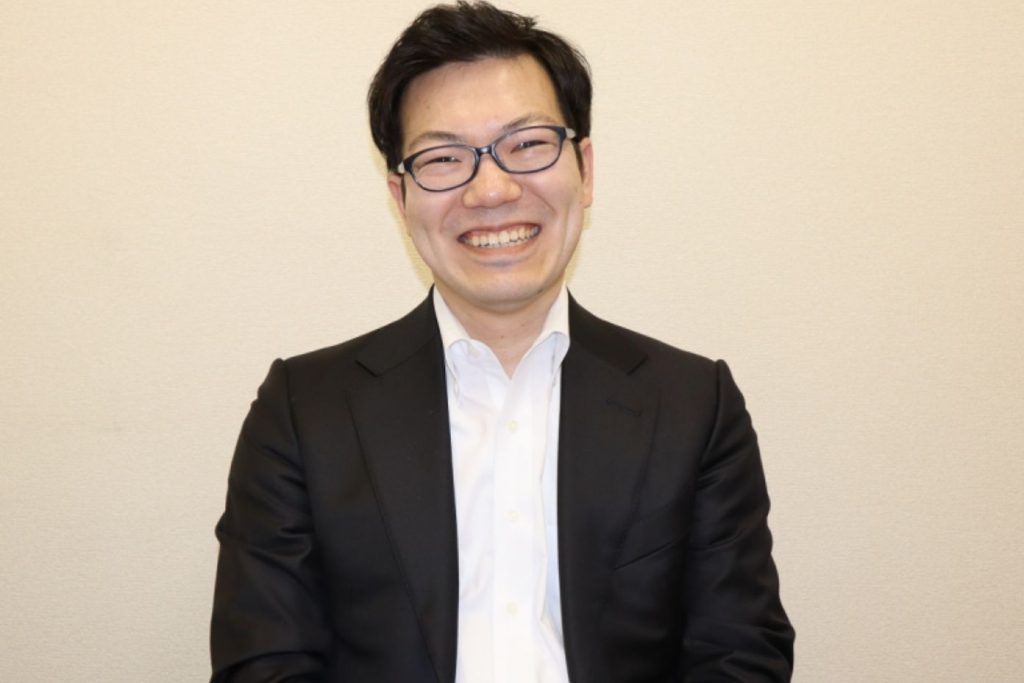
The story behind the development of the "600" goes back to the time when WebPay Holdings, the credit card payment service I launched as the third company, became a subsidiary of the LINE Group. It was the first time for me to work in a high-rise office building, and I felt the stress and inconvenience of having to go back and forth between the office and the convenience store during my breaks, not to mention the number of people there. I started developing an unmanned convenience store to alleviate the time lost waiting for elevators and the mental fatigue that accompanies it, which is unique to high-rise buildings in the heart of the city.
The monthly fee is 50,000 yen. Approximately 50 companies, including IT companies such as subsidiaries of CyberAgent and BASE, are using our service. Inquiries are also increasing steadily, and we are aiming to install the system in 500 locations by the end of this year. First, the plan is to secure current sales by increasing the number of subscriptions, mainly to offices in Tokyo, and to push forward with the construction of marketing data targeting demand in offices by increasing the number of products handled and sold. In the future, we would also like to create a new shopping scene that is closer to customers than convenience stores by strengthening our expansion into various places where people gather, such as factories, common areas of condominiums, and hospitals.
A big challenge from the small world of the "50-meter radius trade area."

The name of the service, "600," reflects our goal and desire to realize the 600 products handled by a typical convenience store in the showcase of an unmanned convenience store. Currently, the service is being deployed mainly in offices, but as the number of locations expands, as mentioned above, the service may be utilized not only in offices, but also in various other locations to analyze data on hot-selling products.
Major convenience stores have already entered the market of mini-convenience stores for office use, but we are challenging them to compete in a smaller "50-meter radius trade area". We are convinced that detailed marketing data in a small area will become indispensable for manufacturers and retailers to consider product development and sales strategies, including regional products. We would like to scoop up detailed needs from the small world and use the data to help streamline and revitalize corporate activities, including the creation of new businesses. We also hope to bring innovation to the distribution and retail industry by using the more realistic data that can only be obtained from a "50-meter radius trade area" as the key to adding value to the retail industry.
| name of company | 600 Corporation |
| Establishment | 2017/6 |
| Location | 〒101-0031 1-9, Higashi-Kanda 2-chome, Chiyoda-ku, Tokyo |
| representative | Kubo, Kei |
| Business Overview | Production, sales and operation of unmanned convenience stores |
| uniform resouce locator | https://600.jp/ |





 JA
 EN
