


Seven projects undergoing feasibility studies
Success and Failure Factors for Project Promotion
The program's trajectory, unraveled by the numbers
Track 1) Project Entry - Adoption
Track 2) Project disclosure - Team formation
Locus 3) Business concept design - Initial selection
Locus 4) Project Needs Assessment - Secondary Selection
Prototyping - Final selection
Program Status (as of October 2020)
We have now completed three rounds of selection and seven of the total number of projects are still in the process of project verification.
At the time the program was launched, 30 project proposals were selected overall.
Currently, we have 8 projects that have made it to product launch, so we have verified that we can run to productization at a rate of approximately 251 TP3T.
Although we have not yet achieved the commercialization or sale of the business, we are very encouraged by the early adopters and the many talented people who are working on the project. We will work hard throughout the year to build a track record of user acquisition and actual transactions.
7 projects undergoing commercialization verification
Earmind - Customized ear monitors (D2C)
Monolab - Manufacturing Platform
Career to - Carrier Share Platforms
YourApparel - Clothing C-to-C rental service (Share Eco)
Connelva - Event platform specializing in interactions among participants
Abroach - Overseas expansion support SaaS
Freeat - Free offer application for near-disposable food (ad)
Success and Failure Factors for Project Promotion
Of the 30 projects initially adopted, only seven remain after six months, but what exactly are the stumbling blocks?
The following is a rough summary of the main factors.
Factors that work
∙ Teams are well-balanced (about 3 core members)
The entire team is very passionate about the project.
The team also successfully engages peripheral collaborators outside of the team.
reason for being a stumbling block
Too busy with his day job to concentrate on the project.
Difficult to achieve with program schedule
Failed to manage team
No needs
Other (programmatically closed but positive movement)
I'm going to start a business!
I'll do another thorough customer review!
Top 5 of 20 factors that cause startups to fail, according to CB INSIGHTS,market needsNone, andWe weren't the right team.but they have this in common. On the other hand,Exhaustion of fundsand ... andDefeat in competition, ,pricingThis is not really true for the Startup Studio program in that (as many teams had to cancel their projects before product launch).
Product launch junction wall
Looking back at the points that seem to be difficult with the product launch as a turning point, before the launch, we can see thatIdentification of customer needs based on business ideasand ... andIncorporation into the productAfter launch, we createdGaining product recognitionand ... andCreating traction (results) for servicesI have the impression that many projects are struggling to
Other than the aboveTechnical problems make commercialization difficult.and ...,The PoC verification method was incorrect.In some cases, the project was terminated due to factors such as
My personal impression is that in terms of planningWhether or not they had the product structure somewhat in mind from the beginning while conducting customer interviews and planning.and mindset, so as not to lose heart.Were you able to self-manage?is a factor that makes the difference between success and failure.
Program Trajectory Unraveled by the Numbers
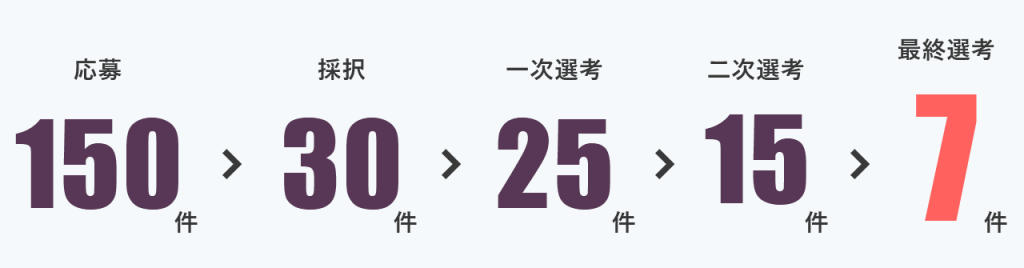
In March 2020, we invited people who wanted to create businesses in STARTUP STUDIO by Creww through press releases, some SNS ads, and an information session event on VR using Cluster, etc. We received about 150 applications in one month, and we felt the potential of people who wanted to create businesses. We felt the potential of people who wanted to create a business.
We were very impressed by the enthusiasm of the participants and the fact that many of them felt that starting a business while continuing their day job was very beneficial.running a start-up company while workingI remember thinking that "I thought "I'm still into it.
Track 1) Project Entry - Adoption

In all, we received approximately 150 entries. We thought it might be due to the press releases and events, but when we asked the remaining founders, many of them said, "I saw it in a Facebook ad! I think it was because of the press release and the event.
One of the reasons we started the Startup Studio was to make it a place to solve the problem that "there is a lot of interest in "zero first" but not many opportunities" from the beginning.
Track 2) Project Disclosure - Team Formation
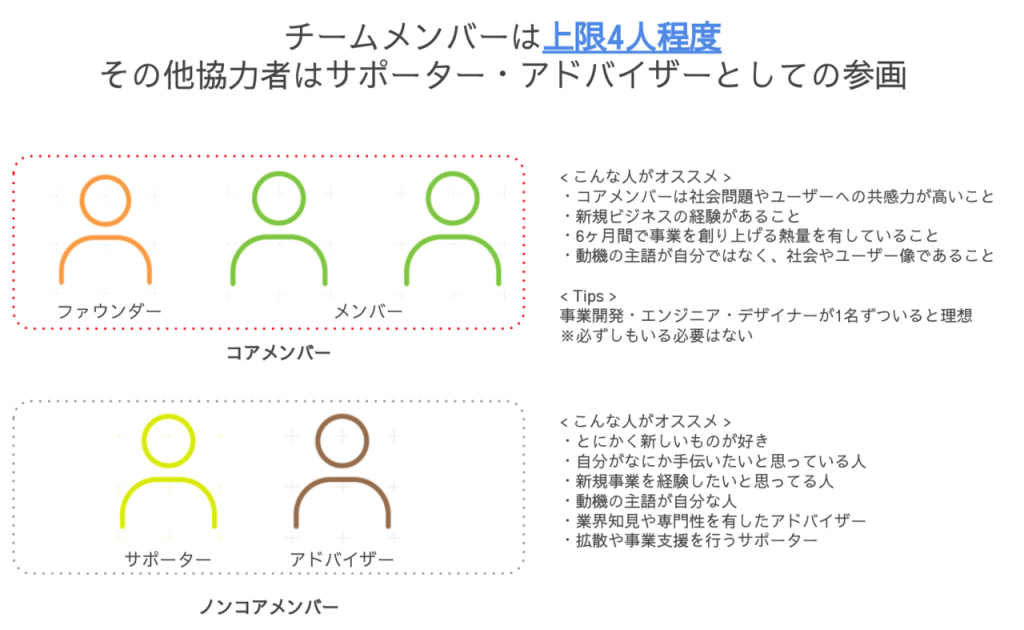
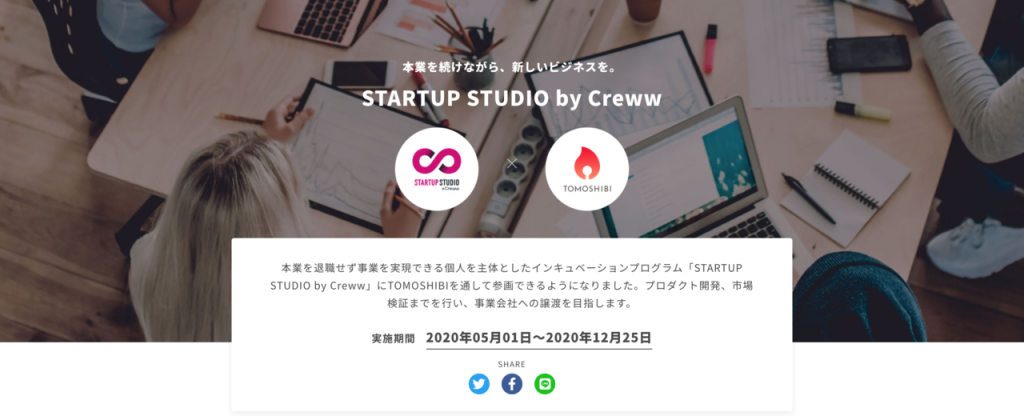
After the project went public, we received applications from a variety of people for the project through a press release and partnerships with CAMPFIRE's companion-gathering platform "TOMOSHIBI" and the side-job platform "Anotherworks. The project team formation proceeded smoothly, thanks to the partnerships with platforms that have a diverse range of human resources, as they say, the best way to make a living is to make a living.
Trajectory 3) Business concept design - Initial selection
As a primary selection criterion for the program,Design and solidify the business conceptthereforeOne criteria for creating a Lean Canvas and planning a specific PoCThe selection criteria are set at an easy level of difficulty because this is the first concept work conducted after the team is formed. Since this is the first concept work to be conducted after the team is formed, the difficulty level of the selection criteria is set to be easy.
The criteria that the secretariat had set here were,Screening for projects with the will to move forwardIt is. Therefore, we saw a willingness to set and implement goals for the next six months, with varying shades of precision in the planning for each project.
While we did some walloping, we also wanted the founders and team to work as professionals in their field, so we decided not to evaluate the quality of the content of the plan as a basic stance.
Track 4) Business Needs Assessment - Secondary Selection
In the second round, hit the customer with the plan you've developed, and guess what?Period for brushing upThe first step is to create a product. One of the most common cases in early startups is that "no one uses the product, even though we spent a lot of time on its creation. In the name of business walloping and user hearingsHow to capture potential customers before product launchThis was the goal of the project.
I believe that the most difficult part of creating a business is to go through the strategic planning process and then put it into actual action. No matter how much the potential of a business is touted on the table, whether or not customers will want to use it is another story. Therefore, in the Startup Studio program,To collect 50 user interviews with the users of the project's services (early adopter setting) and their demographics.was the "selection criterion".
It takes a lot of horsepower to devote time to service verification and user interviews while having a day job. We are looking for potential partner companies as well, since Creww cannot do it alone. We are also looking for potential partner companies.
Trajectory 5) Prototyping - Final selection
For projects where the hypothesis has been verified through catching potential customers or through user interviews,Phase of product creation based on actual customer feedbackWe will move on to the the recent trend of the day.Value delivery validation is underway with prototyping using NoCode tools.Some teams, if any,The project is being developed from scratch (from scratch).There are also projects. In the case of scratch development, be careful not to proceed without knowing "what you want to verify," as it will only take time.
Once the principles and the elements to be measured in the initial value verification are defined, we recommend a method of proceeding with the implementation of the product with the minimum functionality to verify the hypothesis. If you are not familiar with this method of new business development, I recommend you read this book.
What are the points to be verified?
What exactly is the value of your business? It is a good idea to think from the perspective of "What is the value of your business? For example, a situation where a service site is accessed by a million people every day = "advertising value," a situation where there are a million transactions per month within the service = "customer base value," a situation where there are a hundred thousand product sales = "being able to meet specific user needs," and so on, The following are some examples.





 JA
 EN
