


The theme of the third Intrapreneur's Hub was "New Business Recommendations Unraveled from Failed Cases. The moderator was Dong Lee of Creww, who has a wealth of new business experience, and panelists included Keisuke Matsuo of Fujitsu Limited, who is in charge of new business development through collaboration with startups; Keisuke Tamura, president of EDOCODE Corporation, which he spun off after launching businesses in the entertainment field; and Takamasa Tamura, who has established several new businesses as an intrepreneur. Mr. Takamasa Tamura, who has been involved in the launch of several new businesses as an intrepreneur, and Mr. Hisatomo Obayashi, who is currently the CEO of Another works Inc.
What are the criteria for exiting a new business?
What are the keys to concept work?
To accomplish new business with members who have no real experience...
How to recommend a new business "to the process of breaking through the actual experience of gaining failure"
Li :(The audience raised the most number of requests.) You will talk about the process and the order of starting a new business. Mr. Tamura, please.
countrysideWhen I create a business, I think about various issues, but I had a very hard time deciding where to place the priority of the service users.
In a one-to-one service where there is only you and the user, you can think about the user, but in a service with a pattern of multiple stakeholders, you have to think about where you should focus first. I have experienced the difficulty of trying to look good to everyone.
Lee:Mr. Obayashi, do you have any close experience?
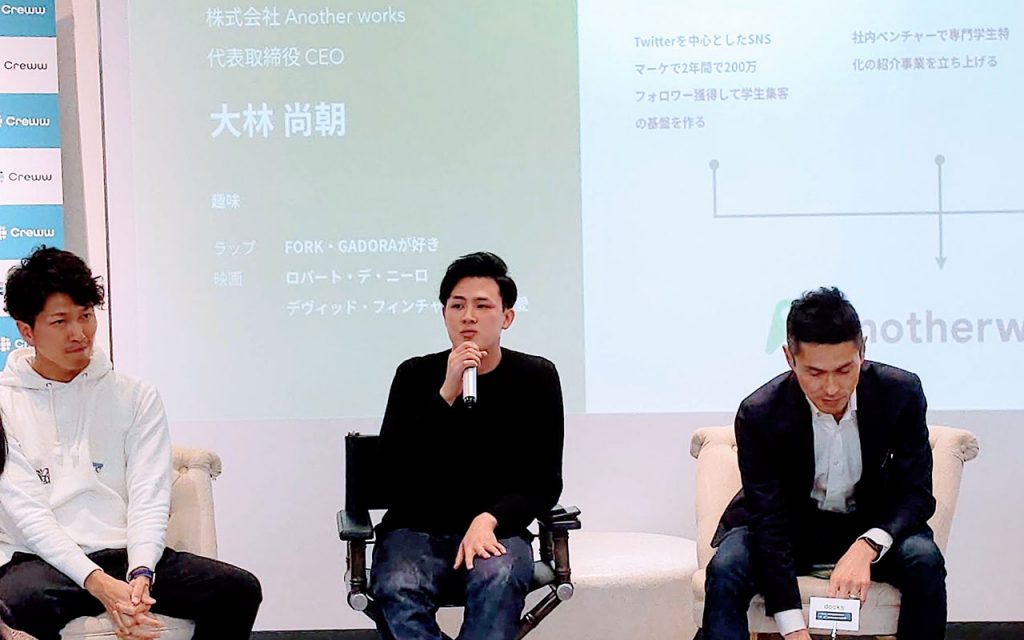
Obayashi:I experienced three "common" failures in large companies: first, not having enough time to meet goals; second, lack of preparedness on the part of team members; and third, not having someone with experience in starting a new business from scratch and taking it to growth, or someone to consult with.
Such failures led me to reflect on "what is the problem I most want to solve, what is the biggest challenge I have faced in my life," which culminated in my desire to "maximize personal challenge" and led me to start my own company.
Lee:You say that your experience of failure became your real experience, which led you to your current business. How about you, Matsuo-san?
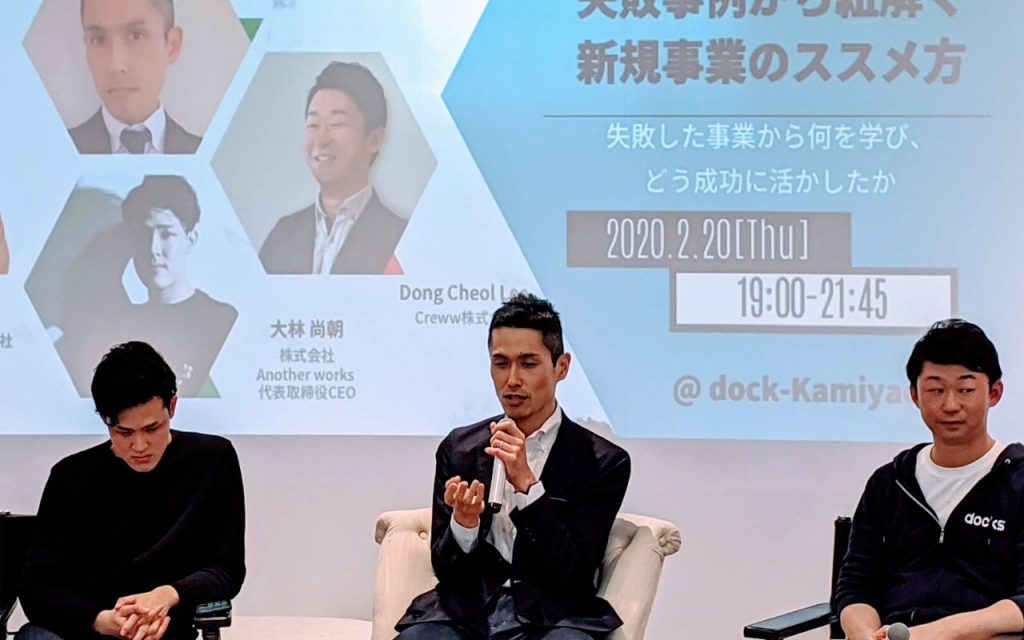
Matsuo:Focusing only on the process, what we place particular importance on is the verification of the effectiveness and business feasibility of the solution, such as POC (Proof of Concept) and POB (Proof of Value). People in large companies tend to shy away from failure, so we make a conscious effort to prepare a plan that does not allow them to say "no" from the beginning. We envision the areas that management is concerned about and create a story from the beginning so that they will not say NO.
Also, when creating new businesses, I always keep in mind that we should aim for areas that are close to and related to our core business, rather than completely flyover areas.
Otherwise, it will lack specificity and will not be persuasive within the company.
Lee:Thank you very much. I would like to talk about the initial stage of the process. When creating something that has never existed before, I am sure everyone is troubled by the problem discovery phase and solution definition. In such cases, there have been cases where the problem was solved quickly and unexpectedly by talking to others. In terms of saving time, I think it is important to communicate outside the company, either internally or externally.
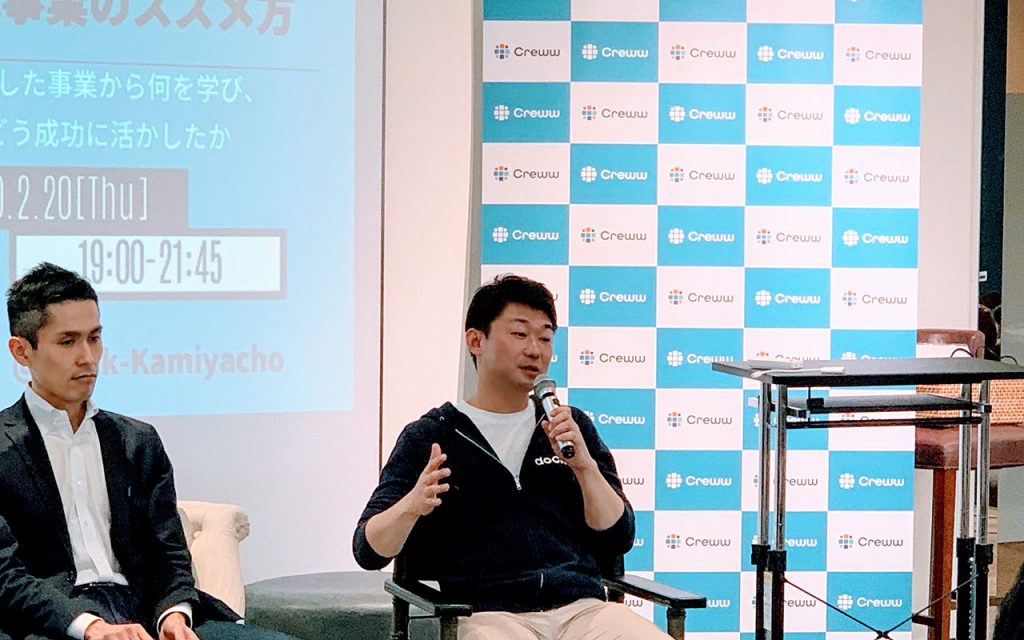
What are the criteria for exiting a new business?
-Related to process, when you fold, not when you start a business, what is a good process or case study?
large forestI think there should be about two withdrawal criteria. I think it is a good idea to have two withdrawal criteria: one is the rate of achievement of the goal by when, and the other is the 3C situation of the competition, the company, and the customer after starting. I believe that this is the case in many large companies.
Prunus salicinaI think you are talking about the fact that there was no standard for withdrawal in the first place. How about you, Matsuo-san?
pine coneI don't think there is basically any reason for withdrawal from the company. However, I do have my own criteria for withdrawal. That is when we compete in business negotiations. When I encounter a competitor, I first look at the win rate. If the win rate is not more than 30%, we cannot get 30% of the market share, so that is one of the criteria for withdrawal.
Lee:Thank you very much. Mr. Tamura, if you have anything to add, please do.
Tamura:If the members have given up, it is impossible to continue the business no matter how much we try. In addition, the existence of alternative services is one of the criteria for withdrawal, in that users will not be troubled even if we stop.
What are the keys to concept work?
Lee:Thank you very much. Now, Mr. Obayashi, if you have any episodes about the concept work, which was the second most frequently raised question, do you have any ideas?
large forestI had a concept in mind from the beginning because I originally had actual experience with the problems and actual troubles in my own company, rather than concept work. I had an idea of the scale of the business and had no difficulty with the concept. I believe that having actual experience is the most important thing.
Prunus salicinaAs Mr. Tamura said at the beginning of his talk, it is often the case that the items to be verified are not the same as the items to be verified. It is quite common that the verification items that need to be verified in the first place are not the same. Therefore, I think this is similar to the question of where to place the priority.
Tamura:Yes, that's right. In terms of concepts, we have excellent engineers, so we can say, "Please make something with blockchain," "Please make something with AI," "Please make something with AI. Please make something with AI. We were often asked to "create something with blockchain" or "create something with AI. I think it is important to solve the problem, not because of AI or blockchain, but because of how to solve the problem.

Companies with engineers often want to do what they can with ideas that come from the engineering side. However, I don't think it is a good idea to be too overconfident in your skills; if you start looking for something that can be done with AI, you will miss the concept.
pine coneWe need to think about what our customers care about most, rather than being technology-driven.
Also, when considering the business potential, we need to find a way to get the money and devise a way to make it work. When we had a business owner of a rental property, he told us that he wanted to look after the elderly. However, upon closer unraveling, we found out that they actually did not want to lower the property value of the rental property. Look properly at who you are taking money from. If you lean too much on technology, you will misjudge.
Prunus salicinaHow about you, Mr. Obayashi?
large forestIn conclusion, I created "Another Works" with the intention of establishing a new business based on three axes: First, whether or not there is a market for the product or service. The first is whether or not there is a market for it, the second is whether or not I am good at it, and the third is whether or not I am bright. The last is whether there is a problem or situation that I am determined to solve, even if it means risking my life. I believe that the overlap of these three factors is the strongest.
Lee:Yes, that's right. I am sure that everyone has the keyword "actual experience. I strongly agree.
To accomplish new business with members who have no real experience...
-How can we devise a way to communicate with members who have no real experience?
Obayashi:Yes, it is. It is certainly a challenge. Most of the members have no experience, but we teach them really carefully. I make sure to say in the hiring interview, "We have done this in the past, there were these issues, the market is like this now, and that's why our service exists. That's why our service exists, and that's why I want to solve these problems.
pine coneFirst, as is often the case in large companies, the decision-makers can change quickly. Second, we are always happy to talk to people who say they want to do this. The second reason is that we are absolutely willing to talk to people who say they want to do this, because they are willing to commit to the work as long as they say so. Conversely, if someone is not willing, it is difficult, but I try to push them a little bit. We try to push them and make them feel like they are building on their successes. Finally, I make a conscious effort to create an atmosphere in which the business I am working on is attracting attention. We try to create an atmosphere in which people feel that they are contributing to the company, for example, by having our business featured in internal newsletters and external websites, improving operational efficiency by deploying services under development to all employees, and receiving messages of support from the president.
Prunus salicinaThank you very much. How about you, Mr. Tamura?
countryside: Yes, that's right. Startups sometimes commercialize things they have no real experience with, so we are very conscious of hiring people who have the right idea of what they want to do. This is because it is difficult to change mindsets, although skills can be acquired. We try to prevent mismatches.
Lee:Thank you very much. We hope that you will take home some of the know-how from what you have discussed and apply it to the creation of new businesses through open innovation.
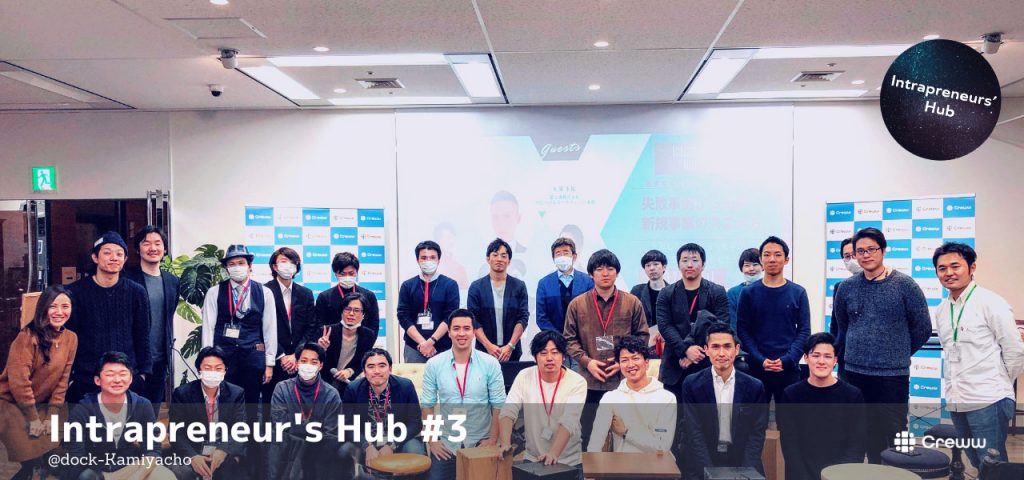
Intrapreneur's Hub" office:Intrapreneur's Hub" aims to create a community where intrepreneurs who share common challenges can share their concerns, know-how, and co-create as needed to accelerate new business in their core businesses. Every month, we invite guest intrapreneurs to share their know-how, failures, and successes, and to build a network of intrapreneurs. Due to the impact of the new coronavirus, we plan to conduct the event online in April. We will inform you of the details as soon as they are finalized.
 Mr. Takamasa Tamura Director, Wano Corporation / Representative Director, EDOCODE Corporation
After working as a manager at Adways Inc. he founded Wano Inc. as a founding member at the age of 26.
He launched a business in the entertainment field that supports creators and artists. In 2016, he also became the president of EDOCODE Corporation, which was established as a spin-off from Wano. a web service that rewards many credit card companies and their users with approximately 100 million yen in points per month.
 Mr. Keisuke Matsuo
Global Marketing Division, Fujitsu Limited
Portfolio Strategy Management Department Ecosystem Promotion Department
After joining Fujitsu as a new graduate, he was in charge of server marketing and contributed to gaining the top market share. Later, he was transferred to the product strategy planning department, where he felt the limitations of self-oriented product development.
With a sense of crisis, he participated in the launch of FUJITSU ACCELERATOR, an organization promoting open innovation, and is currently in charge of new business development through collaboration with startups.
 Mr. Hisatomo Obayashi Representative Director and CEO, Another works, Inc.
While a student at Waseda University, he joined RealLive Inc. and built a strong customer base as head of marketing.
He then joined Pasona Career Company, Pasona Inc. as a new graduate and engaged in new business introducing advisors and freelancers to outsourced work. He set a number of Guinness records, including being the youngest person ever to receive the annual award at the company's annual general meeting. In 2018, he joined Bizreach Inc. as a founding member of its new business in the M&A field.
On May 7, 2019, he founded Another works Inc. He launched "Another works", a SaaS-based duplication matching platform that connects people who want to duplicate their work with companies.






 JA
 EN
