




<Opening Remarks
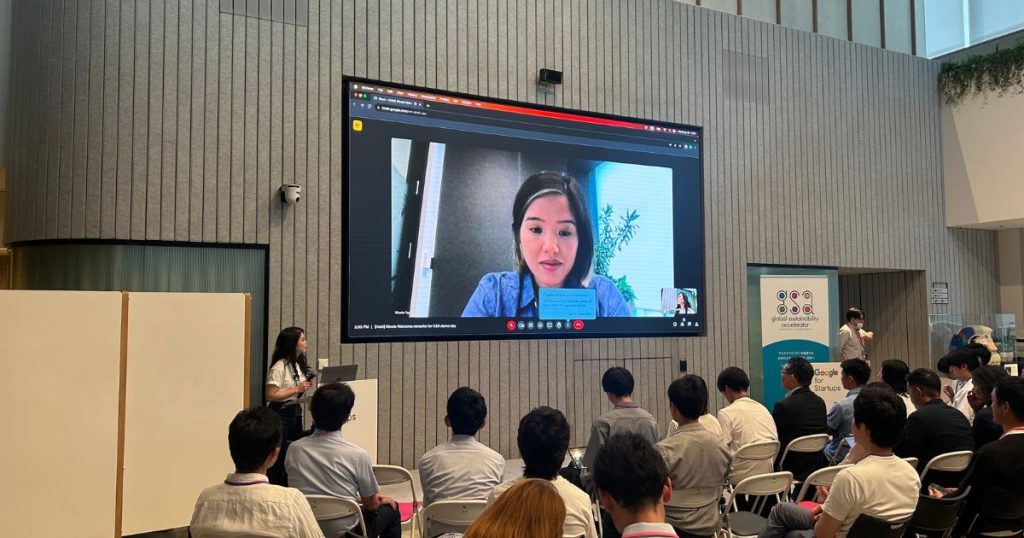
Google for Startups
Asia Pacific Partnership Manager
Nicole Yap.
Google for Startups helps startups and entrepreneurs create innovation by providing Google's global network, training, and mentoring by Google employees.
Currently, we have a global network of more than 70 partners, including Creww and others around the world, to help startups explore new markets and create horizontal connections with more than 1,000 startups around the world.
We are pleased to launch the Global Sustainability Accelerator with Creww and to work with them to help Japanese startups solving the world's sustainability challenges take their solutions global.
<Congratulations
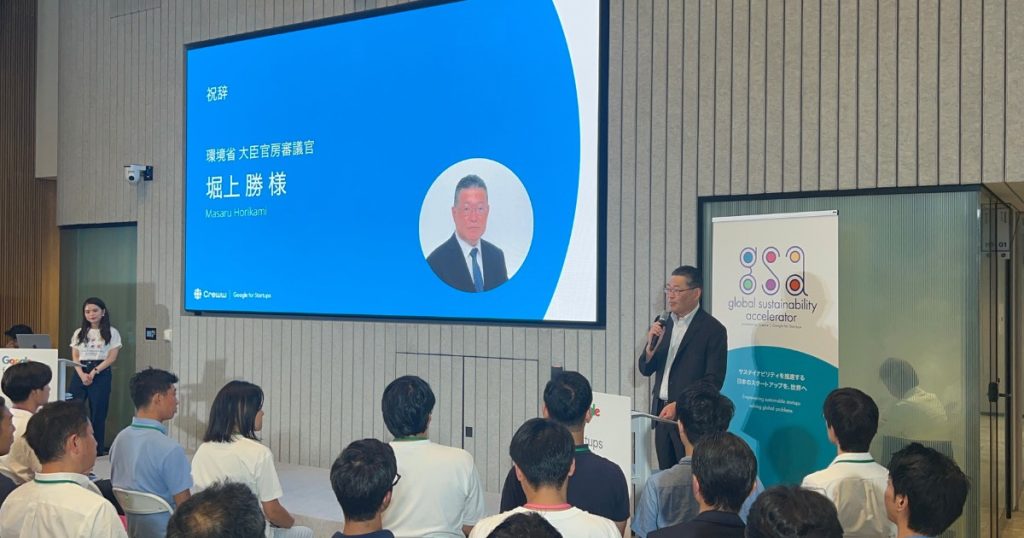
Ministry of the Environment
Deputy Director-General, Minister's Secretariat Masaru Horigami
Today, the world is facing not only global warming caused by climate change, but also various issues in creating a sustainable society, such as biodiversity and resource recycling. At the G7 Summit held in Hiroshima, it was proposed that unless carbon neutrality, nature positivity, and circular economy are achieved, we will not have a sustainable society.
Governments are developing various initiatives to achieve sustainability, but it is not enough. Private investment, including start-ups, is important, and the time has come for enthusiastic companies to receive funding.
Japan is also trying to realize a large-scale investment of 150 trillion yen in the public and private sectors over the next 10 years toward "carbon neutrality in 2050," and the Ministry of the Environment is supporting startups from business concept to practical application through designated subsidy projects under the SBIR system from FY2021.
I have been involved in nature conservation at the Ministry of the Environment for more than 30 years, and never has natural capital or ecosystem services been more important internationally than now. I look forward to the emergence of start-ups with new technologies and ideas that will contribute to this.
<Program Summary
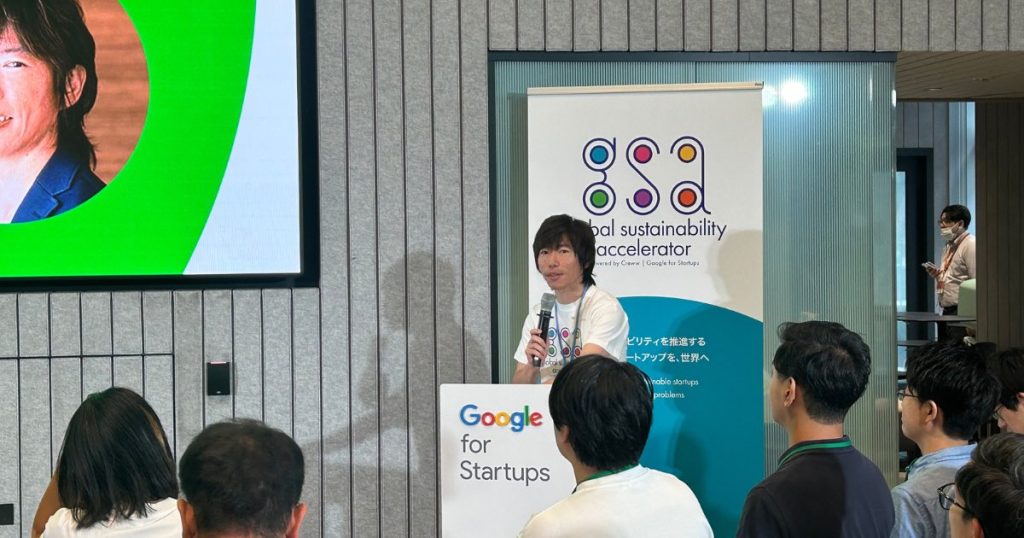
Creww Corporation
CEO Ijichi Ten
The purpose of this program is to support Japanese sustainability-related startups with great technology to expand their business globally.
During the program, Google for Startups and Creww jointly ran workshops to learn how to pitch in English, held business meetings with overseas partners, liaised with local corporations and government agencies, and provided repeated support for sales planning and marketing research.
We asked JICA, which had come on board as a sponsor, to help us explore environmental and other issues overseas and to introduce us to sustainability-related mentors who had experience providing assistance overseas. We also asked our corporate partners, including Shimizu Corporation and Kyushu Electric Power Company, to collaborate with us in developing our business in Japan and overseas.
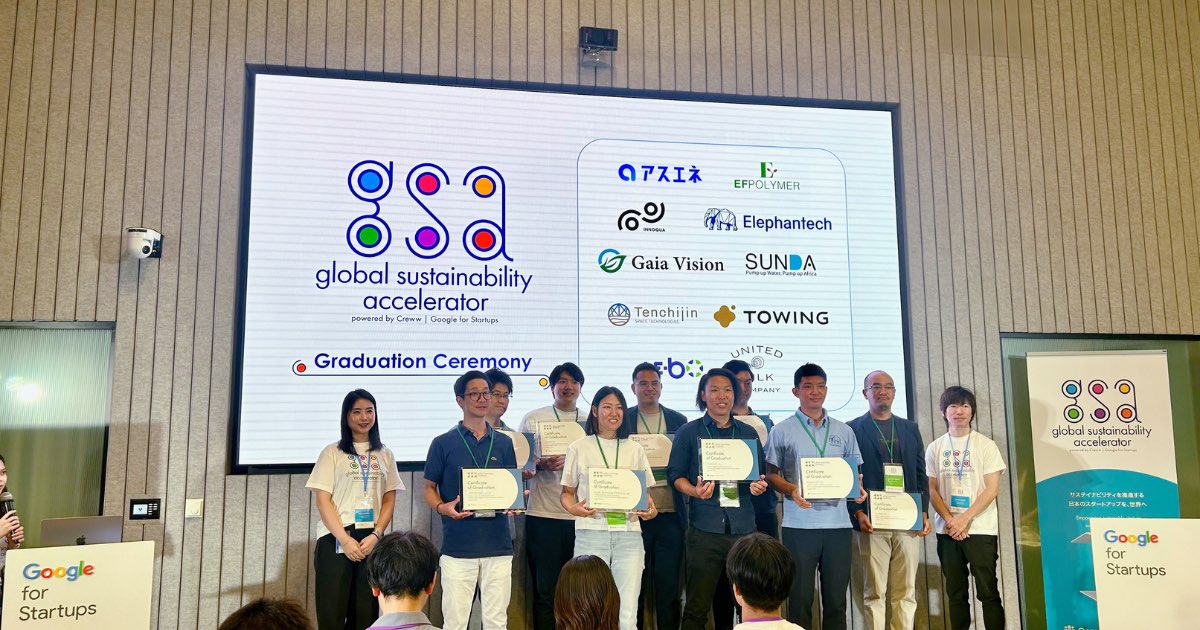
The four main themes that were solicited for the program were "Electricity," "Water Resources/Water Supply," "Food Preservation (Agriculture, Livestock, Fisheries)," and "Others (Insurance and Medical Care, Environmental Management, Regional Development, Transportation and Traffic, etc.). From the startups that applied, we selected 10 excellent companies that represent Japan and proceeded with the initiatives in a short period of about 5 months from the kick-off.
As a result, we were able to interact with 16 countries in the region during the program period, 27 companies were connected to local partners who became hubs in their respective countries, and we connected 20 local companies. We have already completed contracts with 4 companies and are in discussions with 6 companies to conclude contracts, so we have achieved great results in a short period of time. In addition, 6 out of 10 startups have completed fundraising during the program period, which we believe is a tremendous number when compared to regular accelerator programs.
Although the program itself is coming to an end, we hope to continue to collaborate and support each other in Japan and abroad through the Alumni Network, and to work together in global activities.
.
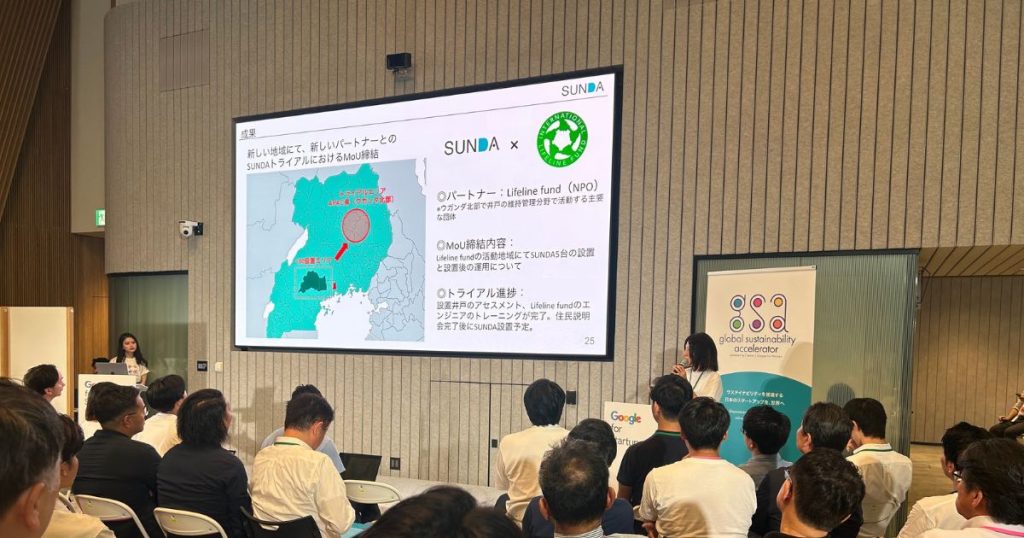
Sunda Technology Global Inc.
Aya Tsuboi, Representative Director and CEO
We are based in Uganda, Africa, and are working to solve rural water problems. In rural areas, there are wells installed by aid agencies and the government, but the maintenance of these wells is a major problem. This is because, although the maintenance of the wells is entrusted to the residents after installation, they do not have a fee collection system to manage the wells.
To solve this problem, we have created a pay-as-you-go, prepaid fee collection system using mobile money as a mechanism that allows residents to collect fees fairly and continuously without difficulty. The product is a combination of hardware and software to be installed in existing wells.
We currently have 150 of these systems installed and are conducting a series of demonstrations, and we participated in this program in order to expand and mass-produce these systems in earnest in the future. Our expectations were to learn how to communicate effectively with our overseas partners and to collaborate with new partners in order to build effective relationships with them.
In fact, it was great to get objective advice on pitching in English and to learn for the first time how to sell in English to increase the probability of success. I communicated with Creww and the mentors on a regular basis, was introduced to investors, and was allowed to do wall-to-wall pitches, so I had a lot to gain during the five months.
As a result, we have decided to conduct a new trial in the northern area of Uganda with Lifeline fund, an NGO working in the field of well maintenance in northern Uganda, as a partner. In the future, we hope to expand the system not only throughout Uganda but also throughout Africa to solve the water problem as soon as possible.
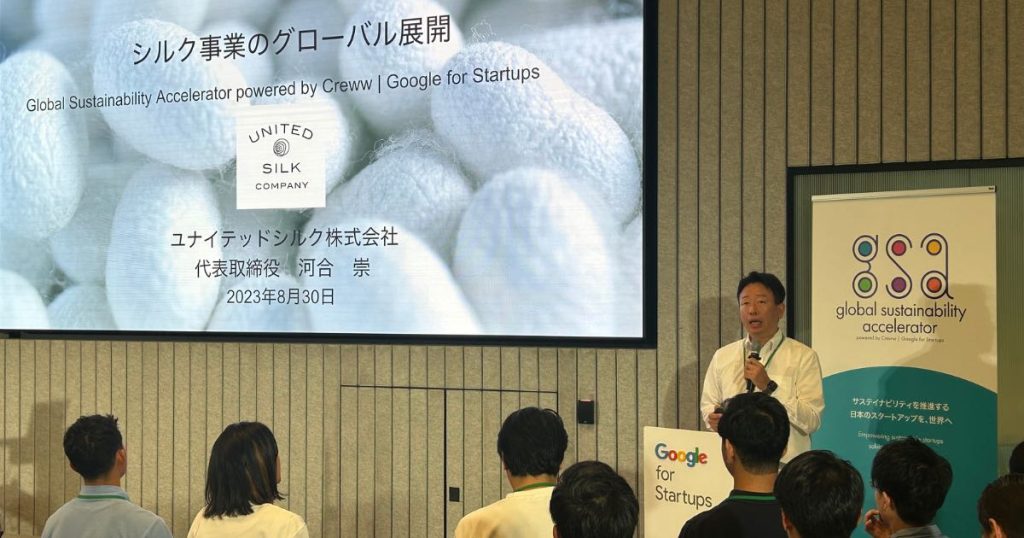
United Silk Corporation
Representative Director Takashi Kawai
We are a company that is trying to expand Japanese silk globally in the areas of food, healthcare, and biotechnology. Since our headquarters is in Ehime Prefecture, if we had not been able to participate in this program, we would have had limited contacts with the media, not only in the Tokyo metropolitan area but also overseas. We participated in this program in order to learn what we need to do to compete globally, and to incorporate and test it in our own company.
A major outcome was that we were able to brush up on our company's strengths and story through English pitches. As a result, we were able to network at a startup event in Vienna and a conference in South Africa, thanks to the Austrian government.
We also realized that the US and European markets were particularly important for our overseas expansion, and we traveled to the US three times during the program. We also realized that we could contribute to Singapore's goal of procuring 30% of its protein source in its own country by 2030.
As a result of these activities, we have had 13 business meetings overseas, 3 contracts, and 4 contracts with large Japanese companies. We feel that we have made inroads and gained opportunities from local to global markets.
In the future, we would like to collaborate with overseas business partners in agri-tech and food security to solve social issues, and once again promote Japan's excellent silk to the world. In the future, we would like to contribute to the world by utilizing Japanese silk in the development of materials for textiles, cosmetics, foods, bio-pharmaceuticals, and semiconductors and electronic components.
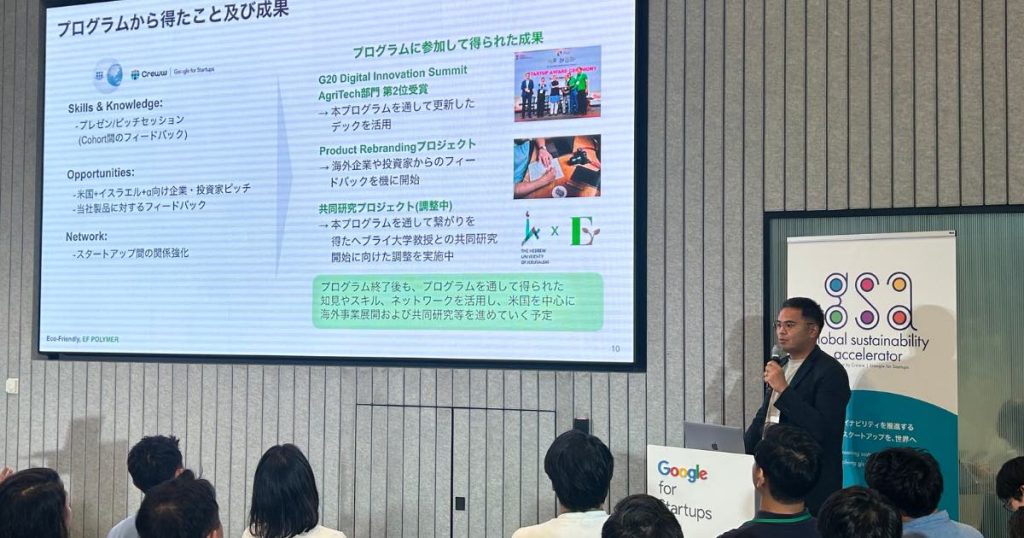
EF Polymer Co.
COO Kunihiro Shimoji
We are a deep-tech startup born in India and raised in Okinawa, Japan, that aims to achieve economically and environmentally sustainable agriculture through helping farmers struggling with drought and rising fertilizer prices. Its unique feature is that it uses patented technology to produce a super absorbent polymer that is completely organic and biodegradable. We are developing materials that retain more water and fertilizer in the soil.
About 45% of the world's population is affected by drought, and 70% of the freshwater available to humanity is used for agriculture, which in combination causes many farmers around the world to suffer from water stress. Therefore, a representative from a small farming village in India, a farmer affected by drought, came up with the idea and created a technology to extract polysaccharides from mandarin orange peels and banana peels and convert them into water-absorbing materials.
This has allowed us to reduce water use by about 40% and fertilizer use by about 20%, increasing yields and helping both the environment and the economy even as fertilizer prices have skyrocketed.
Polysaccharides are found in many crops, so raw materials can be locally produced for local consumption by upcycling discarded crop residues. Polymers are produced from raw materials to support local farmers, and the crop residues from this process are used to achieve sustainable agriculture. We are working to expand this globally, mainly in Japan and India, but also in the United States, France, and Thailand.
What was good about participating in this program was that I gained presentation skills for overseas expansion, networking opportunities with people overseas, opportunities to pitch to overseas audiences, and connections with investors.
As a result, we were able to raise Series A funding during the period and placed second in the agri sector pitch at the G20, where 29 countries participated. We also used the presentation skills we learned in the program to pitch in the U.S. We received feedback that we may need to change our name in order to develop our market, and we are currently working on a rebranding project.
We are also working on other joint research projects with the Bly University in Israel, and we hope to continue to network with various people in order to develop our business.
<Collaboration between corporate partners and startups
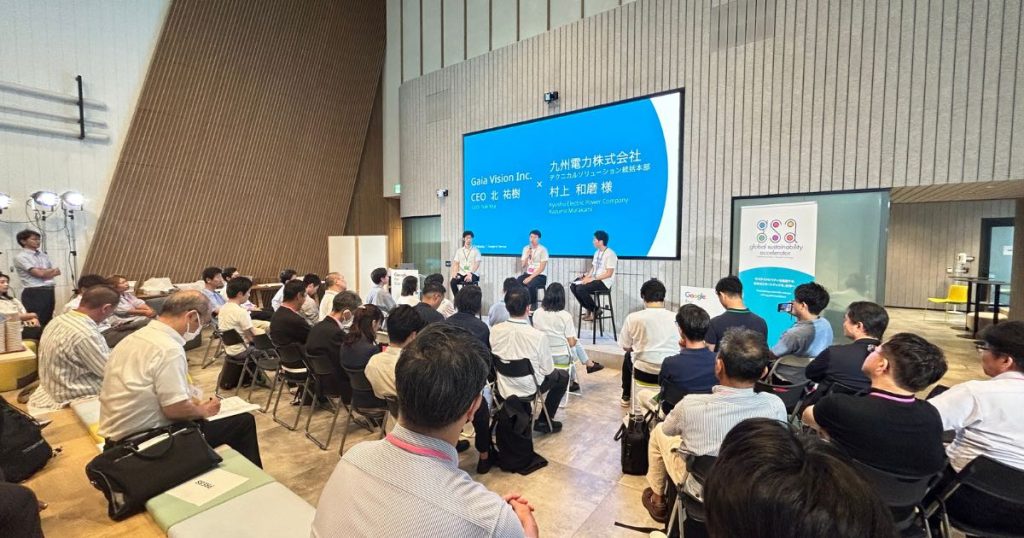
Speaker
Yuki Kita, CEO, Gaia Vision Inc.
Kazuma Murakami, Technical Solution Management Division, Kyushu Electric Power Co.
Moderator
Katsuya Nakajima, Executive Officer, Creww Inc.
island in a pond or river Through this program, Gaia Vision and Kyushu Electric Power decided to collaborate. What possibilities did you see in each other?
village (esp. Kyoto and vicinity) Kyushu Electric Power is expanding its power generation business not only in Kyushu but also globally. But while it is easy to find suitable rivers for hydroelectric power plants in Japan, it is very difficult to find suitable rivers globally. Gaia Vision had the technology to estimate the volume of water in rivers globally, so I approached them.
island in a pond or river What attracted you to Gaia Vision's solution compared to conventional solutions?
village (esp. Kyoto and vicinity) There are three things that made this solution so impressive: the ability to predict water volume on a global scale, the ability to take into account the effects of climate change, and the ability to use satellite data to estimate river water volume in real time, without the need for actual measuring equipment. I thought these three points were excellent.
north Thank you. Predicting floods requires a wide range of information from the past, present, and future of the area, in addition to rain, land, and river information. Since we are a two-year old start-up, we are grateful for the collaboration with Kyushu Electric Power Company, which is an expert in river flow rates, etc., and we are proceeding with research, development, and demonstration.
island in a pond or river Please tell us about the specific collaborations you are pursuing.
village (esp. Kyoto and vicinity) Since we have been operating a hydroelectric power plant in Kyushu for a long time, we have accumulated a large amount of data from actual measurements. We are in the process of finding out how much difference there is between that data and the values simulated by Gaia Vision, what the cause of that difference is, and improving the accuracy of the simulations. It would be wonderful if we could verify this in Japan, bring it to the global market, and link it to the power generation business.
north As you say, the key and difficult point is to match the actual data with our simulations. To improve the accuracy with respect to a specific location, we need to collect various data, such as rain and land, and for each of them, we need to look at state-of-the-art observation data and data that Kyushu Electric Power has, and improve our technology, which is very difficult.
But we are doing the most advanced things in the world, both in research and business, and if we can achieve this, we will not only be able to see global river flooding in real time, but also be able to predict the future. I see great potential here.
island in a pond or river It is wonderful to see the global linkage between short-term verification and medium- to long-term verification. What is your goal with this initiative?
village (esp. Kyoto and vicinity) I believe that starting up an overseas hydroelectric power generation business with Gaia Vision is important in terms of pursuing sustainability. We would like to work on the pursuit of sustainability not only in the power generation business, but also in cooperation with various startups.
north By improving our technology through this initiative and expanding our business globally, we would like to contribute to visualizing the risks of climate change, especially the risks of rivers and water shortages, not only in Japan but also around the world, and how we can counteract and reduce the damage.
<Comments from Corporate Partners
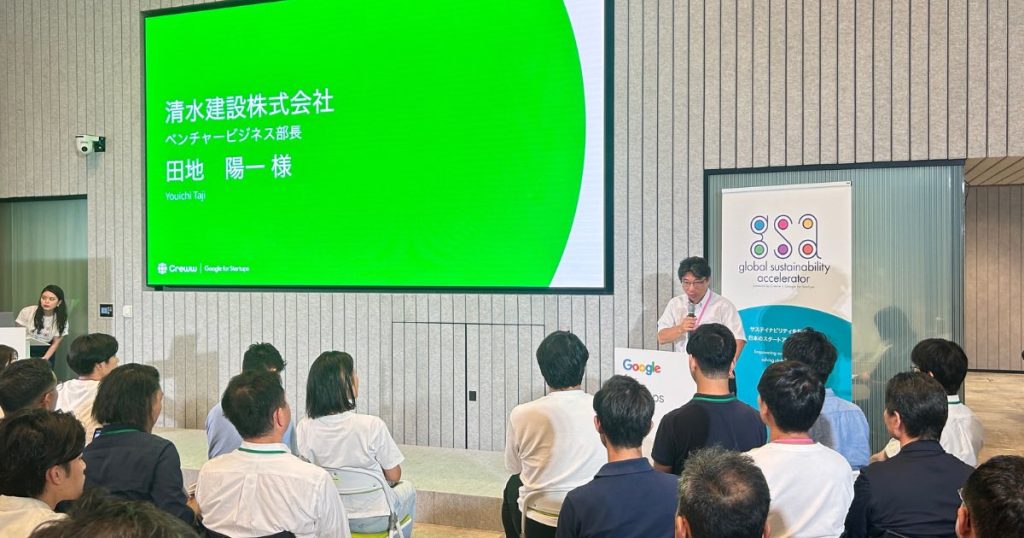
Shimizu Corporation
Yoichi Taji, General Manager, Venture Business Dept.
Shimizu Corporation's Venture Business Department is launching a CVC in 2020 and promoting an internal entrepreneurial open recruitment program called the Corporate Venturing System starting in 2022. In this program, we learned about the perspectives of Google's partners during the overseas roadshow, and what they look for in you to support your growth.
As an outcome, we received a unique idea about biochar through the in-house entrepreneur open competition program, so we connected with TOWING, a startup from Nagoya University that develops and sells next-generation crop cultivation systems that utilize "high-function biochar," an environmentally friendly artificial soil, and have begun to study the possibility of a new supply chain. We are beginning to consider the possibility of a new supply chain.
Although not selected for this program, it has led to concrete activities, such as applying for a Tokyo Metropolitan Government program with Eightknot, a company that aims to make water mobility autonomous with robotics and AI.
From September 1, 2023, we will begin operating NOVARE, a base for innovation and human resource development built in Koto-ku, Tokyo, where we will collaborate, form capital tie-ups, and exchange human resources with startups and employees who start their own businesses through our entrepreneurial open recruitment system. We would like to engage in activities that can enhance the corporate value of both parties.
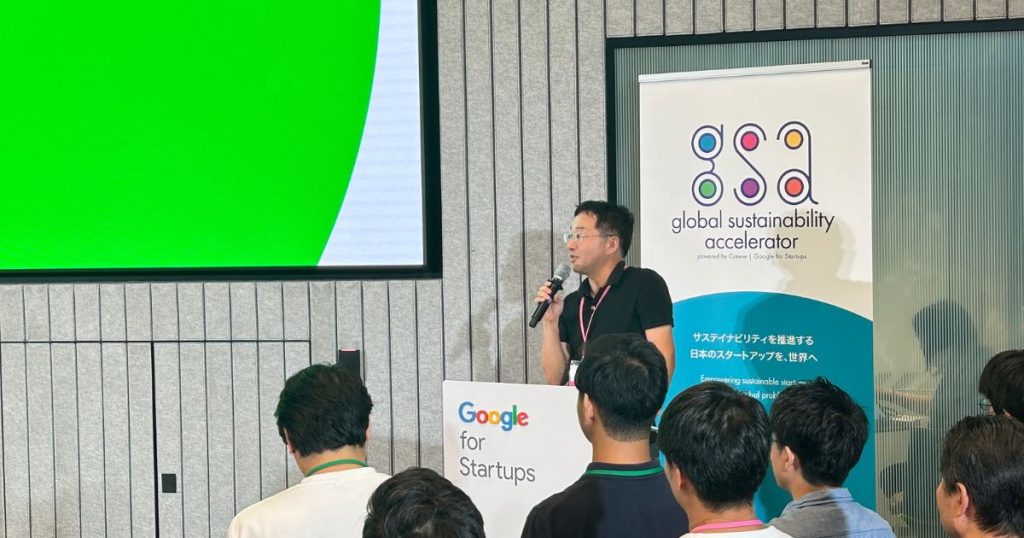
Sumitomo Mitsui Trust Bank, Limited
Takashi Ikemura, Director, General Manager, Innovation Company Promotion Dept.
Sumitomo Mitsui Trust Bank, Limited has set forth in its Purpose "to create new value through the power of trust and help our customers' prosperous futures flourish. To realize this Purpose, we are now focusing on innovation and sustainability.
We want to support innovative startups to become the driving force of Japan's economy and become a social infrastructure that promotes a virtuous cycle of funds, assets, and capital for sustainable growth in Japan.
I am grateful that this program has allowed me to build relationships with some of Japan's great start-ups that can expand globally and contribute to society.
Cooperation with foreign countries is much more difficult than you might imagine, and I am sure you will have many difficulties. However, I expect that all of you who have taken this precious step will become a driving force of Japanese industry. Sumitomo Mitsui Trust Bank will do its utmost to support you toward this goal.
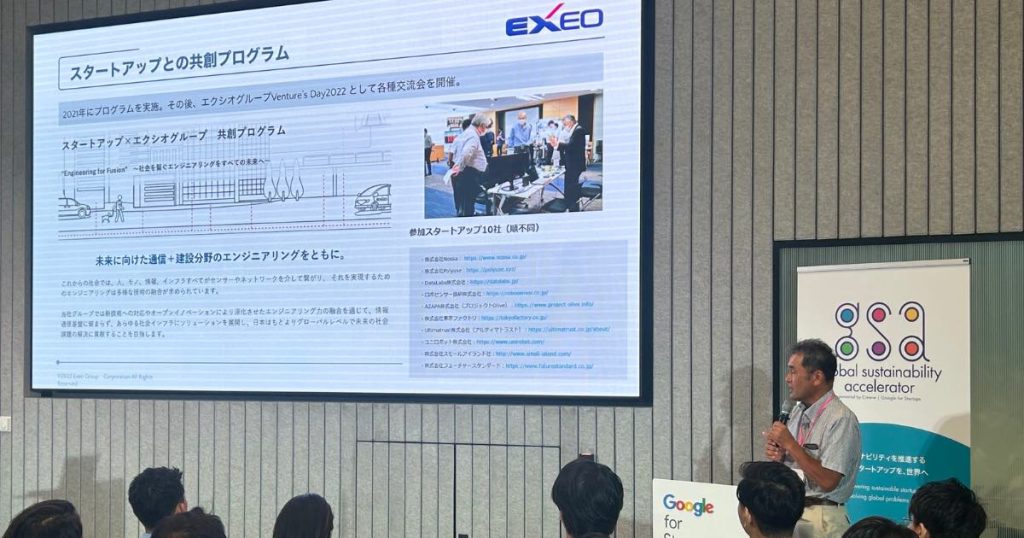
The EXIO Group, Inc.
Hiroki Machihara, Director, Director in Charge, Innovation Promotion Office
The EXIO Group is a company that handles engineering work for the world's infrastructure, including telecommunications carriers, urban infrastructure, and system solutions.
As engineering is becoming more and more efficient and jobs are decreasing, we created the 2030 Vision three years ago and are taking on the challenge of developing new businesses with a wide range of keywords such as carbon neutral, smart society, global, and correcting social disparities.
However, we cannot launch new businesses on our own, so the Innovation Promotion Department would like to serve as a hub to explore new business possibilities with startups. We have conducted co-creation programs with various startups in the past, and there are several companies with which we still have an ongoing relationship.
If you have even the slightest idea that we could do something like this together, please contact us. We hope to grow together with you.
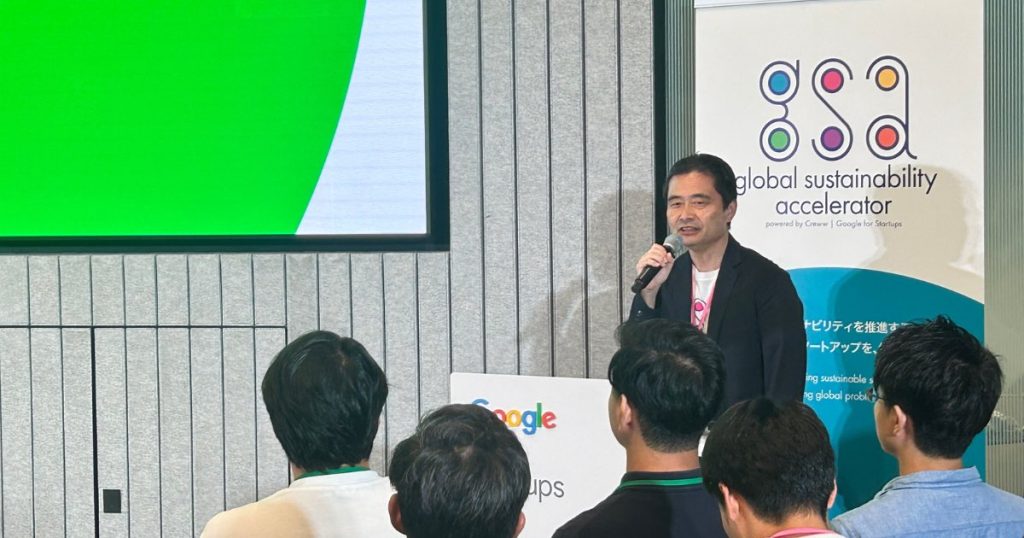
Kyushu Electric Power Co.
Shinichi Miyajima, General Manager, ICT Business Promotion Dept.
I am sure there were many hardships involved in suddenly going overseas where it is very difficult to promote business in Japan. However, from the perspective of Japan, with its declining birthrate, aging population, and sluggish economy, I am proud and hopeful that there are start-ups that are going overseas.
The Kyushu Electric Power Group is mainly engaged in the electric power business, but we are aiming to double our current ordinary income by 2030, and half of this goal is to be achieved through businesses other than the domestic electric power business. As part of this effort, I participated in the program this time together with group companies such as Kyuden International and Nishinippon Plant Kogyo.
Currently, we are working on several collaborations with startups. In the energy business, we are working on overseas electricity projects, especially micro-grid-related projects in developing countries, hydrogen, batteries, etc. In the non-energy business, we are trying to do any business that can use the resources of the Kyushu Electric Power Group.
For example, Kyuden Drone Service. To use drones for disaster prevention and inspections, we have drones all over Kyushu. So we are trying many things, such as new businesses using drones, a local currency business through our ties with local governments, and a salmon farming business on the grounds of the Toyomae Power Plant.
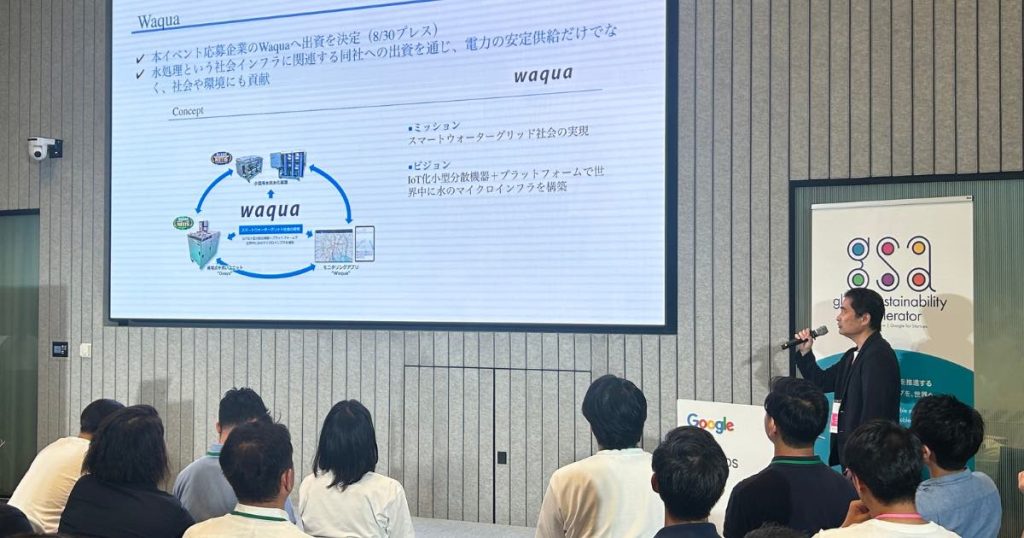
Although not selected as a finalist for this year's program, we invested in Waqua, a company with advanced water treatment technology, because we sympathize with its business. Waqua is a startup with the mission of "creating a smart water grid society. Water is one of the most important infrastructures when we consider not only electric power but also social infrastructure. We would like to work together to realize a sustainable society in Japan and abroad.
Another company working on this program is TOWING, which is developing a crop cultivation system using "high-performance biochar. We have a woody biomass power plant in our power generation business, and we are in the process of examining whether we can make good use of the ash from this plant.
We are a local company in Kyushu, but we have various test fields and would like to expand overseas together, working with startups with various technologies.






 JA
 EN
