


What is the site management system service by SAAS startup Leretto for efficient store operations?
First of all, could you tell us about the services provided by Leretto?
southeastLeretto is a company that develops and sells a SaaS cloud system that centrally manages Google maps, twitter, facebook, instagram, websites, and all other types of media to attract customers.
If you look up the name of the area plus some type of business on the google search engine, such as "Ebisu Lunch", "Tokyo Izakaya", "Tokyo Dentist", etc., a google map will appear.
People are being attracted from these sites, and now the search codes of these people are migrating from their own portals to Google Maps, social networking sites, and other sites.
In this situation, stores must use an ever-increasing number of media to attract customers. Our service is a system that improves operational efficiency to solve the problem that the more stores there are, the more man-hours are required.
Google Maps has a feature that allows you to suggest changes to your business information. Google Maps has a feature that allows anyone to suggest changes, such as "the store name is wrong," "the hours of operation are different," or "the phone number is different. When a number of these suggestions are accumulated, the information is altered without permission, and malicious people are taking advantage of this feature.
As a result, the hours of operation on Google Maps have changed, resulting in complaints and problems when people go there and find that the restaurant is not open.
A particularly serious problem is occurring with banks. The problem is that banks overseas are now falsifying bank phone numbers and using them to commit bank transfer fraud. We have received quite a few inquiries from banks and financial institutions because of this.
Our system is officially linked with Google, so even if tampering were to occur, we have a function to prevent it. Companies with many stores would have to check every day to see if the system has been tampered with, but this reduces the man-hours required to do so, and also eliminates human error.
Originally, the area of SEO, which was to rank websites, food logs, gurunavi, or portal sites, was popular, but Google changed the rules about 2~3 years ago and installed Google Maps on top of the SEO area. If you look up now, you will see that only 3 stores are listed, but if you press "View All", you will see each and every page. Attracting customers from here is paying off quite well right now. This area is called Map Engine Optimization = MEO.
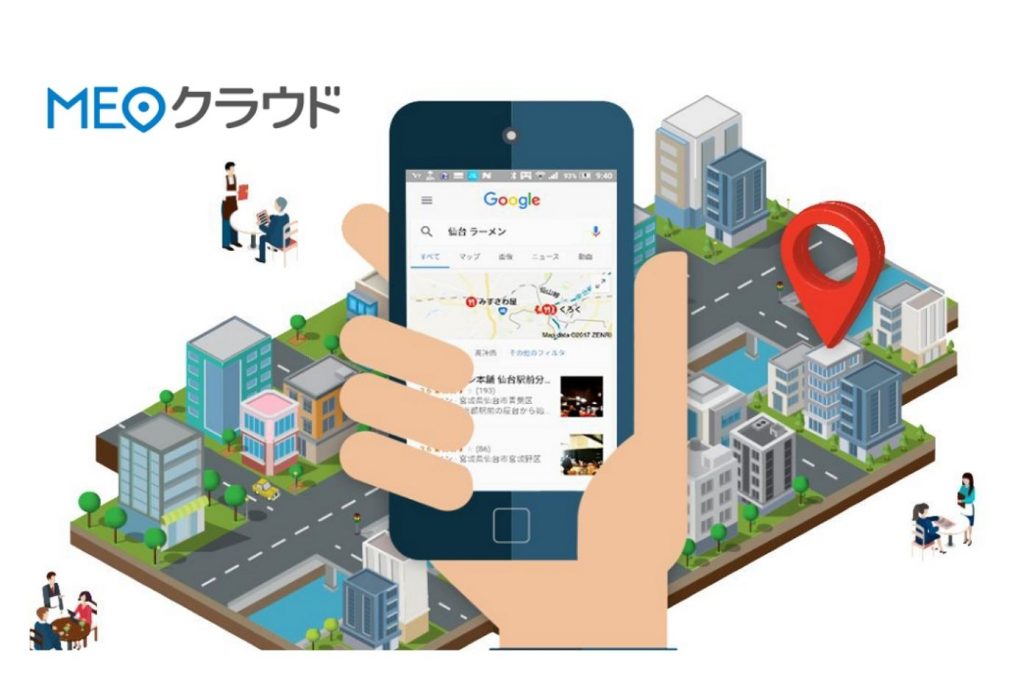
We started out as a google my business page management company. We were charging around 30,000 yen per store, but when you have more than 30 stores, outsourcing the management of these accounts can be very costly.
For a store that operates more than 30 stores, we could consider the option of bringing this account countermeasure in-house to reduce costs, but since it is not our core business, we inevitably run into a literacy barrier. Outsourcing is too expensive, and in-house production is not feasible. We launched an in-house system that enables MEO and SNS measures, mainly targeting companies that operate more than 30 stores.
If two people with different strengths and weaknesses were to combine, they could be Masayoshi Son!
When did you start your company?
We are now in our third term, so the company was launched a little over two years ago. Actually, we started out as a banquet management service. I originally tried to create a platform for businessmen to search for restaurants based on my experience as an organizer of presidential entertainment and dinners since I was working for a trading company. Unfortunately, this was closed due to the impact of Corona.
How did you come to start your own business as a co-owner?
southeastLeretto is a company that is co-owned by myself and my co-chairman, Akiyama. Akiyama and I went to the same university, and we met when we were both job hunting in our senior year of college. We were job hunting together at the time, and it was decided that Akiyama would go to a bank and I would go to a trading company. We remained close after that, so we shared a room during our second year in the workforce.
During the two years we spent sharing a room together, we both had a common desire to start a business. But we are young, so it is not easy to do it alone, realistically. However, while we may not be able to become Masayoshi Son by ourselves, if these two people, who have different strengths and weaknesses from each other, were to combine, we might be able to become Masayoshi Son. These thoughts resonated with me, and we decided to start a business together.
Do you have a motivation or background for starting a business?
My father's company went bankrupt, and I saw how unhappy the employees were because of the bankruptcy, and I really felt at that time that my efforts and my future would not match up with my efforts as a salaried worker.
As a high school student, I was thinking along the lines of what kind of occupation would give me control over my own life. I thought, "If that were the case, I would be a manager," and in my second or third year of high school, I began to think about becoming a manager. I was accepted to the Department of Management Systems Engineering at Waseda University on the recommendation of a designated school, and when I read in the pamphlet that the school "fosters managers in the sciences," I decided to go there! I decided on a hunch that this was the place to go.
When you started your business, how did you decide on your current business as a pillar of your business?
In order to succeed at a young age, we focused on the area in which we had the greatest sense of challenge. We started with the idea that if we became the persona, we could create a service for ourselves that would be successful, and the first area we chose was food. We chose "food" as our first focus. "A service that solves the problems business people face in choosing restaurants.
My co-founder, Akiyama, a former banker, used to organize company banquets incessantly when he was a banker, and I used to organize them incessantly when I was a trading company. Both of them had great difficulty finding restaurants.
If it is a bank, for example, it is quite difficult because there are quite a few restrictions, such as having to specify the brand of beer or finding a restaurant with a private room. Having experienced the strict restaurant selection process when I was working, I thought, "I bet there are a lot of young businessmen who have trouble with that." So, I started a service similar to a food log where businessmen can find the best restaurants.
Hiring and Management Barriers|Mission Values are the Key to Solution

What were some of the obstacles that stood in the way of your starting your own business? What were some of the obstacles that stood in the way of starting a business, and how did you overcome them?
The most difficult part was hiring people. We were not able to hire people who matched the culture of the company, partly due to our own lack of ability, and it was difficult for people to grow in this environment. If you can't hire people, that means you can't boost business. We were very concerned about how we could properly nurture people and how we could all work together in the same direction toward the team's goals and push the business forward.
How we solved this problem was by sticking to the company's mission values from the beginning.
Mr. Inagaki, the president of User Base, is now an investor in the company, and since he used to be in the joint management business, I asked him how I could solve the problem of human management, and he told me to "set mission values. I asked him how I could solve the problem of people management, and he told me to set mission values. After setting the direction (mission) and the values that the company was aiming for, and just continuing to say them, a culture was created in the company, and people who matched that culture were brought in. We now have about four new graduate members, and they have become the main members and are pushing the company forward.
It now has 30 members.
Mission values packed with room-sharing era philosophy and co-founder's strengths and values
How did you decide on the mission values that were the key to overcoming the obstacles in the establishment of the company?
Basically, the mission was created by identifying commonalities between what Akiyama and I wanted to create in our original experiences. I was originally involved in the airport business when I was a trading company, so "infrastructure" was one of the keywords.
Akiyama also says that banks are, in a sense, the infrastructure of finance, and we have created this mission with the idea of making people happy like the infrastructure business we were involved in by creating a company that continues to build the infrastructure needed by people with new technology.
Regarding the value, we were doing quite well when we were sharing a room, and this know-how is reflected in the value as the essence.
In "Let's be altruistic," the issue of who takes out the trash when sharing a room comes up, and "the one who notices should be altruistic" reflects the idea of being considerate of others and helping others when they are in trouble. In "Be honest whenever you get into trouble," we reflect the point of "Let's confide in each other openly."
In addition, we have included many of Tatsumi and Akiyama's strengths in our values. Therefore, the value element is a mix of the philosophy that worked well in the room-sharing era and the strengths of Tatsumi and Akiyama.
I am good at taking responsibility and sticking to results until the end, and Akiyama's strength is his action philosophy of "try first" and thinking from there rather than standing still. Both of us have the value of "start from the customer's ideal" from the viewpoint of "always do what is beneficial to others.
Securing human resources is a step in the scale
How did you create your current business model? Can you tell us about the process of service scale?
We started with an MEO service, but when it came time to update the system for in-house production, we needed an engineer, so we searched high and low and asked Hasegawa, our current CTO, to join us.
Creating a system requires sales people, engineers, a customer success team to support customers, and people in the backyard such as billing and human resources who work behind the scenes. We realized that we needed a variety of people to create a single system, so we hired a large number of people, and since we hired nearly 20 people via twitter, our recruitment cost has been zero. We have 65,000 followers between Akiyama and Tatsumi, and we started twitter as soon as we started our business, thinking it would be useful for something. I am now able to have an influence. One of the scale points is that this has accelerated the recruitment of people.
The second scale point is fundraising. We did this this year, May-June 2020. We raised about 66 million yen in a pre-series A round. We were introduced to the company by early angel investors and used our existing connections to find people who fit the company's synergies and who would support us and fund us. We searched from these perspectives.
We want to solve the problem of system management man-hours in the hospitality industry!
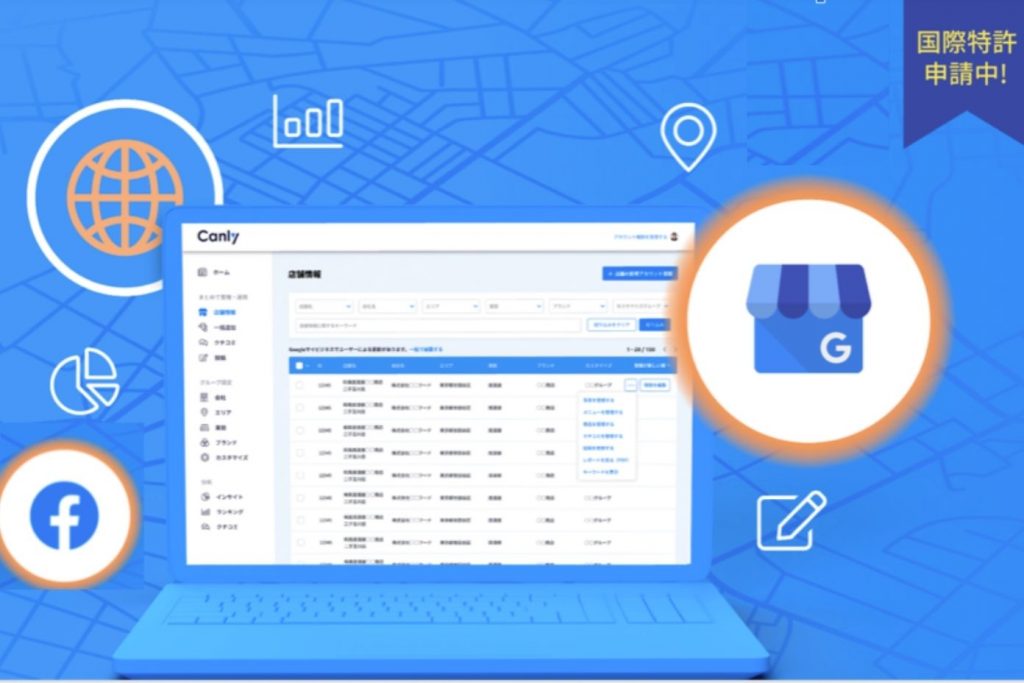
You have actually gathered some people and secured some funding, and this year you finally launched your service.
."Canly.We released the "PRTIMES" service on July 27, and at the same time, we used twitter and PRTIMES to spread the word.
In the two months since its release, we have received orders from more than 3,000 stores. Some of the most well-known companies that use our service include Pronto, epicurean, Aeon affiliate Aeon, Aeon Fantasy, and Temmin. In addition, we have recently released a partnership with Tokyu Department Store, and other large companies are using our system.
What are some of the issues that companies that have adopted "Canly" are facing and why did they decide to use it?
The most important thing is that it is getting harder to manage the media. Corona was one of the factors that encouraged this, but I think the business hours were changing frequently after the declaration of the state of emergency started. I think this is especially true for restaurants, but it is quite difficult to change business hours. You have to log in to the website to change the business hours, and then log in to Google Maps to change the business hours. If there are 1,000 restaurants, they would have to change their business hours 1,000 times each, so I think that is why they paid attention to our system, which allows them to update their business hours to all media with one click by entering data into the master data.
I believe that the first major factor is the streamlining of these operations. Secondly, I think the trend toward DX is also a driving force.
I think that each medium has its own kind of word of mouth, but many stores have problems with how to utilize word of mouth and how to reply to word of mouth, and by introducing a system, they can reply to word of mouth efficiently, and Canly has attracted attention as a way to utilize that word of mouth as well. I think Canly has attracted a lot of attention as a way to utilize word of mouth.
What social issues did you have in mind when creating "Canly"?
The problem of man-hours for media management was very large, so we created this system with the hope that the customer service industry would reduce the time spent on system management as much as possible, since the competition is how much time can be invested in the field.
Frankly, the store business industry is structured in such a way that it is exploited. The lack of know-how, the high cost of outsourcing, and so on. We also wanted to improve IT literacy. So, we believe that the introduction of our system will help the employees in the stores to acquire IT knowledge and develop their skills so that they will be able to think about marketing on their own.
Accelerators to help startups scale
Have you used any accelerators up to the present?
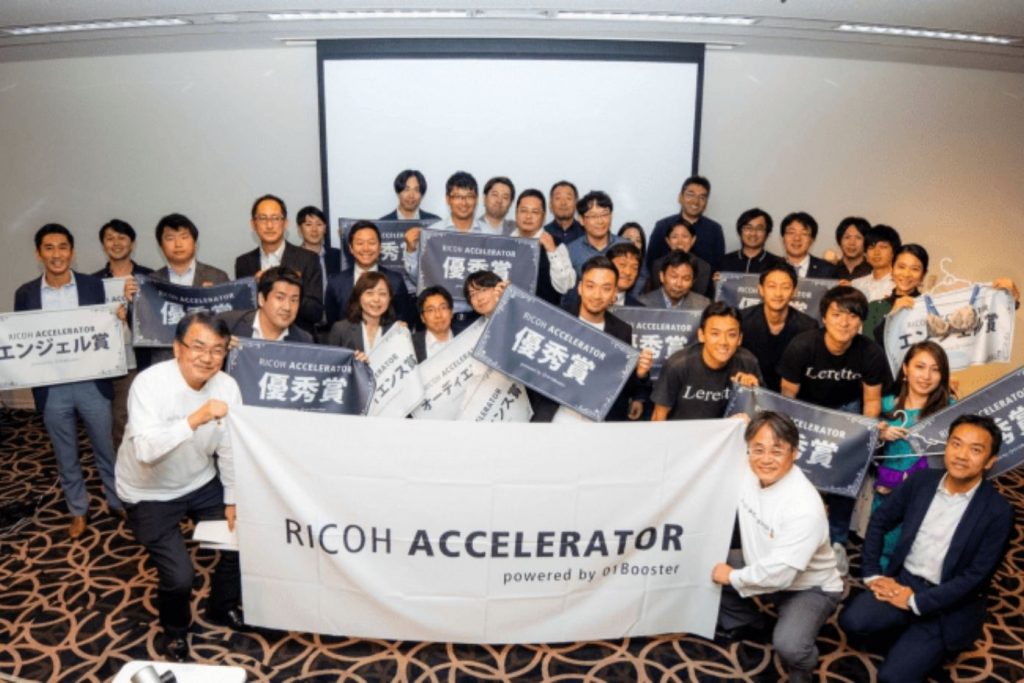
The service was adopted by Ricoh's accelerator program before it became its predecessor. As I mentioned earlier, that service itself was closed due to the Corona disaster, but through the accelerator, I thought it was very good that we could receive support from a large company. The large company had resources, and the fact that there were two or three people in charge of our service, who thought about our service and consulted with us, was very important.
The Tokyu Department Store, which has introduced Canly to us, actually agreed to do so after talking with us during the process of the Accelerator Program.
Ricoh and other parties and companies involved with various stores, especially Tokyu Department Store, are increasingly supporting startups as accelerators, and I would like to do my best to expand business sales by constantly visiting such places.
The key to the Accelerator Program is involvement.
What are some of the points of using the Accelerator Program?
One key point is how much people can be involved. Large companies are willing to make a commitment to startups, since they hosted the accelerator, but while they provide support, they also have their own day jobs. The startups are not passive, but rather, they must be proactive in asking their employees to help them.
What we did was to hold a drinking party. We held a drinking party, saying, "About 40 people should come." We got to know each other through the party and communicated with the employees, saying, "Please help us in this area.
It is important how much we can involve TOP. I think it is important how much you can involve the top management.
Aiming to be the best product in Japan
Please tell us about your company's goals for the future and what you hope to achieve in the future.
As I mentioned at the beginning, our mission is to continue to create the infrastructure for the next generation. We want to continue to create a system that will serve as the foundation for the store business and provide a service that will be used by those involved in the store business so that they can focus on serving customers. By using the system, we want to reduce the amount of work that can be cut back and have people focus their labor time on serving customers.
We are confident that Canly is a great system for restaurants, beauty salons, karaoke rooms, drugstores, and other retailers.
I will definitely support Creww as well. Thank you very much.
 Mr. Mamoru Tatsumi Leretto Corporation
President and Representative Director
Graduated from Waseda University, Faculty of Science and Engineering in 2015. Joined Sojitz Corporation. Credit and business investment screening,
Experienced in domestic and international airport M &A. passed the US CPA exam in 2017. co-founder of Leretto.
36,000 Twitter followers (https://twitter.com/maamorun).
Canly, which centrally manages media such as Google My Business and SNS, is currently being developed (https://jp.can-ly.com/).





 JA
 EN
