


*This article is a reprint of an article published in STARTUPism on January 30, 2019.
Aleska Japan Co.Noritsugu Katagiri, Representative Director
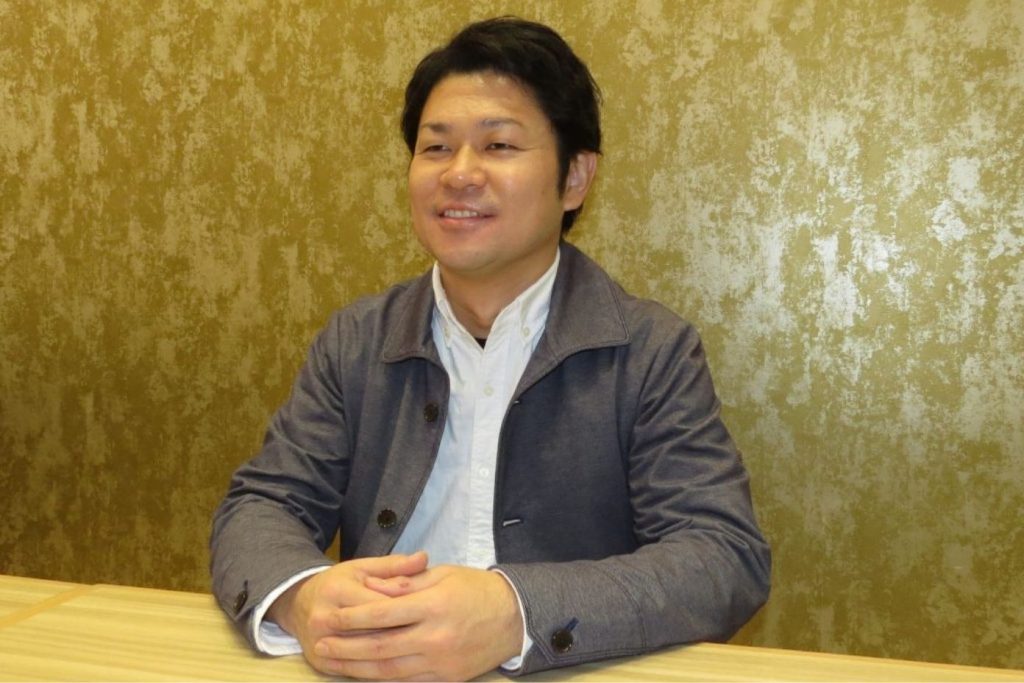
To solve food problems faced by developing countries, the company is expanding its operations in China (Beijing and Shanghai) and the United Arab Emirates (Dubai), both of which are experiencing remarkable economic growth.
The company's founder and group CEO, Tsuyoshi Oda, frequently had the opportunity to visit Southeast Asian countries on business, which led him to see firsthand the serious social problems in rapidly growing Asian countries, such as the retention of resources waste, and the immature agricultural product distribution market. In order to solve these problems in developing countries and other regions with food problems, we started developing containerized plant factories. First, we established Aleska Life Technologies Limited in Hong Kong in 2013, expanded our bases to China (Beijing and Shanghai) and the United Arab Emirates (Dubai), and established Aleska Japan in Tokyo in October 2017. As a global hub, the Japan base is responsible for creating an IT-based framework for efficient and stable vegetable cultivation and developing products that collect and analyze a variety of data related to hydroponics.
Currently, the Aleska Group is developing services in two countries: Beijing, where the reliability of vegetables sold domestically is being questioned, and Dubai, where vegetables are difficult to grow due to geographical factors. In Beijing, there is a strong affinity with our service in terms of "food safety and security," and in Dubai, our service has been adopted as a solution to the current situation where most vegetables for domestic consumption have to be imported from overseas. Despite the relatively high price of hydroponically grown vegetables at this time, both countries have a very high awareness of the need for safe and fresh vegetables, and our service is being used mainly by wealthy customers such as high-end hotels and restaurants.
In addition to container-type plant factories, we have also introduced a hydroponics machine called "Alesca Fresh," which is like a vegetable vending machine, to be installed in restaurants as part of our marketing efforts. We deliver vegetables that have been grown to a certain degree, grow them hydroponically on the restaurant floor, and serve the harvested vegetables in our dishes. In Japan, where health consciousness is on the rise, we believe that it is possible to develop this business in terms of food safety, and we hope to take some action within the next two to three years.
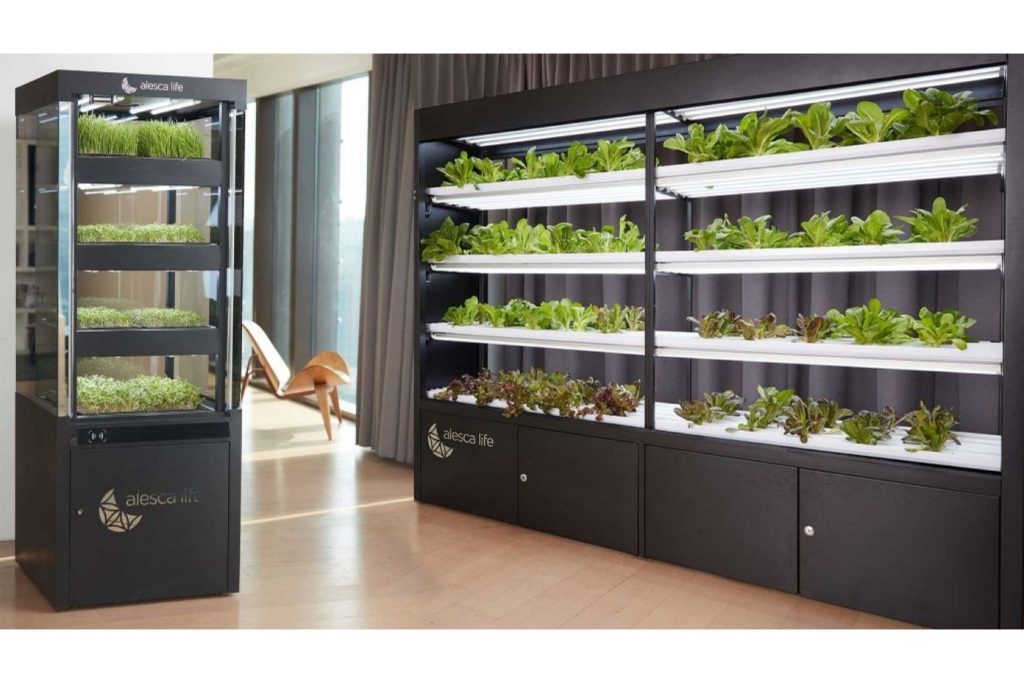
The keyword is "Anyone, Anywhere. Nutritious vegetables are sent from landmarks around the world.
As a member of a global company, we share the phrase "Anyone, Anywhere" within our company. This is our desire to deploy systems, data, and know-how that enable anyone to grow vegetables anywhere, and it is our heart's desire to realize our vision of "delivering highly nutritious vegetables to people around the world". Following Beijing and Dubai, we have decided to roll out containerized vegetable plants and "Alesca Fresh" in South Africa starting in 2019. We decided to introduce the service in Dubai for the same reason, but our marketing strategy is to develop the service from landmark cities in each region, and next we aim to expand the service to neighboring countries, starting with Cape Town, a landmark city in the southern part of the African continent.

Originally a boom initiated by the government in hopes of revitalizing agriculture and exporting technology, container-type plant factories, which grow vegetables in an artificial environment with controlled temperature and humidity, are attracting attention as the "agriculture of the future" that can provide stable production unaffected by weather conditions.
However, it may take several more years for hydroponics to take root as a stable means of supplying vegetables, due to the initial investment, lighting, and other costs involved, as well as the difficulty of mass production with the current technology. In terms of research and development, hydroponics research in Japan tends to be seen as lagging behind that of foreign countries, which are more concerned with quality and taste and focus more on yield than foreign countries. We believe that now is the time to step up to the plate.
We believe that if the technological and marketing strengths of Japan and other countries are brought together in the field of hydroponics, it will surely be possible to create a production system that can provide a stable supply of quality, tasty agricultural products at an efficient and affordable price. As a start-up that will play a key role in the "agriculture of the future," we are working day and night to contribute to the development of the industry as a whole and the improvement of technology. We are working hard, believing that one day we will be able to solve the world's food problems.
| name of company | Aleska Japan K.K. |
| Establishment | October 2017 |
| Location | Shiroyama Trust Tower 4F, 4-3-1 Toranomon, Minato-ku, Tokyo |
| representative | Noriji Katagiri |
| Business Overview | Alesca Japan Japan branch of Alesca Life, a foreign startup that designs, develops, and operates "IT x plant factory" products and is currently expanding its business worldwide. |
| uniform resouce locator | https://www.alescalife.com/ja/ |





 JA
 EN
