


The term "startup" does not directly translate to "a company just getting started. It does not matter how long or how large the company has been in existence, it can be considered a company that is betting on "innovation," although the definition of this term varies. Innovation is the development of new products, new production methods, new markets, etc., through creative activities that, when accomplished, have a significant impact and change people's lives.
Startups are always accompanied by products that trigger innovation, engineers who can create such products, and venture capitalists who make appropriate investments. This leads many people to believe that a startup is a technology company or a company that receives investment from venture capitalists, but this is not always the case.
It also differs slightly from venture business.

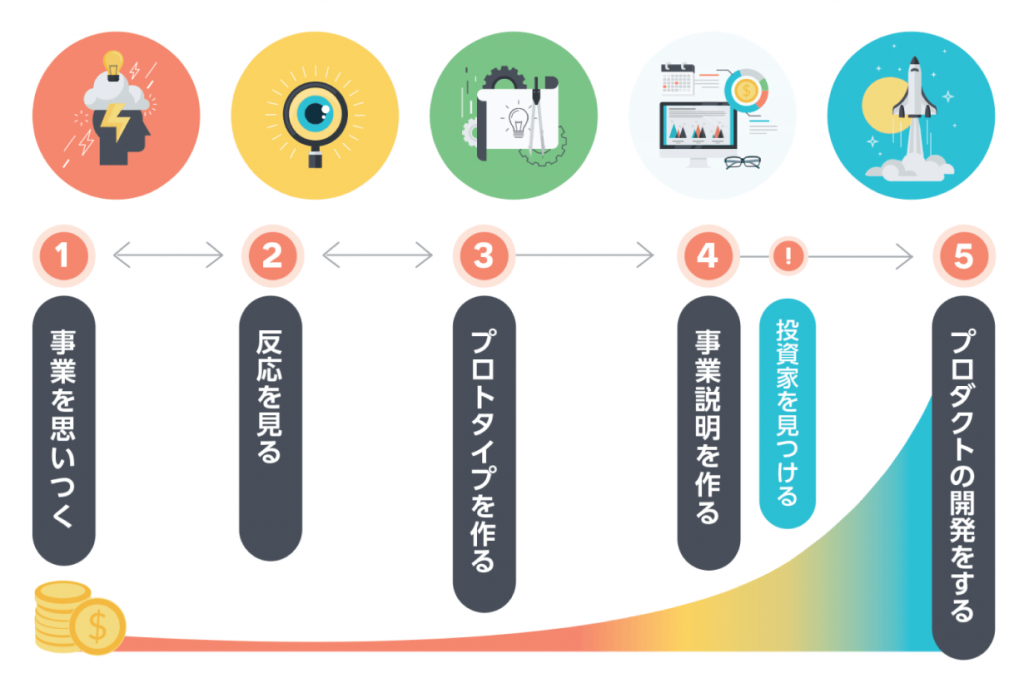
Startup Growth Stages and Venture Capital
Startups have stages, from inception to exit. They may be divided into Seed, Early, Middle, and Rater, or Series A, B, C, and so on by round of funding.
The company that invests in startups is called a venture capital firm. Venture capitalists collect money from investors other than themselves or from operating companies and invest it in startups in the form of "funds.
Some venture capital firms are "incubators" that support startups. Also called "seed accelerators," they actively support startups to increase their chances of success.
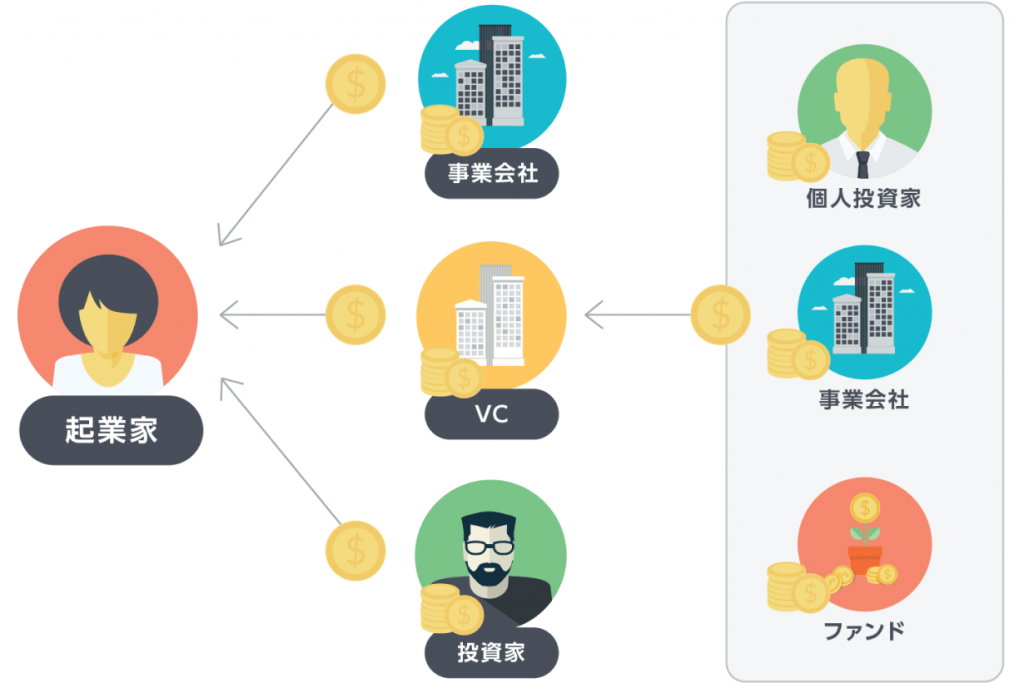
Let me explain "exit" here. Exit, meaning "exit," is a way for startup founders and venture capitalists to recoup their investment. The most common exit methods are IPO (Initial Public Offering) and M&A (Management & Acquisition).
In many cases, the founders of the company (founders) and investors both aim for large returns through eventual IPO or M&A, and thus have zero profit up to that point. At the time of start-up, the company raises immediate funds from outside investors and explores the business model. Once the direction of the company is set, a second and third round of funding is raised, with the goal of a final exit.
In the U.S., it is said that 90% of all exits over the past 10 years have been through M&A. Therefore, it is believed that M&A will be increasingly used for startup exits in Japan, whereas IPOs have been the mainstream method.
When startups end
A startup ceases to be a startup when one of the following three things happens
- Investors recoup their money through acquisitions, IPOs, and other public offerings.
- No longer experiencing explosive growth as a startup, the company settles into a de facto small business with no prospect of going public.
- Withdrawal.



 JA
 EN
