


What is an open innovation case study by Tokyo Metro and Story & Co.
Taku Hosokawa, CEO, Story & Co.
*This interview was conducted at the end of 2018.
- First of all, please tell us how the project was launched.
Ishikawa:We started accepting applications in October 2017, and the application was adopted in December of the same year; we started the demonstration experiment in March 2018, and we started announcing the initiative around the end of April. After a trial period of about three months, we were able to see the direction of the business, and on August 1, our company (Tokyo Metro) and Story & Co. started a business partnership.
Hosokawa:At the time the program was adopted at the end of 2017, there were around 10 hosts for our service...it was really in its early stages.
-Was there any difference in the concept between the "Tokyo Metro ACCELERATOR" 2016 and this 2017?
Ishikawa:Since the 2016 project was the first, we solicited applications from a broad perspective (area), "all areas that can contribute to the development of Tokyo. Through our initial efforts, we decided on a specific and catchy theme for 2005: "Make the city of Tokyo more enjoyable. The key word was "connect," and the "connect" project was accepted.
- Please tell us about this project.
Ishikawa:One is the "AND STORY" initiative, an experience sharing service that connects "people who want to communicate" with "people who want to try it. For example, one of my favorite experiences is the "Sinahan with a Film Director Tour. Sinahan stands for "scenario hunting," and it is a tour where you go out on the town with a film director to think about scenarios. One day we went on a tour near Shinjuku-Gyoenmae Station, including the park. The general public's image of Shinjuku-Gyoenmae Station is just "there is a park" or "you can go cherry blossom viewing." However, while carefully looking at the town in my own way with Sinahan, I found myself thinking "there is such and such a store in such and such a place" or "that person goes into a flower shop and I wonder what he/she buys. It is a good way to learn about Shinjuku Gyoen, which you did not know much about, and to like it more. Our company's premise is to encourage people to ride the subway. As a company that is built on the accumulation of 165 yen (the first ride fare), we thought it would be interesting to give people the opportunity to experience the city from a different perspective.
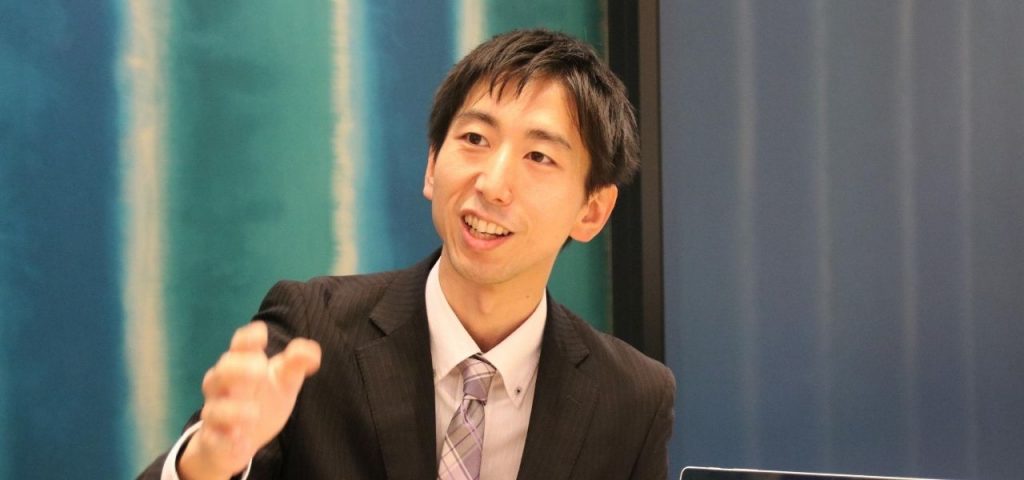
Hosokawa:The director actually even taught me how to fantasize, and we create the scenario together. In everyday life, we are rarely aware of the cityscape, but for the sake of creating a scenario, it is necessary to be realistic, so they suggest that we actually drop by the stores and places (in that city). It makes them feel more attached to the town. At first, the director who would be the host of our service didn't know what he himself could do. However, our company has created a proposal service for the hosts, saying that we can provide this kind of experience (based on what the host actor is good at and what he/she can do). In the case of Sinahan, we thought it would be good to offer a glimpse into the "daily life of a filmmaker," and that's how we came up with the idea of Sinahan.
Ishikawa:We also offer gourmet, entertainment, and bicycle tours of East Tokyo. There are 179 metro stations alone, but we can't fully grasp the charms of each city on our own. Each city has its own charms, and even if we publish various free newspapers, we cannot fully grasp the charms of each city. However, when we ask the general public to share their stories, experiences, and thoughts about their towns, we can discover things we didn't know, such as "I didn't know there was a sacred place in such a place.
AND STORY" is unique in that it is a compact 3-hour experience. And the focus is on the "person. The stories, experiences, and thoughts that are unique to each person are incorporated in the development of the program. I think that another initiative, "Tokyo, Traveling Talk," is an even stronger expression of this concept. This is a community event where the people who make the city of Tokyo colorful meet those who are visiting the city for the first time and secretly share its charms with each other.
-I see that the collaboration between the two companies has combined the attractiveness of both companies and has produced some interesting projects. Are there any advantages for both companies in collaborating with each other?
Ishikawa:Our 7.42 million average daily passengers are a touchpoint that we hope to utilize in our initiatives with Story & Co. For Metro, our goal is to bring out the charm and vitality of the city through our initiatives. This is the first time that we are disseminating information in an experiential way, either through free newspapers or on the web.
Hosokawa:It is only since we started working with Metro that we have received applications for "AND STORY" and "Tokyo, Traveling Talk" from people who want to "do something for the town. The problem with this kind of "koto" industry is that it quickly becomes homogeneous. For example, when you go to a calligraphy class, what beginners do is often the same everywhere. The only thing that differentiates them is the price and the location (of the class). When that happens, the big companies (with capital) have the advantage. The big companies are opening more and more stores and offering services such as free trials. This makes it difficult for individuals to compete. However, I believe that individuals also have an advantage, and if they can compete, it is because they have a story to tell and unique "feelings" (of the service provider). Large corporations are not able to see these aspects, so I hope this project will lead us to those aspects.
Tokyo, Traveling Talk" created through open innovation

-This is how "Tokyo, Traveling Talk" was born, isn't it?
Ishikawa:As of December 13, 2018, "Tokyo, Traveling Talk" has been held 28 times at 22 stations. The first event was held near Tokyo Station, followed by Akasaka, Asakusa, and Kanda. We call these events "people who color the city," and we invite people who are closely related to the city, people who have feelings about the city, and people who have stores in the city to come and talk about the city. The speakers will share their stories about their experiences and share the charm of the town. When the feelings of these people are conveyed to the audience, they become sympathetic to the town. It is a great pleasure for us to see people become fans of the city and commute there by subway.
Hosokawa:I originally had the idea for a traveling talk. As for myself, I have already moved about 25 times in my 38 years of life (laughs). (laughs) I've always been fascinated by the idea of "(local) community," and I thought it would be nice to have a community in Tokyo that was easy to get into. Another reason is that as the number of large corporate restaurant chains and retail stores increases in the city and the landscape becomes more homogeneous, the importance of individual stores and other stores with strong human feelings is increasing. I thought it was important to have these people talk about the charm of the city.
Ishikawa:At first, Hosokawa himself took the stage as a host, and his seniors appeared as guest speakers. Now we are gradually having people who are actually active in the city take the stage. This is a chain of events, and it is spreading spontaneously.
-How do you get the word out about attracting customers?
Ishikawa:Rather than pamphlets or posters at train stations, we make more announcements digitally, including through Metro's Twitter account and email newsletters. The newsletter is aimed at people who like trains and walking. We also introduce them during town walking events that we have been planning for some time.
-As for Metro, I think there is a part of contributing to society. Do you set KPIs for sales, profits, and other aspects that are difficult to see in numbers?
Ishikawa:I honestly don't believe that this is a project that will explode in profit, but we are chasing numbers in terms of the number of participants and the number of events held. As for "Tokyo, Traveling Talk," we are aiming to hold the event at all 179 stations, so we have a goal to reach by March 2019. We also have KPIs for the number of contents and the number of registered guests. As for Tokyo Metro, one of the company's significance is to bring out the attractiveness and vitality of the city. The subway is rarely a destination in itself. However, I believe that the main character of Tokyo is the city itself, and furthermore, it is important to consider the thoughts and feelings of the "people" who live in that place. Metro's role is to evolve while inheriting the context and DNA of the city. Although we are chasing numbers, I think it is important that we are communicating the charms of various towns.
-What issues have come to light as a result of this effort?
Ishikawa:Even though we do not believe that this is an initiative that will generate solid revenue, we must operate the business so that it does not go into the red in order for it to continue. We must earn at least a minimum figure, and to be honest, even within the company, there are some who point out that the profitability is low. The most difficult part is the settlement of the payment at the stage of entering into this cooperation, and there were some who asked us what kind of results we had achieved in the demonstration experiment, and then asked if we should do it now. There were some who asked, "Should we do it now?
Hosokawa:Although the number of events itself is increasing, I feel that it is difficult to "visualize" the results of such efforts. For example, even if we did large-scale advertising such as commercials, it is difficult to know how much profit we are making (due to the nature of the public transportation system). The same goes for free newspapers and poster announcements. Although I cannot see much of the internal communication within Metro, I believe that it was only because of Mr. Ishikawa's meticulous coordination with all related parties that we were able to make this project a reality.
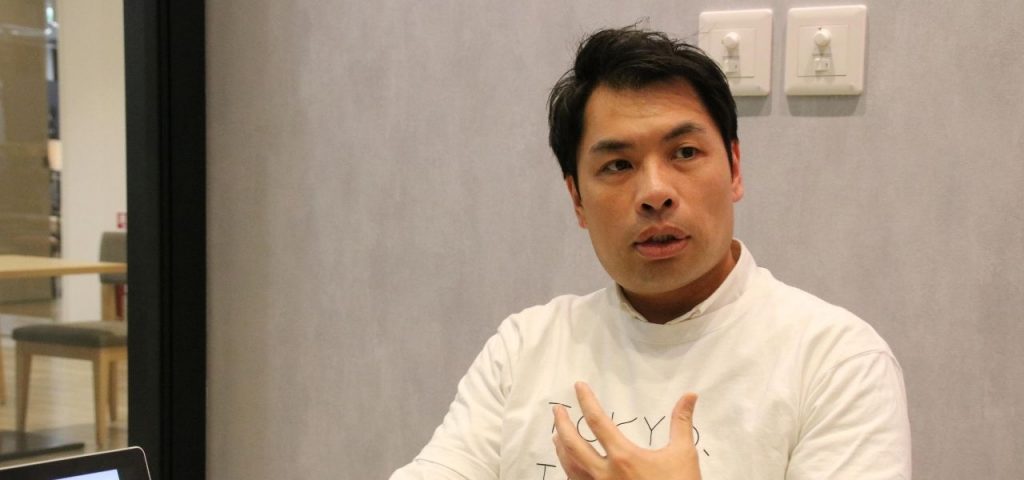
Ishikawa:On the other hand, the management part of the project is largely left to Story & Company. Mr. Hosokawa has been putting in a lot of effort. It is reassuring to know that you are giving it your all.
-Are there any major prospects for the future?
Ishikawa:After all, holding the event at all 179 stations is a major goal. In fact, people have developed a sense of empathy, and events held with the hosts have led to people saying, "I want to talk about the charms of this town, too! and the chain of events is continuing. It is good to have people utilize andstory to add depth to the town, and to naturally develop empathy and expand their efforts. As a result, I would be happy if the charm of each town becomes apparent and each town becomes more colorful.
Hosokawa:I think things are going to get more and more interesting. For me personally, I owe a debt of gratitude to Metro for being the first company to adopt our project and for the business partnership. In order for people to say, "Wow, Metro found this company and service," I don't want to neglect the part that can be measured by numbers, such as the number of users and profits. Although it is difficult to generate profit with the current structure, we would like to show our gratitude to Metro by increasing the number of users while also giving back to each other as a result of our business.
Potential for Accelerator Programs
-Finally, do you have a message for startups and large companies considering the Accelerator Program?
Hosokawa:When we decided to collaborate with Metro, our company had just been founded and there were only two members including myself. I honestly did not think I would be able to make it through the presentation, being just after the launch of the service and with only two people on the team. The question that I did not want to be asked the most during the pitch was, "How many people are running the company? (laugh). (laugh) But Metro adopted a company like that (just after its establishment) and even formed a business partnership with us. I truly believe that this kind of collaboration is a result of fate, so I would like to encourage startup companies that are confident that they are creating a good service to apply. In my case, you may meet someone with enthusiasm like Mr. Ishikawa. I would like you to take on this challenge without thinking that it will be impossible or that you will not be taken seriously.
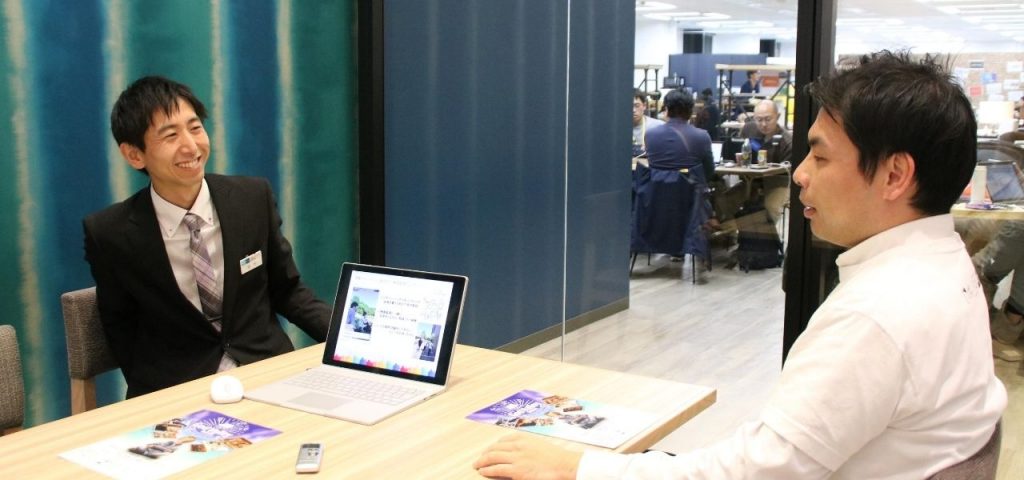
Ishikawa: What we have found through the two programs is that people who share our company's raison d'etre and group philosophy are the ones who apply for the program. I believe that this is an opportunity to find the best partners who can accompany each other to the end of the project, facing the same direction. Another thing is, and this may sound rude to say, but I think that some major companies take a lot of time to go through many procedures and settlements in order to proceed with a thing. However, by going through a program with a lot of thought and care, it creates an atmosphere that says, "Now that we've made a decision, let's make sure we get it done right until the end. When a startup-like speediness is introduced to a slow-moving large company, some members of the company will be inspired, and this will trigger a more active movement. With the speed characteristic of start-ups and the flexibility of ideas, they are prepared to say, "We decided to do it," "(we) adopted it," and "We gave the go-ahead, didn't we? That becomes a great power in the end.




 JA
 EN
