


Step 1 Identification of issues "New business prototype
The first and most important step is to discover the issue. (Without this, we can't begin!)
It is often said that when you have a problem in your original experience, you should consider whether the problem can be solved by an existing service. When the problem cannot be solved by existing services, it becomes the starting point of an idea, the prototype for a new business, so to speak.
For example, car sharing services between individuals, which have become a hot topic in recent years, are a solution to the problem of people who do not own a car and want to rent one but cannot! For example, the C-to-C model was created as an option to solve the problem of people who do not have a car but want to rent a car but cannot! (There are other reasons as well, such as the fact that people want to rent a variety of cars easily! (There are other backgrounds such as "I want to drive a variety of cars easily!)
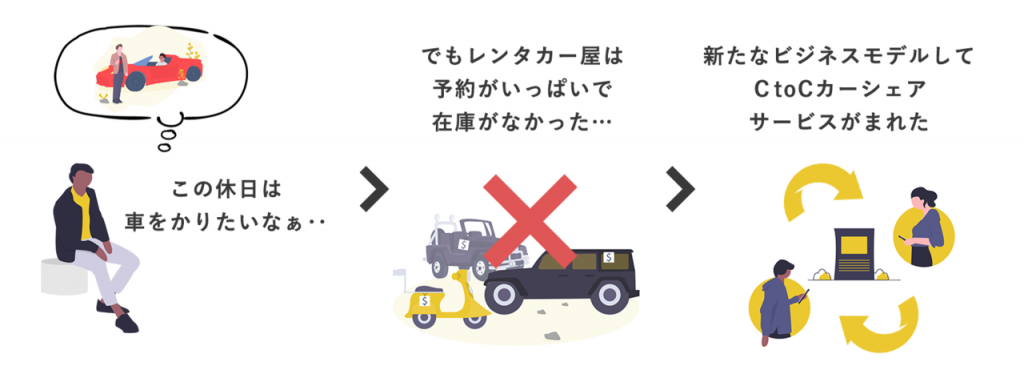
As I mentioned earlier, there are opportunities for new businesses when the problems you are facing or the issues you or society are facing cannot be replaced by existing services.
(i)Would you really want to use the service you created, even if you had to pay for it?
(2)Understand the Burning Needs of Your Customers
What are the Burning needs here?The "pressing issues that need to be resolved now."For example, water sold for 100 yen at a supermarket or convenience store might sell for 1000 yen if it were on a desert. For example, water sold for 100 yen at a supermarket or convenience store might sell for 1,000 yen if it were in the desert. If you are thirsty, you might be able to sell it for 30,000 yen. (Although 30,000 yen may have been exaggerated.)
It is very important to find out "what" the people who are in need, even if they are willing to pay 30,000 yen, are in need of!
If you just write down the "problems you want to solve even if you have to pay for it" on a daily basis, you may come up with new business ideas.
Step 2 Consider solutions
Once you have come up with an issue, then think of a means to solve it, a solution.
For example, the earlier mentioned "I want to use my car!" There are a variety of solutions to the challenge of "I want to use my car!
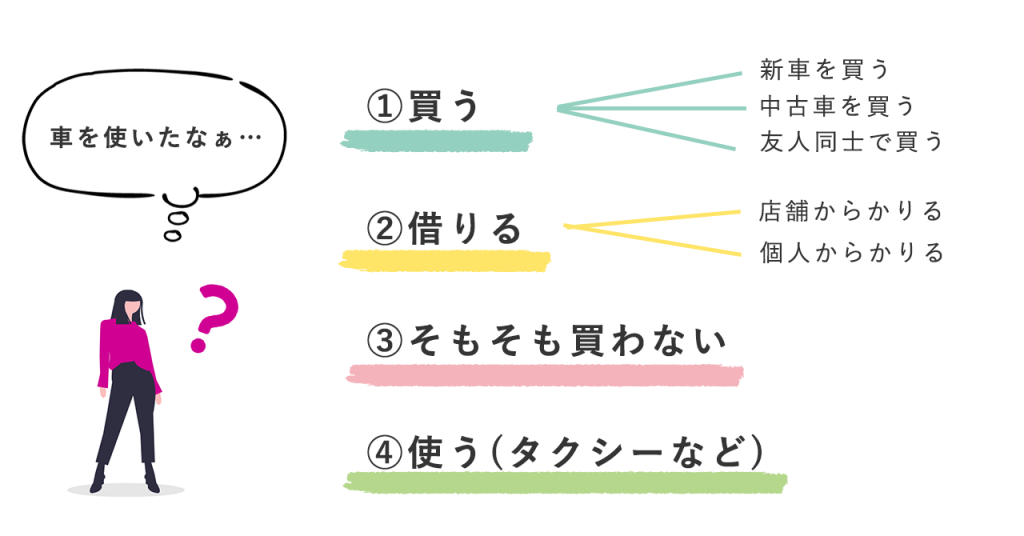
Like I mentioned earlier about car sharing,Multiply the existing problem (x) by the new business model (y), and you get a new product direction (z).
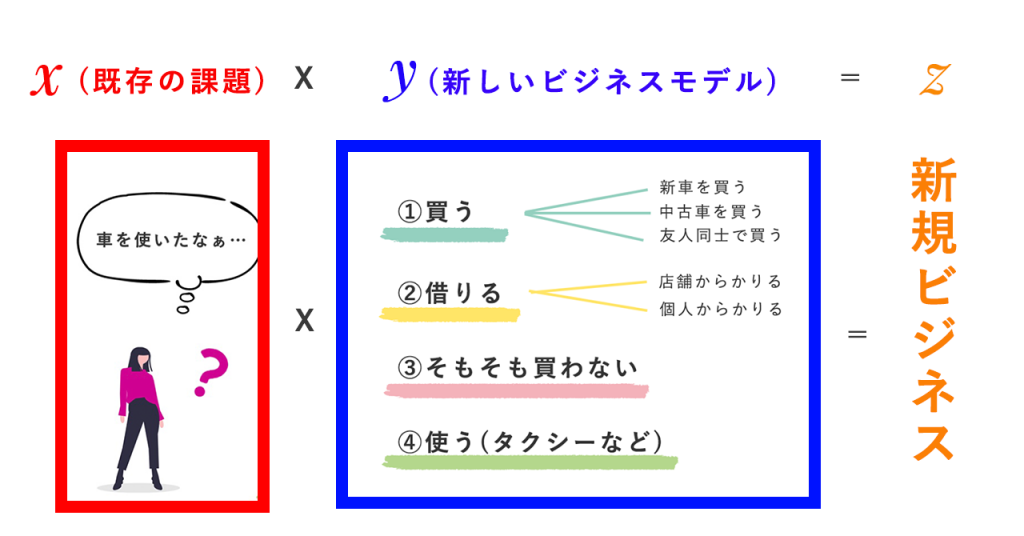
The important point at this time is,
✔ Don't blasé about X (existing issues)!
It is common to get pulled into the means when thinking about a business model and lose sight of the problem you are trying to solve by thinking, "If this is a C-to-C service, then maybe clothes would be better than cars! and lose sight of the problem you originally wanted to solve. If this happens, the question becomes, "So, what do you want to do in the end? And then you end up with "So, what do you want to do? First of all, let's give it a try.
✖ Solution→Issue
0 Problem → Solution
Step 3 Write a Lean Canvas
So far, who and what are the issues and how to solve them?
Once you have identified the "what" and have some sense of direction, the next step is to fill in the Lean Canvas.
The Lean Canvas is a single piece of the business model.
Lean means "no waste" in English. In other words, Lean Startup is an entrepreneurial methodology that involves creating a small business, and if there is a problem, immediately eliminate the waste to correct the course.
https://teams.qiita.com/guide/more-application-qiita-team/about-lean-canvas/
Here, we will also write down possible monetization plans.
(* Basically, the verification process follows the order of this Lean Canvas.)
Step 4 Write a business model
It is important to clearly define information such as people, goods, and money, as well as user issues and the products that solve them, and to organize user movement and money flow.
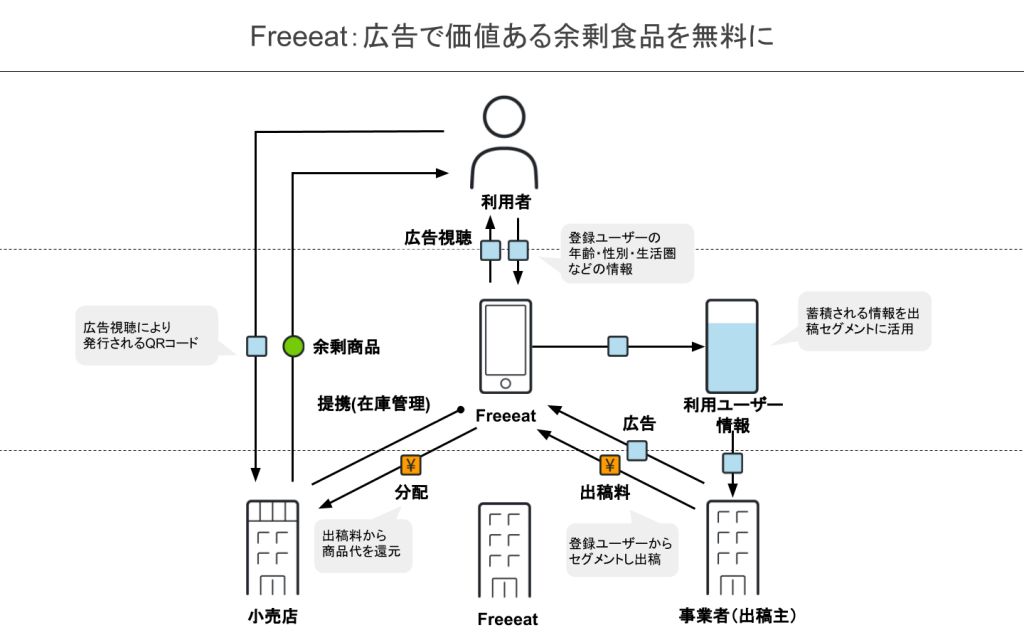
Once you have organized the information as described above, review it from a bird's eye view.
If you have a Lean Canvas and a business model, you can generally tell the other party who and what problem you are going to solve and how you are going to solve it, without having to prepare a pitch document.
What are the criteria for evaluating ideas at STARTUP STUDIO by Creww?
STARTUP STUDIO by Creww is accepting applications from people who already have an idea. The following criteria will be used for selection.
Novelty
Feasibility (time frame must be feasible within 6 months)
Social
Scalability
SDGs Relevance
We also consider whether the company has an objective viewpoint that includes milestones in product development, the story of the sale, the size of the market, and competitors and benchmark companies.





 JA
 EN
