


In this program, three companies, Shinano Kenshi Corporation of Ueda City, Nagano Prefecture, Sanyu Plant Service Corporation of Sagamihara City, Kanagawa Prefecture, and Otsuka Industrial Materials Co. of Nagahama City, Shiga Prefecture, aimed to co-create with startup companies. A total of 97 proposals were received from startups in response to the visions and themes of local companies, and through phases including document screening, discussions among the persons in charge, and executive presentations, six cases of co-creation were ultimately created. The program plans to start demonstration experiments for each case study this fiscal year, and to work toward the creation of new value through repeated dialogue and trial-and-error between the companies.
In this issue, we will report on the results of the "REGIONAL GROWTH ACCELERATOR CHALLENGE 2020," which was held on March 12, 2021. and the second part.
Case2:Open innovation case study by Sanyu Plant Service Co.
Case 3: Open Innovation Case Study by Otsuka Industrial Materials Co.
Summary of the REGIONAL GROWTH ACCELERATOR CHALLENGE 2020
Case1: Open innovation case study by Shinano Kenshi Co.
Founded in 1918, Shinano Kenshi (ASPINA) is a global company that develops and manufactures a wide range of hardware products centered on precision motors. With an overseas production ratio of 90% and an overseas sales ratio of 80%, ASPINA is creating a world where people can feel "hope" and "comfort" by providing a wide range of solutions that meet the needs of customers worldwide.
Currently, we are developing four business fields: home appliances and housing, medical and welfare, automation, and automotive. Our strengths are custom design, one-stop support from start-up to mass production, and low-volume, high-mix technology.
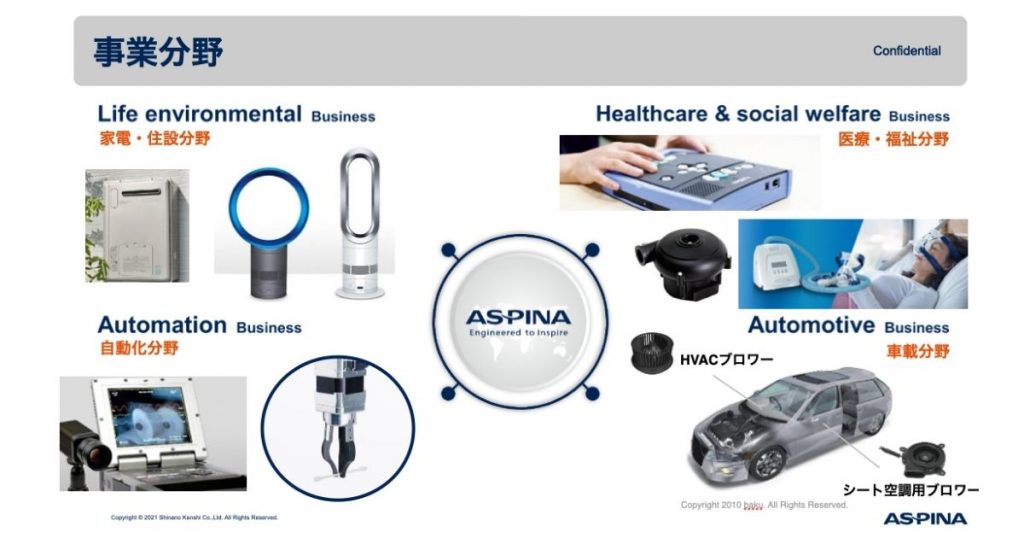
What did we want to achieve with this project?To create new business pillars that respond to the accelerating changes in the environment in order to continue to offer hope and comfort for the next 100 years.It is. And instead of creating products on our own, we aimed to create new value through open innovation with startups.
Three things I expected from a startup: cutting-edge technology, out-of-the-box ideas, and speed.We wanted to create products and services that will be needed in the future by crossing the strengths that ASPINA possesses.
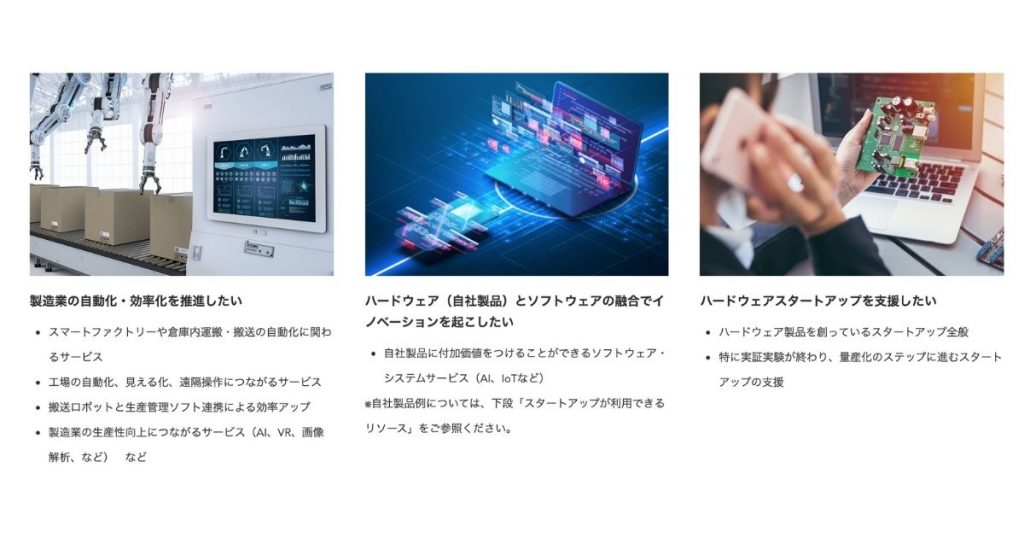
After accepting entries from November 20 to December 5, 2020, we received applications from 33 companies and held individual meetings with 14 companies after screening the applications. After screening the applications, individual meetings were held with 14 companies, leading to the start of the demonstration experiment with two companies.
<project 1: Joint development of a new powered prosthetic leg with BionicM Inc.
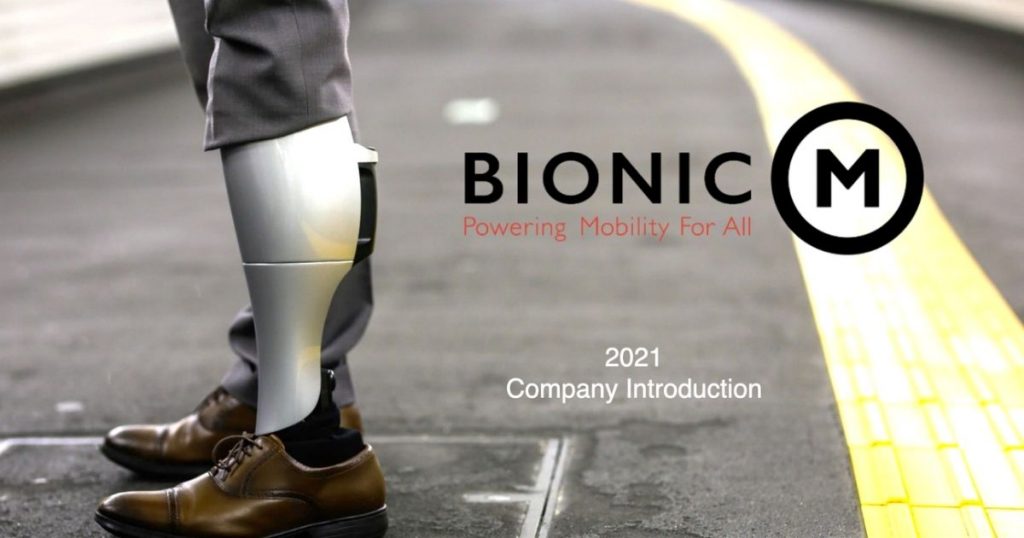
The first is a collaboration with BionicM Corporation, a startup from the University of Tokyo that develops powered prosthetic legs that use robotics technology to assist the user's movements.Together with the company, which was founded in 2018, we will develop a "new powered prosthetic leg" using ASPINA's technology.
What we want to solve is the issue of daily movement for the approximately 12 million lower-limb amputees worldwide who are unable to move freely on their own legs. One person loses a leg every 30 seconds due to diabetes in the world, and the prosthetic leg market is an oligopoly dominated by three European companies,
The 99% prosthetic leg on the market is a "passive prosthetic leg" that is not powered, so even going up and down stairs in daily life is not easy, and the fear of falling and the strain on the legs and back are major issues for prosthetic leg users.
Therefore, in order to provide "freedom of movement and enjoyment" to all, we are proceeding with demonstration experiments aimed at improving the performance of current BionicM products.
.
The second company is Fan-Time Corporation, a startup that has improved the efficiency of several major companies' production sites by more than 30% through the use of IoT and other digital technologies.
In Japan, small and midsize companies have lagged far behind their larger corporate counterparts in the shift to DX. This is due to a lack of knowledge about digital, a lack of images, and step-by-step challenges such as not being able to proceed with specific development even if an image is created, or not being able to make changes afterwards even if development is completed.
Therefore, by utilizing Fam-Time's software and data analysis know-how and ASPINA's domestic and overseas manufacturing sites and data acquisition sensors, we will jointly develop a "step-type" DX service that is easy to introduce, tailored to the needs and phases of each medium- and small-sized company.
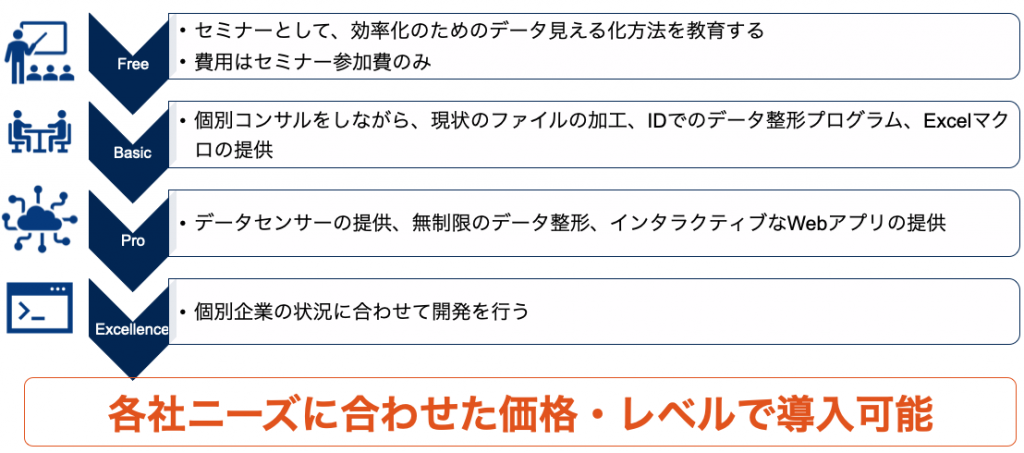
In the demonstration experiment, we aim to improve productivity and quality by "visualizing data" within ASPINA. Ultimately, we hope to provide a new total solution by linking the various hardware developed by ASPINA with Fam-Time's proprietary software.
Results and Future Activities
One of the major achievements of this year's event was that we were able to make new connections with startups and uncover two collaborative themes. We are particularly proud of this achievement because we had been unable to discover new business ideas on our own due to the Corona disaster.
Open innovation between business companies, startups, and universities is essential to survive in the coming era of rapid change, and the entire ecosystem needs to be strengthened. Through this initiative, we have reaffirmed that if we proceed with a proper understanding of each other's strengths, it will lead to new businesses, and we would like to continue our proactive activities to create innovation in the future.
Case2:Open innovation case study by Sanyu Plant Service Co.
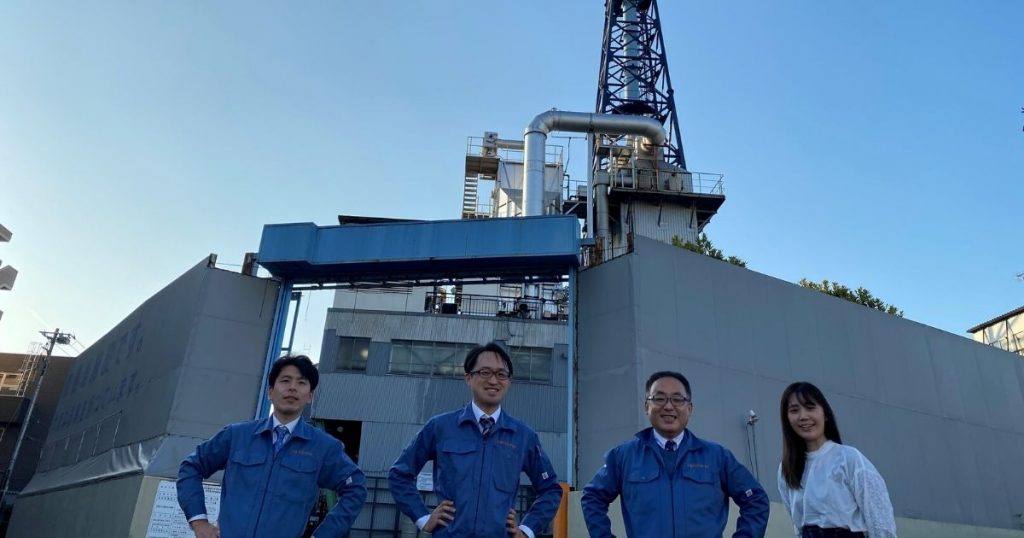
Founded in 1948, the Sanyu Group is a one-stop solution company that protects the environment and resources by providing collection, transportation, intermediate treatment, and final disposal of industrial waste disposal as well as addressing various issues in the environmental field.
Throughout Japan's postwar history of economic growth and environmental regulations, we have continued to grow by responding to pollution and preserving the living environment, and by properly taking on the needs of our customers. In the future, however, Japan's production and consumption are expected to shrink due to a declining population and aging society with fewer children, and the volume of waste is also expected to decrease.
Furthermore, in Japan, where natural resources are scarce, the role of the Sanyu Group is changing due to the need to promote recycling-oriented use of resources and energy.
That's where the Sanyu Group comes in,A new message for a recycling-oriented society: "Look to the future for waste" in order to see waste not as waste, but as a resource that will lead to the future.The company has set forth the following
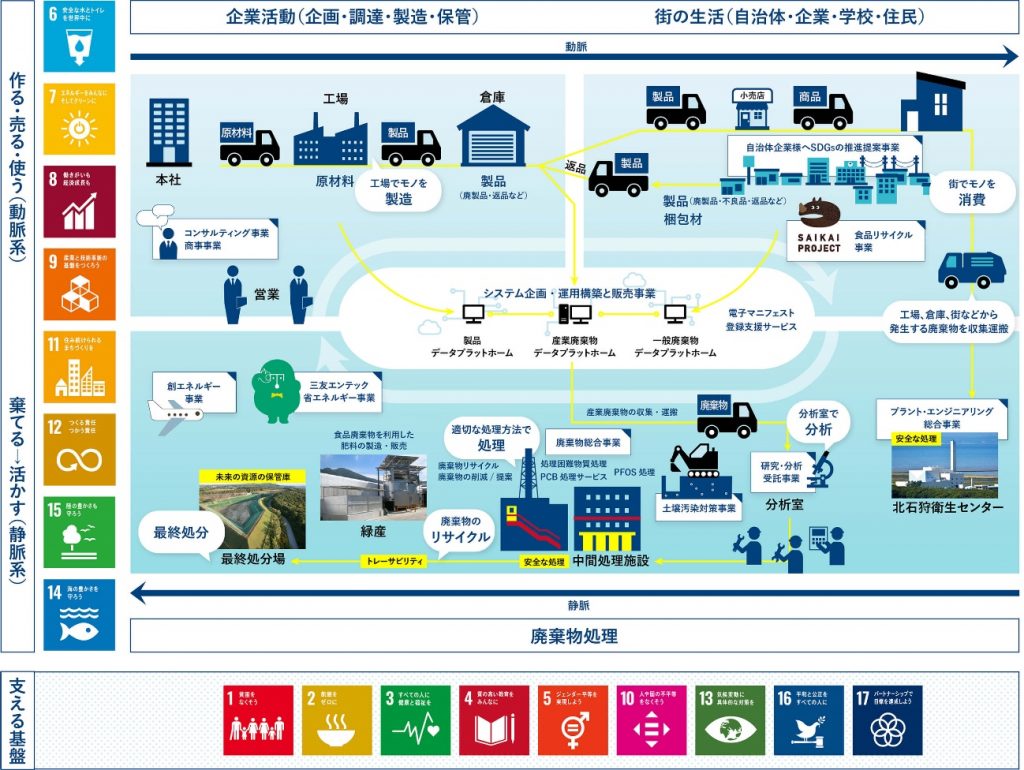
And to contribute to the new administration's stated goal of "virtually zero greenhouse gas emissions by 2050," we are accelerating various initiatives in areas such as recycling, reuse, energy, and food. Already, the company is promoting "coffee bean dregs recycling" with Starbucks and production of domestically produced jet fuel from waste with a startup.
In this accelerator program as well, we wanted to work with technology and IT startups to develop new perspectives and ideas for environmental and energy-related initiatives.
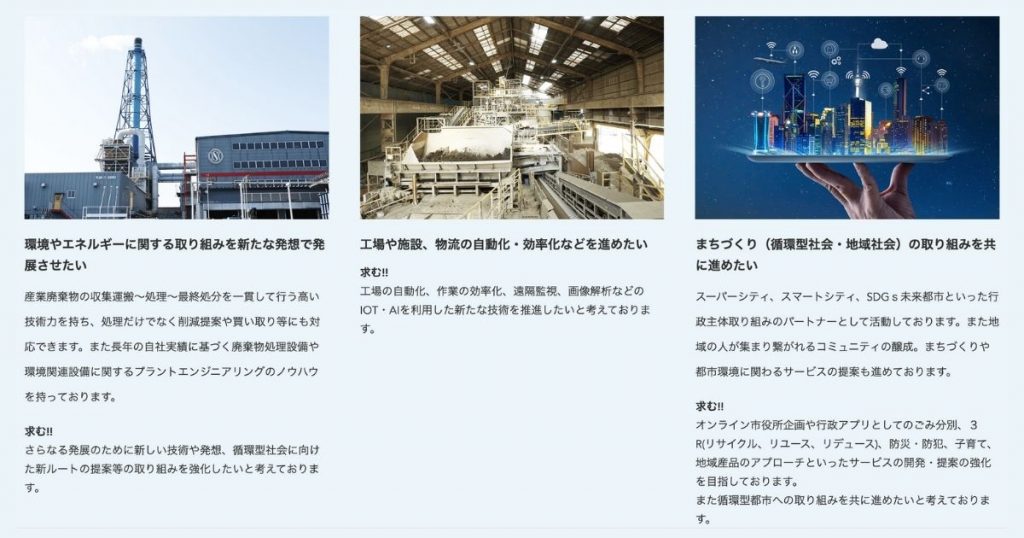
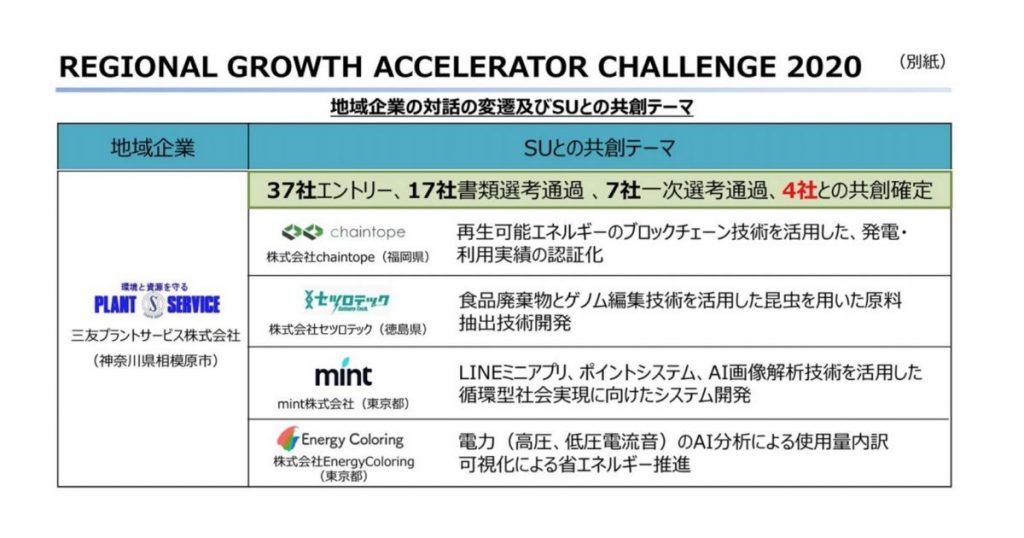
After accepting entries from November to early December 2020, we received applications from 37 companies, and after document screening and discussions, we finally decided to start the demonstration with a total of 4 companies: 2 energy-related companies, 1 IT-related company, and 1 research company.
.
chaintope Inc. is a startup specializing in the development and implementation of blockchain infrastructure technology.
Until now, the determining factor for choice has been biased toward price, as it has been difficult to see the tangible value in promoting the switch to new electric power. To address this issue, Chaintope's blockchain technology is used to visualize the flow line of renewable energy from generation to actual use. By issuing "Certificates of Use," which certify the environmental value of the new power, the project aims to establish a new business.
Certification of environmental value will allow power generators to sell to environmentally conscious companies and consumers to prove that they are using value-added electricity. Furthermore, consumers will be given "environmental value points," a local currency, based on their use of certified brands, which we hope will help stimulate consumption activities within the region.

About chaintope Inc.
A blockchain technology company whose mission is to "implement blockchain in society as a blockchain integrator". We provide a distributed DX development platform based on the public blockchain Tapyrus, and develop and provide blockchain applications at high speed. He is the author of many blockchain-related books, including "Blockchain Opens 'Atarashiiaru Keizai' (The New Economy)" (Gentosha).
Representative: Hideki Masada
Location: 530-25 Yukibukuro, Iizuka City, Fukuoka Prefecture
Capital: 320,085 thousand yen
Website:https://www.chaintope.com/
.
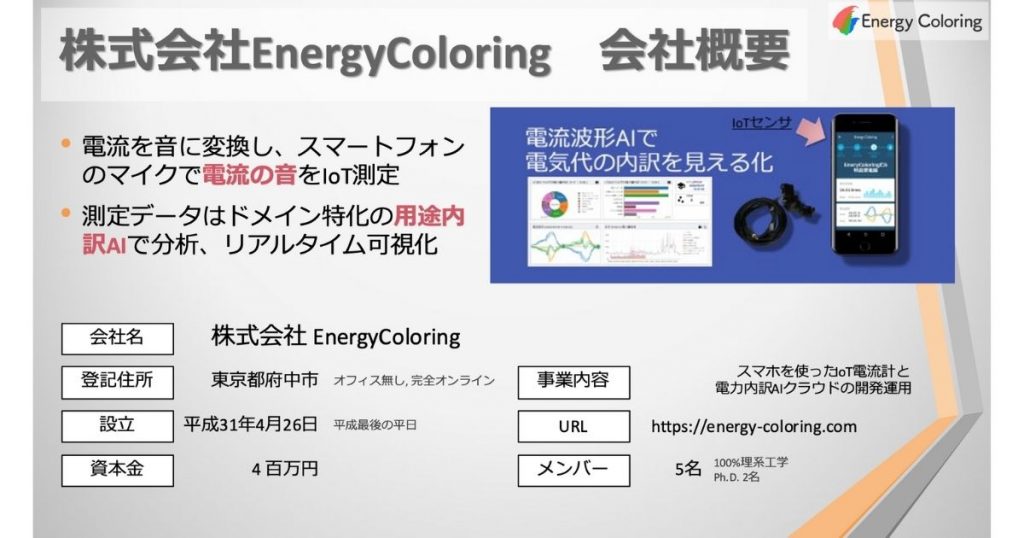
EnergyColoring Inc. is a startup that develops and operates a power consumption breakdown cloud service using current waveform AI.
Until now, even if we wanted to promote energy conservation, we did not know the amount of electricity used by each facility, such as air conditioning and lighting, and it was unclear what improvements could be made to reduce power consumption.
Therefore, EnergyColoring's proprietary technology, current waveform AI ammeter IoT, visualizes the breakdown of power usage in a top-down manner. By combining the professional human resources of the Sanyu Group, we identify facilities with large energy-saving potential and combine all energy-saving improvement solutions to promote essential energy conservation.
<project3, resource circulation by mint inc. and app.
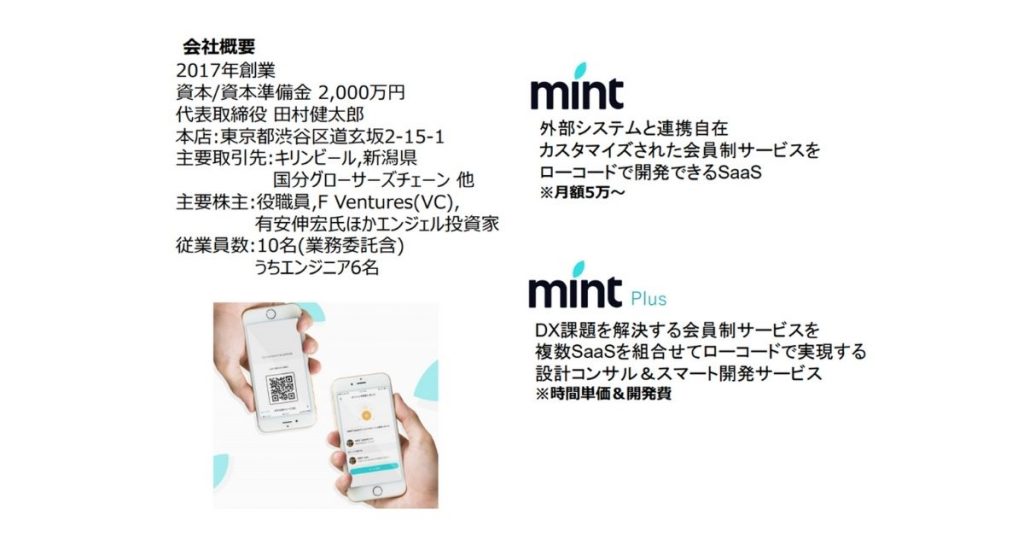
mint, Inc. is a startup that develops and operates a SaaS that allows membership services and loyalty programs to be created in low code.
To solve social issues such as fire accidents caused by waste mis-sorting, promotion of recycling, and incinerator operation that is difficult for a single municipality to realize, we plan to develop a system to realize a recycling-oriented society by utilizing applications, point systems, and AI image recognition technology.
Specifically, the data collected from residents will be used to improve the safety of disposal and promote recycling and reuse. In this way, we hope to move closer to the realization of a resource-recycling society and also contribute to environmental education from the perspective of waste separation and reduction.
<project 4, Extraction of raw materials from food waste by genome-edited insects of Seturotech Inc.
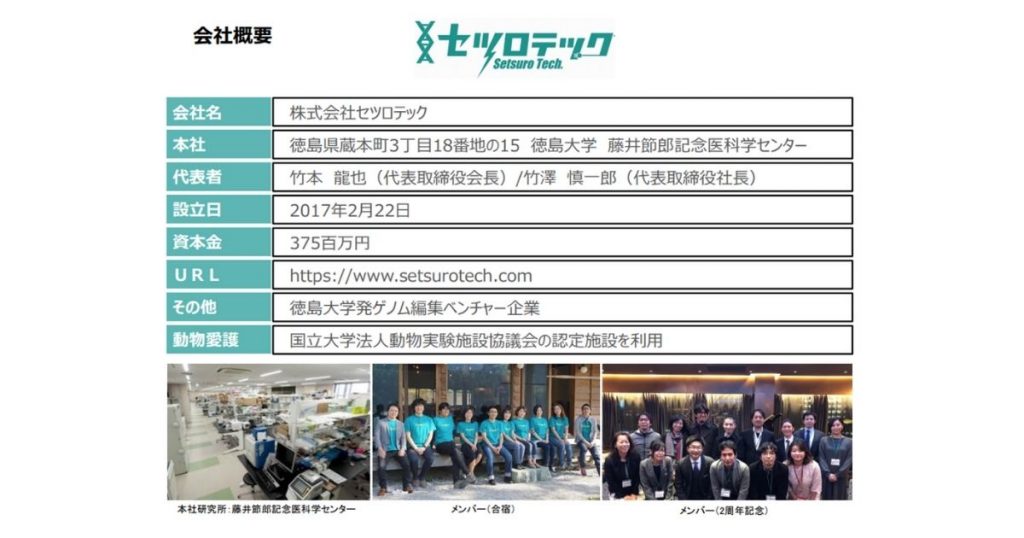
Seturotech Inc. is a startup specializing in genome editing that originated at the University of Tokushima.
What we want to achieve with Seturotech is the recycling of large amounts of food waste.
Currently, 17.67 million tons of commercial food waste, 3.28 million tons of commercial food loss, and 2.1 million tons of agricultural waste are generated annually, which has developed into a major social problem.
In this project, Setsurotec's genome editing technology will be used to research a highly efficient technology for recovering active ingredients normally contained in insects used for food waste disposal.
We are also considering treating waste that is not suitable for use as feed or fertilizer, and hope to establish a system that will significantly reduce CO2 emissions compared to incineration or other forms of treatment.
The key points of this initiative are
(1) Use of web conferencing
Since face-to-face meetings were not possible due to the Corona disaster, remote meetings were held via the Web, focusing on key points for each phase.
(2) Involvement of related departments
Since the project was to cover a wide range of fields, we asked not only the Corporate Planning Office but also the heads of specialized departments to participate in the project.
(iii) Cooperation with management
The president participated from the selection stage at the interim point, and the president and the heads of each division participated in the executive presentations, making this a collaborative effort with management as well.
The goal should be to commercialize the product from a medium- to long-term perspective with the four companies that have been conducting demonstration experiments.
And by continuing to actively engage in open innovation and collaboration with other companies, we hope to gain recognition that the Sanyu Group is proactively taking on new challenges.
Case3: Open Innovation Case Study by Otsuka Industrial Materials Co.
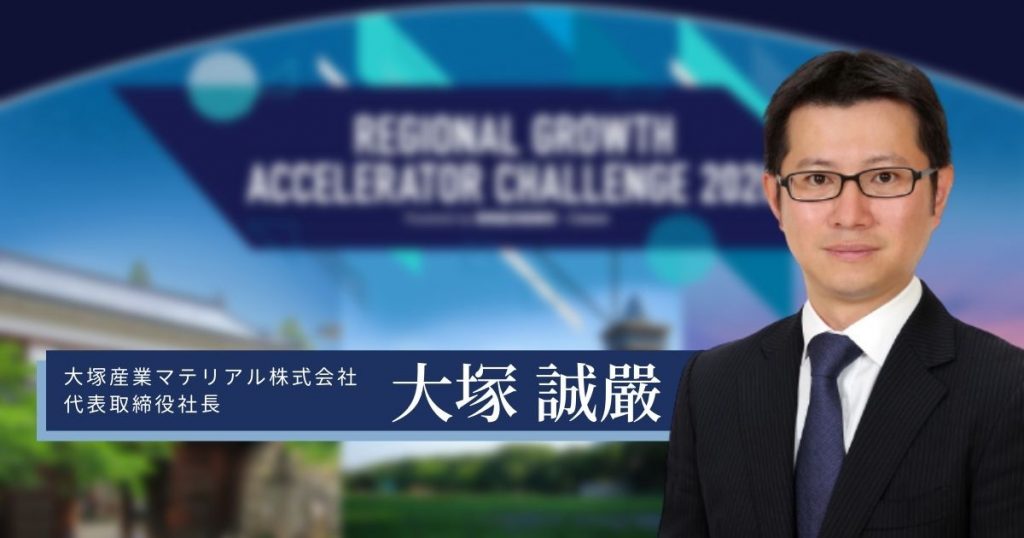
Otsuka Sangyo Material Co., Ltd. was founded in 1706 in Nagahama, Shiga Prefecture, and has a history of more than 300 years. Today, with nonwoven fabric forming technology as its key technology, the company provides products with superior design and functionality in a variety of fields, from the automotive field to railroads, office furniture, construction and civil engineering, and medical and nursing care.
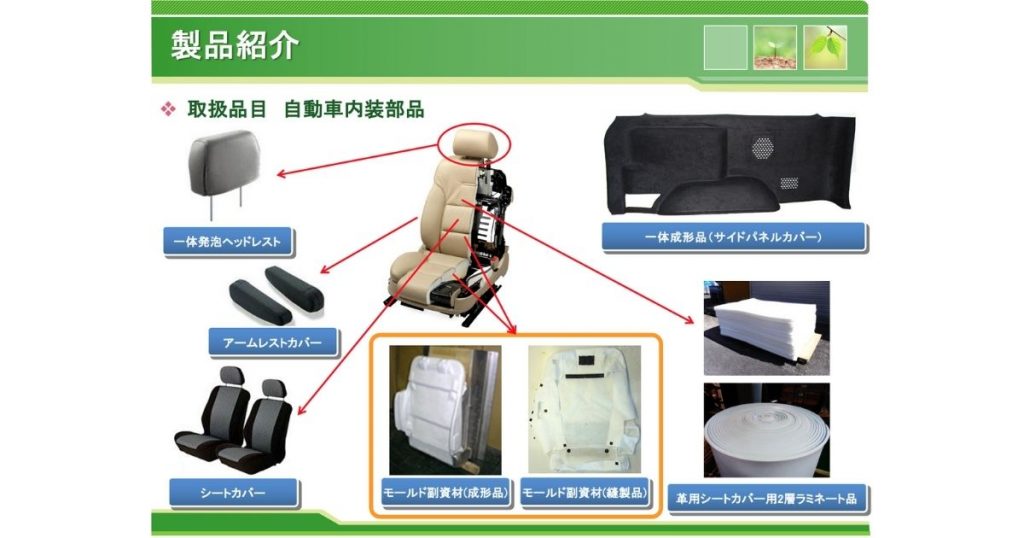
Our main products are automobile interior parts, and our products are used in approximately 70% of automobiles in Japan. We also deal in seat cushions for bullet trains, chairs and partitions for offices, and recently, nonwoven gowns and nonwoven masks for medical use.
The background of our participation in this program is the major transformation of the automotive industry, which is said to occur once every 100 years. Technology such as electrification, automation, connectivity, and sharing is advancing day by day, and the domestic market is expected to shrink due to the declining birthrate and aging population, so we, who have the automotive industry as our main domain, also needed to change.
Therefore, we wanted to create new customers, products, and applications by combining our existing technical capabilities and strengths in nonwoven fabrics, equipment, products, and other resources with the ideas and technical capabilities of a startup.
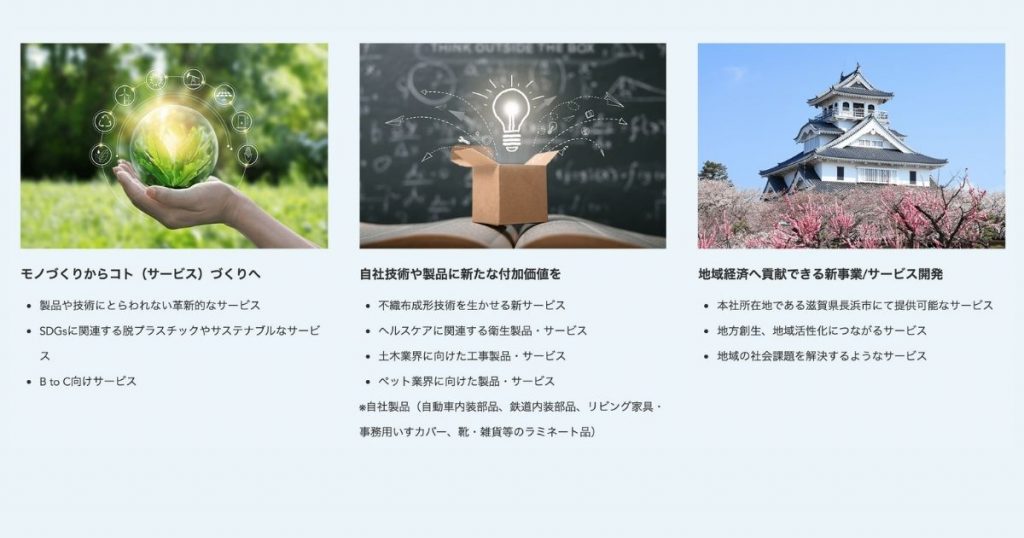
There were three areas in which we expected startups to focus, the first being "from monozukuri (manufacturing) to kotozukuri (making things). Since the wave of shift to services in the manufacturing industry is rapidly accelerating, we wanted to explore innovative services that are not bound by existing products or technologies, sustainable services, and services for BtoC.
The second was services that could provide new added value to the company's technologies and products. The third was to develop new businesses and services that would contribute to the local economy.
As a result of soliciting entries from startups, we received 27 proposals, but were unable to reach a final co-creation.
Issues for next time
In this effort, I believe there are three points that need to be reflected upon.One is that when recruiting, we should have presented specifics, including the image of the partner we were seeking, rather than just presenting an abstract theme.I think we needed to be more specific about our business model and resources in order to get startups to want to collaborate. In order to get the startups to want to collaborate with us, we needed to be even more specific about our business model and resources.
Second, there was a need for a speedy cycle of hypothesis, verification, and direction correction.It is. Instead of drawing a perfect map and then moving on, we move forward with a simplified map in the direction we need to go. And in the process, we found that we need to verify and correct "Is this what the customer really wants?", "Is this not our own assumption?", and "Is this a viable business?" as soon as possible.
Third, it is necessary to think about products, services, and business models from the customer's point of view, not from a product-out perspective.It is. We lacked the experience and knowledge to generate business from the potential needs and challenges of our customers, and it was a major regret that we could not take the initiative to move forward successfully.
In the future, I would like to continue to challenge open innovation, taking advantage of my reflections and lessons learned from this experience. Open innovation is a means, not an end. We would like to create a better future by partnering with companies that have ideas and technological capabilities that we do not have, based on a clear objective and vision of what we want to achieve in the medium to long term.
Summary of the REGIONAL GROWTH ACCELERATOR CHALLENGE 2020
This program has resulted in six new cases of co-creation between local companies and startups. Open innovation, which is a common method used by major companies to create new businesses, has not yet spread to many regional companies. However, it was found that regional companies with a sense of speed in making management decisions are attractive as open innovation partners for startups. The Kanto Bureau of Economy, Trade and Industry (METI-Kanto) will continue to encourage regional companies to create new businesses through collaboration with a variety of players through a variety of measures.
(Reference)
REGIONAL GROWTH ACCELERATOR CHALLENGE 2020
https://www.kanto.meti.go.jp/seisaku/open_innovation/accelerator_challenge2020.html
REGIONAL GROWTH ACCELERATOR CHALLENGE 2020
https://accele.creww.me/collaboration/kanto-2020-11
Kanto Bureau of Economy, Trade and Industry, a hub for open innovation between small and midsize companies and startups
https://port.creww.me/featured/68636
Open Innovation Matching Square
https://jgoodtech2.smrj.go.jp/lp/oi-matchingsquare





 JA
 EN
