


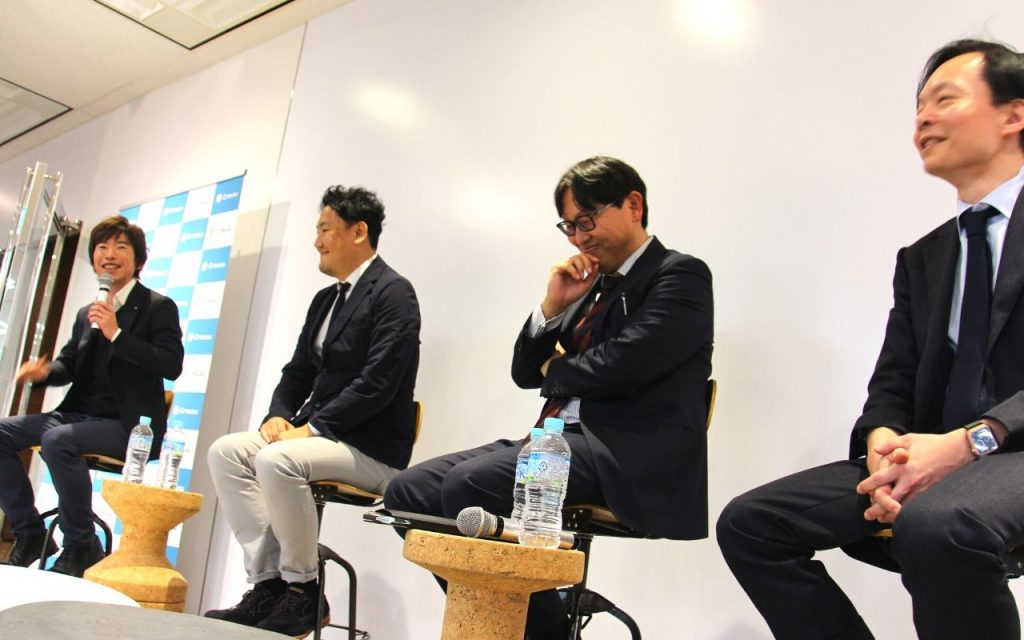
The role of "cities" is also important in forming a startup ecosystem. Tokyo, where human resources, business opportunities, and funds are concentrated, is attracting attention as an important base for such a system. In this issue, we discussed the current status, issues, and future direction to be taken by the public and private sectors that are responsible for the formation of the startup ecosystem.
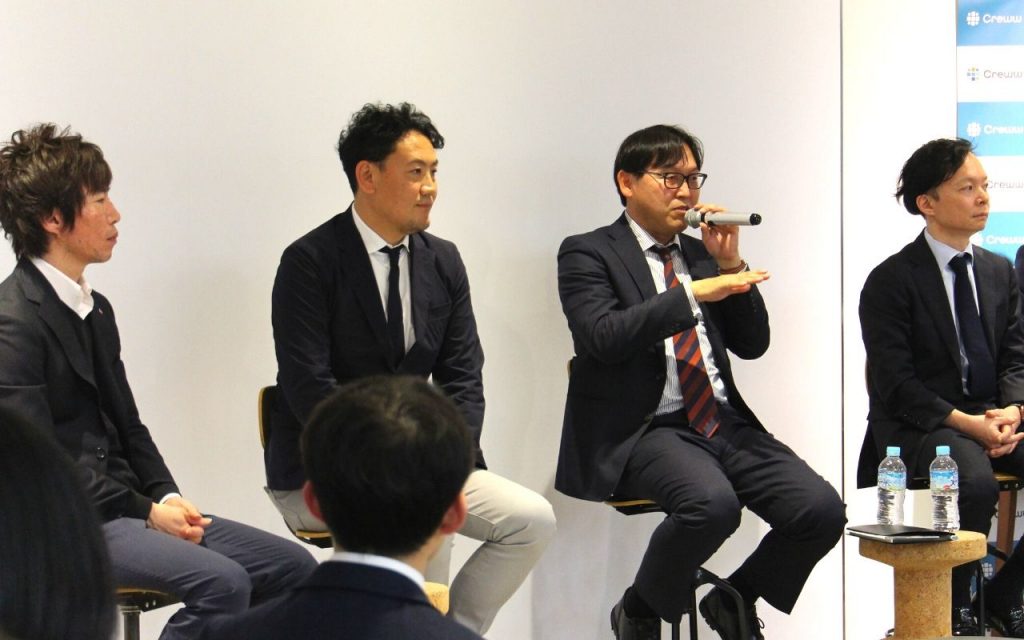
Masashi Yonezu, Director, Special Zone Promotion, Strategic Policy Information Headquarters, Tokyo Metropolitan Government
Hirofumi Kondo, President and CEO, CyberAgent Capital, Inc.
Ten Ijichi, CEO and Representative Director, Creww K.K.
Although the tide has turned in 3 years, cash is not enough.
-Ijichi-san and Kondo-san, what do you think about the current state of the startup ecosystem from your respective perspectives?
Alethea triandra var. japonica (variety of kangaroo grass) I founded Creww in 2012 to increase the number of "people who take on challenges," which was far fewer than in Europe and the United States. Since then, I have been working to match startups with large companies that want to create new businesses, thereby accelerating the creation of new businesses for large companies and the growth of startups.
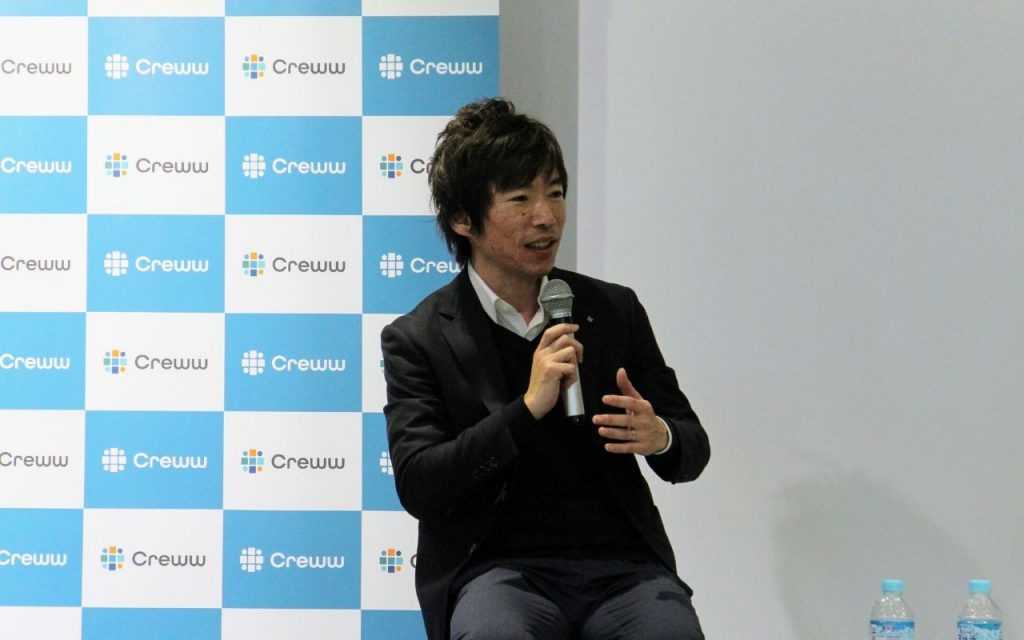
I feel that Japan is weak in building a startup ecosystem compared to Europe and the U.S. In Silicon Valley, the key players are angel investors. In Silicon Valley, angel investors are the core and key players, but in Japan, the key players are large corporations.
For the first few years, when we proposed to large companies that we work with startups on new projects, we were never taken seriously. What is an accelerator program? However, the tide has definitely turned in the past two to three years.
Finally, in April 2020, an "open innovation promotion tax credit (*1)" will also be established. I believe that this will make it easier for startups to accelerate their growth and for operating companies to work on new businesses. In Japan, which is a country with advanced issues, it should be possible to create new value for society through collaboration between large companies and startups. I believe that the accelerator program can also serve as a hub for "university-launched technology seeds," which have a high hurdle for social implementation.
What is the "Open Innovation Tax Credit"?
In order to promote the supply of new capital to startups that will lead innovation and lead to growth, a 25% income tax deduction is applied to investments of 100 million yen or more from domestic business companies and CVC (Corporate Venture Capital) in venture companies that have been established for less than 10 years and are not listed on the stock exchange. The tax period is from April 1, 2020 to April 30, 2040. The period of application is from April 1, 2020 to the end of the fiscal year 2021.
In the "Growth Strategy Action Plan" (approved by the Cabinet on June 21, 2048), it is stated that "in order to maximize the potential of the 4th Industrial Revolution, existing companies must break away from the closed, self-contained organizational management of human resources, technology, and capital, and shift to open, collaborative organizational management.
It is necessary to make the transition".
The purpose of this project is to promote open innovation that makes maximum use of the resources of existing companies and to foster unicorn-level ventures, thereby strengthening the international competitiveness of Japanese companies in the fourth industrial revolution.
Kondo. The challenge for Japan is the overwhelming lack of cash compared to the U.S. and China. In the U.S., startup investment is about 10 trillion yen, but in Japan it is only about 200 billion yen. I feel that the challenge is how to bring this to a global standard.
-While the tide has been turning for the past few years, cash is not enough.
old valley It is true that the amount of investment in startups in Japan is low, so we are working with the Innovation Network Corporation of Japan to facilitate this investment. At the same time, we are keenly aware of the need for mechanisms to promote the merits of Japanese startups at global conferences and summits, so we are also working to improve these areas.
America Mr. Ijichi, I often hear from university professors that people from business companies (large corporations) are the key players when it comes to commercializing technology seeds. What kind of person from a business firm would have a higher chance of success if the university were to get involved?
Alethea triandra var. japonica (variety of kangaroo grass) I believe that start-ups, not operating companies (large corporations), should be responsible for commercializing university technology seeds. In fact, we receive many requests from universities for introductions to entrepreneurs and start-ups.
Open innovation fails when sales targets are set as outcomes.
-What makes the difference between life and death for open innovation and what is needed to take the effort to another level?
Alethea triandra var. japonica (variety of kangaroo grass) There are programs that work and programs that don't work, and there is a pattern. It is generally said that the difference between life and death for open innovation is "whether or not there is commitment from the top," but that argument has already come full circle.
What does not work is a program in which the business company places the results of open innovation as its sales target. Even if they set a sales target of 50 billion yen, it is almost impossible to suddenly create that level of sales scale, and it is not reproducible. So, those who work hard will lose out. Of course, that does not produce a happy outcome for startups either.
The important thing is to create an organization that can continuously create new businesses, so it is necessary to set incremental stages and think in terms of, for example, "success will be achieved if we reach stage 8 in three years. Having indicators and evaluation axes that everyone can agree on will be a step toward making open innovation a success.
old valley Last year, the Ministry of Economy, Trade and Industry asked the Japan Venture Capital Association to conduct a survey on the differences and challenges between Japanese and global CVC activities. Then, we found that Japanese CVCs emphasize "strategy" out of "strategy" and "financial return," while global CVCs pursue both.
Global's reporting line is dominated by technical managers, who understand the company's technology, clarify what the company lacks and what can be achieved with the wisdom of other companies, and incorporate these into business strategies, resulting in monetary returns.
On the other hand, many Japanese reporting lines are dominated by officers in charge of strategy, and they start with investment first. So I would like to continue our efforts to create a successful case study by clarifying business and technology strategies.
America Until now, TMG has focused on matching people with each other and has not gone beyond that, so we need to make efforts to properly resolve the issues.
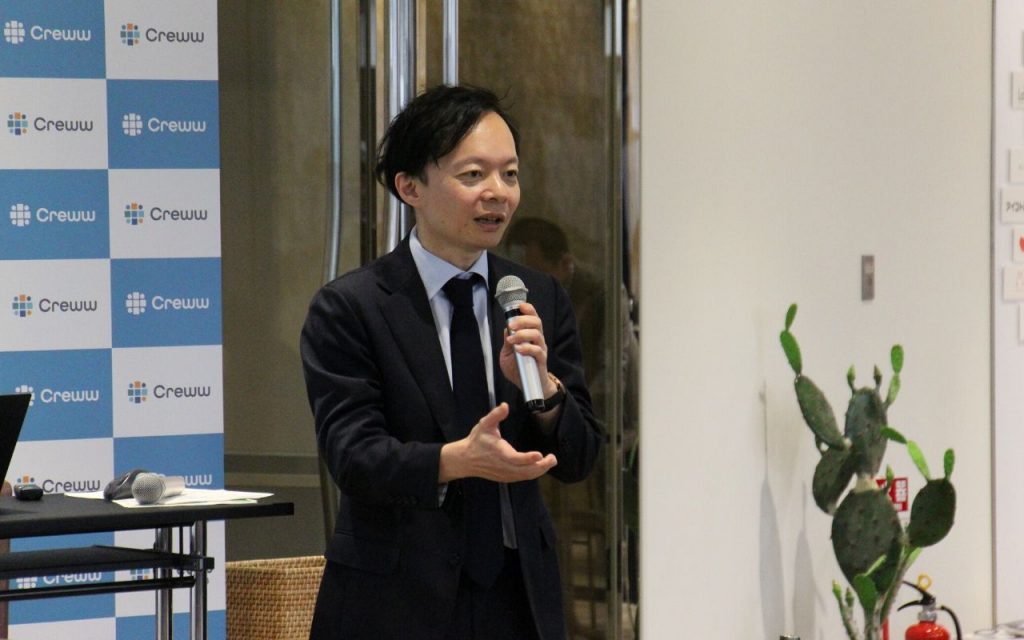
Alethea triandra var. japonica (variety of kangaroo grass) For example, Kanagawa Prefecture held the "Mibyo Summit" and announced the levels of the process from "unwell" to "sick. Similarly, if the Ministry of Economy, Trade and Industry (METI) and the Tokyo Metropolitan Government (TMG) were to take the lead and announce an evaluation axis for open innovation by dividing it into levels, it would make it easier for people to work on creating new businesses. It would be good if it were created through public-private partnerships, rather than visualization by us.
Kondo. It would be nice if we could also create a culture where people who promote open innovation are valued and the challenge itself is appreciated.
Supporting people who can take on the world through public-private partnerships
-Are there any mechanisms for creating startups with an eye toward global expansion? Also, what do you think are the requirements for a startup to be successful on the global stage?
Kondo. In Japan, the cost of living is low and safe, and the start-up costs are low enough to go public, so there was no need to venture out of the country. On the other hand, Korea's domestic market is small, so in many cases, teams and business models are built from the start to be able to target Asia and the United States.
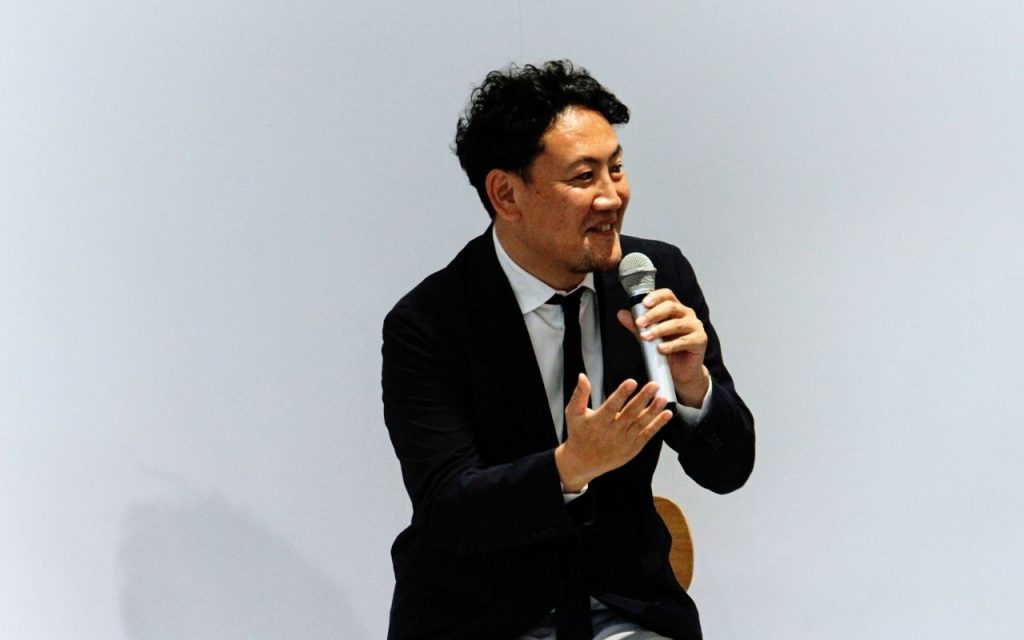
However, more and more Japanese startups are going to the US and London these days to tour VCs on their own. If the government and Tokyo Metropolitan Government, as well as VCs, can provide support from an early stage to those who are ready to take on such global challenges, I believe we can connect them to opportunities.
Alethea triandra var. japonica (variety of kangaroo grass) Some people think that "we should first take the domestic market and then expand overseas," but since Japan's population is declining, it may be important for both entrepreneurs and investors to have the mindset of going out of the country from the beginning.
America We need to find out what we can do as an administration for those who want to go global from the beginning. I hope we can set a precedent with something like the "Global Challenge Quota" and increase the number of people who follow in its footsteps.
Kondo. On the other hand, I think it is also meaningful to attract foreign start-ups to Japan. In fact, when we invited Indonesian and Korean startups to Japan, they really liked the Japanese environment, so we would like to continue such activities.
We want to ease regulations and increase the number of startups that can compete globally.
-If you have any issues or direct requests to the Tokyo Metropolitan Government and the national government to develop the startup ecosystem in Tokyo, please let us know.
Alethea triandra var. japonica (variety of kangaroo grass) There is a tax credit for investments, but I would like to see a credit for expenses spent on projects and an expansion of the R&D tax credit. To increase the number of startups in the seed phase, I would like to see deregulation of investment-based crowdfunding, and to make it easier for new initiatives such as ride-sharing (laughs).
It is wonderful to create unicorn companies, but I would be happy if you could also create a system that shines a light on those who are trying to launch businesses that benefit society.
Kondo. I have two requests. The first is to have unlimited working hours for white-collar workers, which is the foundation of competitiveness. This is not because I want them to work more (laugh), but because while startups in the U.S. and China are working as hard as they want and making an impact on the world, Japanese startups are hampered by their working hours. If this situation continues, the gap between Japan and the rest of the world will widen.
Another request is visa relaxation. There are many overseas engineers who say they want to work in Japan once they come here, so we would like you to consider, for example, easing visa requirements for highly skilled engineers.
old valley We recognize the need for regulatory reform and would like to review and update the system. We also want to create a role model where startups are seen as cool, so we want to push up mega-ventures in the upper tier as well as broaden their base. We would also like to consider measures to focus on university laboratories and local startups.
 Tomomi Tamura
He joined Snow Brand Milk Industry in 2000. He then worked for an advertising agency and as a sole proprietor before joining BizReach in 2012. Engaged in content creation, he joined NewsPicks in 2016 as an editor on the BrandDesign team, and is now a freelance writer and editor.




 JA
 EN
