


Natsume Research Institute's "Pupil Response Analysis Technology" is a technology that quantifies human emotions based on pupil responses. A simple example of its use would be a lie detector.
The pupil of the human eye expands when there is interest, and contracts when there is no interest. This is due to the sympathetic and parasympathetic nerves, in short, the autonomic nervous system, which we cannot control ourselves.
Natsume Research Institute's strength lies in its technology that removes noise such as light/dark reactions of visible objects and extracts only true interest and attention using a proprietary algorithm.
Tadashi Usukura, President of Natsume Research Institute, said, "If we could read the emotions of people watching video from their pupil responses, it would open up the possibility of collaboration with entertainment companies." He said he entered the "Shochiku Accelerator 2019" because of his hope that this would be a great opportunity to collaborate with entertainment companies.

What are the results of the demonstration experiment through open innovation by Shochiku and Natsume Sogo Research Institute?
In a demonstration experiment conducted by Shochiku and the Natsume Research Institute, monitors were asked to watch trailers and special features of several movies to test whether there is a relationship between effective trailers and pupil response. If there is a relationship between this and box-office revenues, then this could potentially be useful for future trailer production.
Wouldn't empirical experiments suggest that the attention span at the beginning of a trailer is of high interest? Would a trailer that ends with a high level of interest in the last part of the trailer be effective? We tested various hypotheses such as the following.
A work with a high level of attention on average. Works with large swings in the level of attention and emotional ups and downs. Works that have a high level of interest overall, and that also have a lively response in the latter half of the work. Works that gain momentum in the second half but lack interest as a whole," were among the results obtained through this demonstration experiment.
They were hoping for the possibility of utilizing the advertising aspect, but the results of the demonstration experiment suggest that it may be a tool to assist in effective editing.
Behind the scenes of the demonstration experiment between Shochiku and Natsume Research Institute
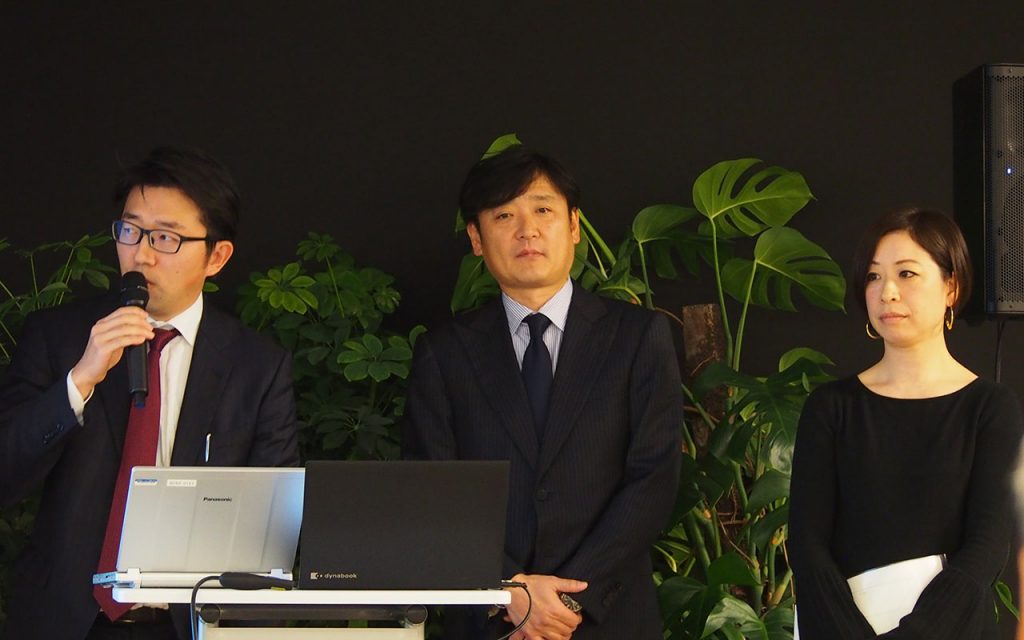
Ms. Yuka Matoi / Media Division, Shochiku Co.
-What kind of demonstration experiments did you actually conduct? Were there any difficulties in the process?
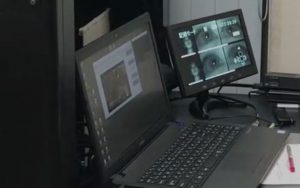
Fumishu Kusunose (hereafter, Kusunose), Shochiku Representative:We focused on the relationship between interest and box office performance through a technique that analyzes interest in terms of pupil movement, but formulating the actual box office performance was difficult because there are many factors other than pupil response. Another challenge was the time lag before the data could be analyzed because the monitors had to assemble at an arbitrary location to take the data using a special PC.
-How did you overcome that challenge?
Shochiku Contact: Yuka Matoi:Shochiku had an environment within the company where we could consult across departments, and we received a lot of cooperation, especially from the field of marketing in the video department, which gave us access to these insights and allowed us to continue with the demonstration experiment. We also realized that it would be more effective if the usage scenarios were more limited and more focused on on-site operations, and we were able to identify possibilities for moving forward to the next step.
For example, it could be used as a tool to "quantify" and check whether a particular cut of video is actually having the effect intended by the director.
-What do you notice from your involvement in the Accelerator Program as a Brush Up member?
Kusunose:The cost of analysis and the fact that it cannot be contained within a normal production budget have also hindered its widespread use. Further improvements in the sensor performance of smartphones and other cameras that can be used at the personal level will make it possible to analyze pupil accompaniment from a remote location, which will help improve the speed of analysis. The field of analysis of the five senses and brain waves is experiencing accelerating global competition for development, and practical application seems to be only a matter of time.
Although I understand that there are difficulties in performance management because the results are not immediate, I felt that we should not make judgments based only on short-term project income and expenditures, but rather work on an ongoing basis to increase the sensitivity of literacy in this area.
| name of company | Natsume Research Institute |
| Establishment | July 16, 2013 |
| capital stock | 25,970,000 yen (as of November 1, 2017) |
| representative | Tadashi Usukura |
| Business Overview | Basic research on pupil response Development of measurement methods, analysis logic, and (optimization) solutions to utilize the information (data) obtained from pupil response in various fields Planning and implementation of experiments for practical use, collection, analysis, and evaluation of information, and development consulting regarding equipment and software Various surveys and consulting using proprietary technologies Emotion analysis by measuring facial expressions |
| uniform resouce locator | http://natsumelab.co.jp/ |
| name of company | Shochiku Co. |
| Location | Togeki Building, 4-1-1 Tsukiji, Chuo-ku, Tokyo 104-8422, Japan |
| Establishment of Business | Established: 1895 Established: 1920 |
| capital stock | 33,018,656,000 yen (as of February 28, 2019) |
| representative | Junichi Sakomoto, President and Representative Director |
| uniform resouce locator | https://www.shochiku.co.jp/company/ |





 JA
 EN
