


What is "Sake Navi," a service that allows you to easily determine your sake preferences on the Internet?
Offered by sake startup Sake Street Co,Web service that uses machine learning results to easily determine preferred sakeThe following is a list of the most common problems with the
Using data collected through joint research with Tomoko Ishijima, Assistant Professor (Laboratory of Food Functional Science) and Keiko Abe, Professor (Laboratory of Taste Science) at the Graduate School of Agricultural and Life Sciences of the University of Tokyo, and a judgment program developed by the company using machine learning, a highly accurate judgment is made possible.
Food, fruits, drinks, etc. to judge.Completed in 1-2 minutes on the web, using only food preference dataI will do so.No visit to the store, tasting, or knowledge of sake is required.By doing so, we aim to fundamentally change the way people select sake, remove the hurdle of "not knowing how to choose good sake," and make sake more enjoyable for more people.
Features of the Sake Navigator
Diagnosistotally free
interpoint (interword separation)No tasting or store visit required.and completed on the web.
To answer questions on the service,No expertise required
URL▶︎https://store.sakestreet.com/pages/sakenavi
Difficulty in choosing" was a hurdle in purchasing sake.
It is said that there are more than 1,400 sake breweries that make sake, with more than 10,000 products. These products come in a wide range of flavors, but eachIt is difficult even for experts to determine what kind of taste it has before drinking it.It is.
The well-known sake classification methods, such as "junmai" and "ginjo" or "tokutei naming," are based on the ingredients used and the production method, and do not necessarily identify the taste of the sake.
This is,The result is to turn consumers away from sake as an option.In recent years, it has been pointed out that
Reference: Diamond Online, "'Sake that only those in the know should drink': How sake overcomes a fatal flaw" (https://diamond.jp/articles/-/289444)
In fact, the company's liquor stores also have "aSake is not something you can choose for yourself, even if you are interested in it.Many consumers say, "I'm not sure I can do this.
Data on the taste of sake on the market is collected and classified into 12 types through statistical analysis.
In order to solve this problem, the company has a wealth of research experience in the field of taste.Joint research agreement with the University of Tokyo's Taste Science Laboratoryin May 2021.
First, to classify sake by taste, several hundred samples were collected from commercially available sake samples to ensure that there was no bias in the attributes of the sake, such as production area and specific name.
The taste and aroma of these samples were databased based on the results of sensory evaluation (sake tasting) by 27 experts (*) who hold highly specialized qualifications.
(*) WSET SAKE Level 3, Sake Takumi, or a certain number of years of work experience in a specialty restaurant was required.
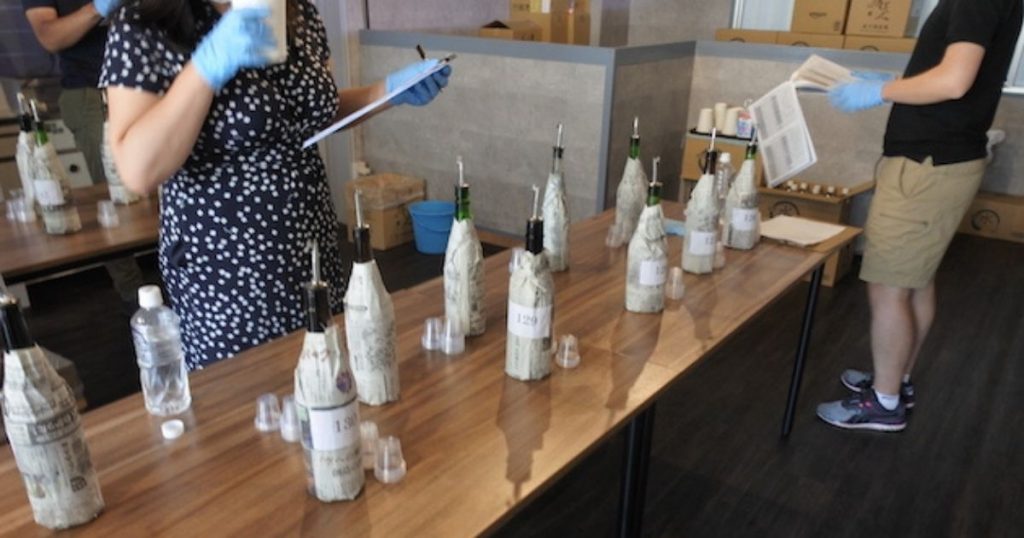
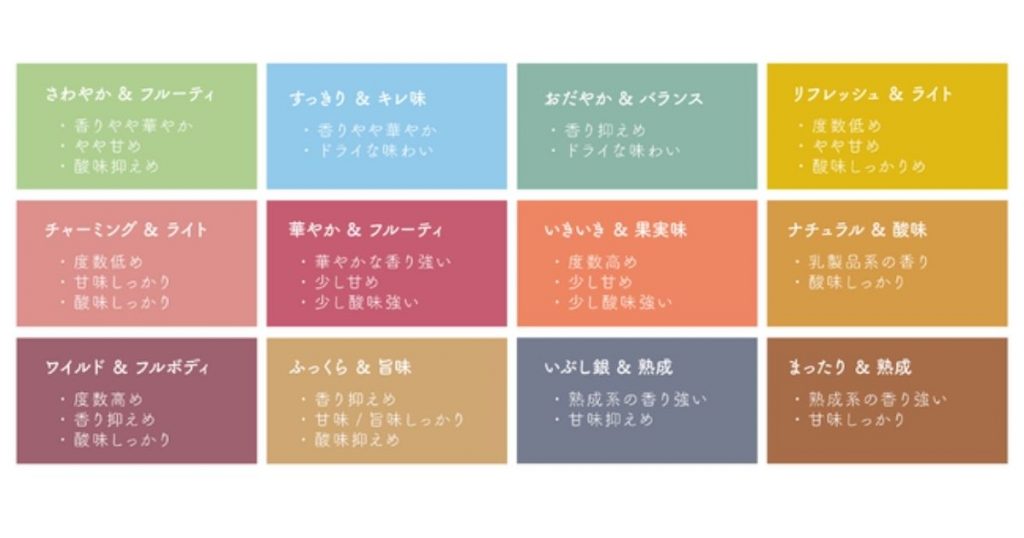
The results of statistical analysis based on these data and other data such as the alcohol content of each sample,Classify commercially available sake into the following 12 typesIt is ready to use. Each type is named using only common words, with the goal of making it easy to visualize the flavor.
Building a logic to determine preferred sake using machine learning.
Next, to investigate individual food preferences and eating habits, a 108-question questionnaire was developed with the cooperation of Tomoko Ishijima, Project Assistant Professor (Laboratory of Food Functional Science) and Keiko Abe, Project Professor (Laboratory of Taste Science) at the University of Tokyo.
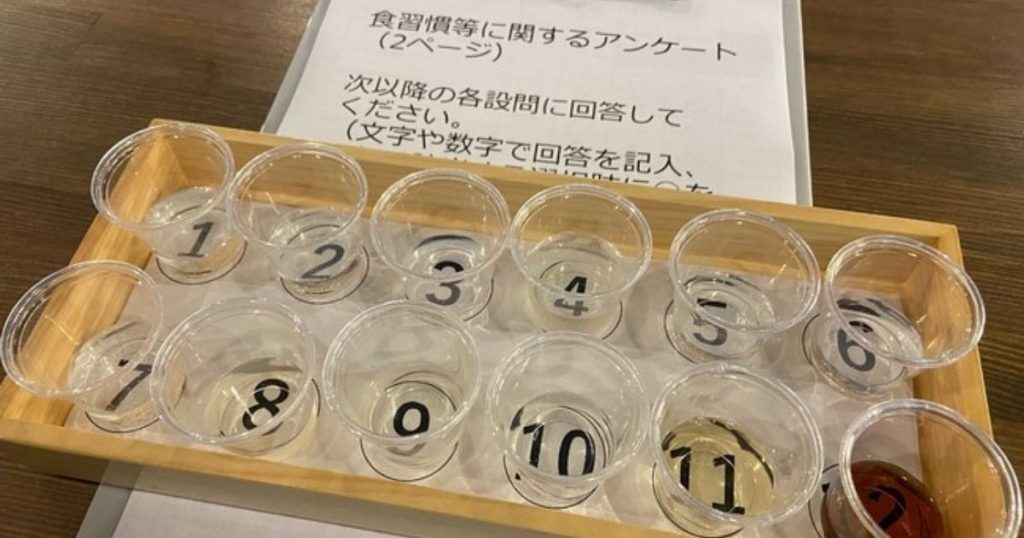
At the same time as conducting this survey, we collected 489 preference data from consumers by asking them to taste 12 types of sake and indicate their level of preference.
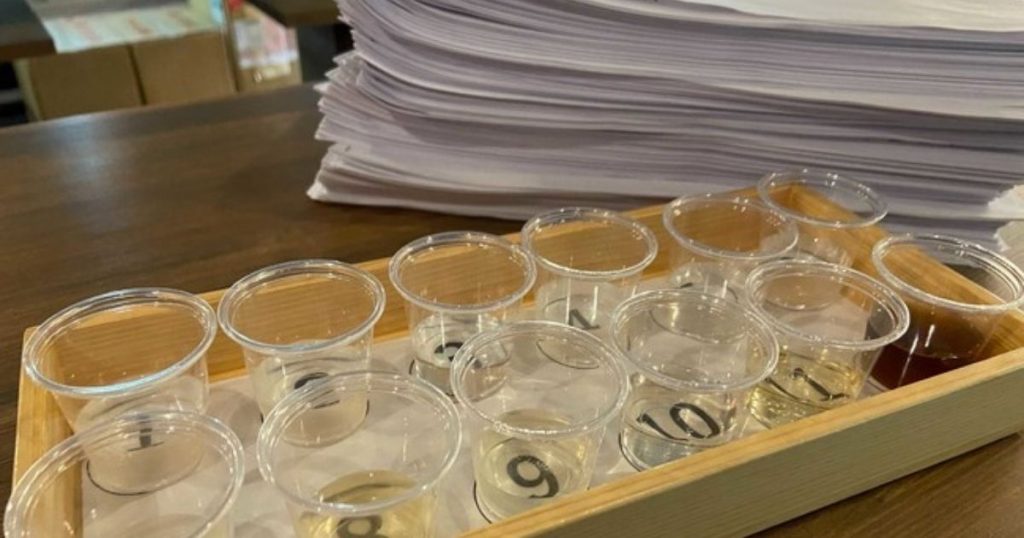
Based on these data.Leveraging Machine LearningBy doing so, we constructed a logic that can accurately determine the preferred type of sake based on general food preferences and other factors.
Future Development
Based on the beta version of "Sake Navi" released this time, we will continue to collect consumer preference data after January 2022 to further refine the diagnostic logic, aiming to release the official version after collecting several thousand data.
In the future, we plan to develop a sake gift service using "Sake Navi" as well as other services and projects that utilize the 12 types of sake classification (such as subscription services, multilingual support, holding contests for each type of sake, etc.).
【【About Us]
Sake Street Co.
Yanagibashi Building 1F, 1-11-5 Yanagibashi, Taito-ku, Tokyo 111-0052, Japan
Web site :. https://sake.st/
Facebook :. https://www.facebook.com/SakeStreetOfficial/
Twitter (store) :. https://twitter.com/sake_st_store
Twitter (Web media):https://twitter.com/SAKE_Street_JP
Instagram :. https://www.instagram.com/sake.st/
Profile of joint researcher (Graduate School of Agricultural and Life Sciences, The University of Tokyo)
Tomoko Ishijima Project Assistant Professor
Project Assistant Professor, Laboratory of Food Functional Science, Graduate School of Agricultural and Life Sciences, The University of Tokyo. He specializes in nutritional science and food science.
In 2000, she graduated from Tokyo University of Agriculture with a bachelor's degree in dietetics from the Department of Nutrition, Faculty of Agriculture. In 2004, she completed her Master's degree in Food Nutrition, Graduate School of Agriculture, Tokyo University of Agriculture, and in 2007, she completed her Doctoral degree in Food Nutrition, Graduate School of Agriculture, Tokyo University of Agriculture. D. in 2007. She was a Research Fellow at the Graduate School of Agricultural and Life Sciences, University of Tokyo in 2004, a Specially Appointed Researcher in 2008, and has been a Specially Appointed Assistant Professor since 2009. D. in Food and Nutrition. D. in Food Nutrition and Dietetics.
Keiko Abe Project Assistant Professor
Specially Appointed Professor (Laboratory of Taste Science), Graduate School of Agricultural and Life Sciences, The University of Tokyo. He specializes in food science, taste science, and genetic science.
Professor, Graduate School of Agricultural and Life Sciences, The University of Tokyo, 1996; Group Leader, Kanagawa Academy of Science and Technology (now Kanagawa Prefectural Institute of Industrial Technology), 2008; Professor Emeritus, Graduate School of Agricultural and Life Sciences, The University of Tokyo, 2010; Specially Appointed Professor, 2015; 2019 President of the Bioindustry Association of Japan. Other positions include Chairperson of the Expert Group of the National Institute of Beverages Research (2018) and Councilor of the Japan Brewers Association. Major awards include the 2005 Ando Momofuku Award Grand Prize, the 2007 Japanese Society for Bioscience and Agrochemistry Award, the 2009 American Chemical Senses Society IFF Award in the field of taste and molecular biology, the 2010 Medal with Purple Ribbon, and the 2010 Taste and Smell Society of Japan Award.





 JA
 EN
