


Developed a highly accurate indoor navigation system "shikAI
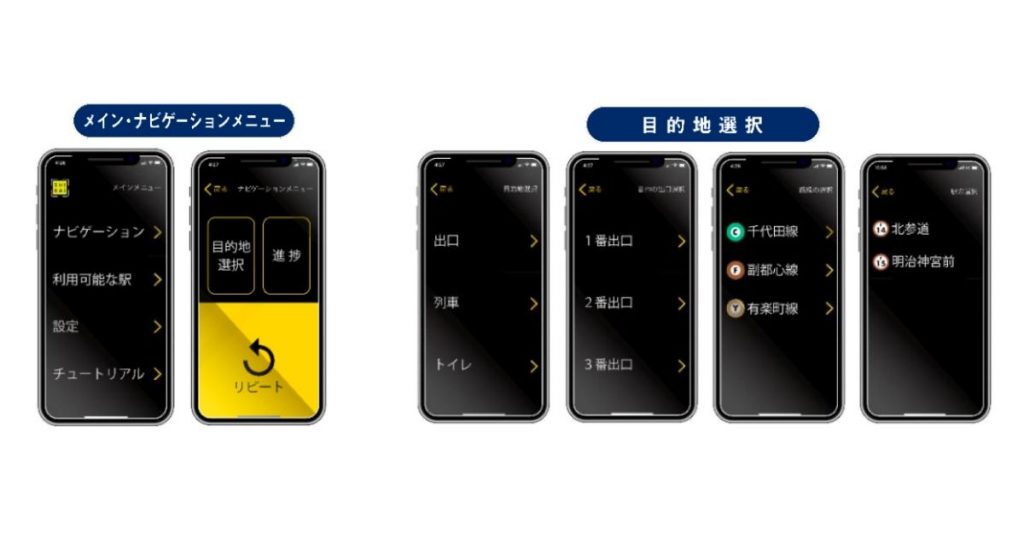
To overcome the hurdle of "social implementation
-What was the background behind the development of the navigation system "shikAI" for the visually impaired?
Society should be fair to all, yet there is no shortage of tragic incidents involving people with visual impairments and accidents in which they fall from station platforms.
While our chairman, Konishi, was exposed to such news,I noticed that digitization in this area has not yet been undertaken.We are not going to do it. Once we became aware of the problem, we had no choice but to take action. This led to the "shikAI" project, a navigation system for the visually impaired.
However, even if we, as a startup, develop the system on our own, we will have to persuade the railroad companies, the Ministry of Land, Infrastructure, Transport and Tourism, the Tokyo Metropolitan Government, and various other stakeholders,Social implementation is a hurdle.In such a case At such a time,Tokyo Metro Accelerator Programand proposed the "shikAI" project.I did. 2016.
Accelerate with the Accelerator Program
-What kind of demonstration experiments have you repeated since being selected for the Tokyo Metro Accelerator Program?
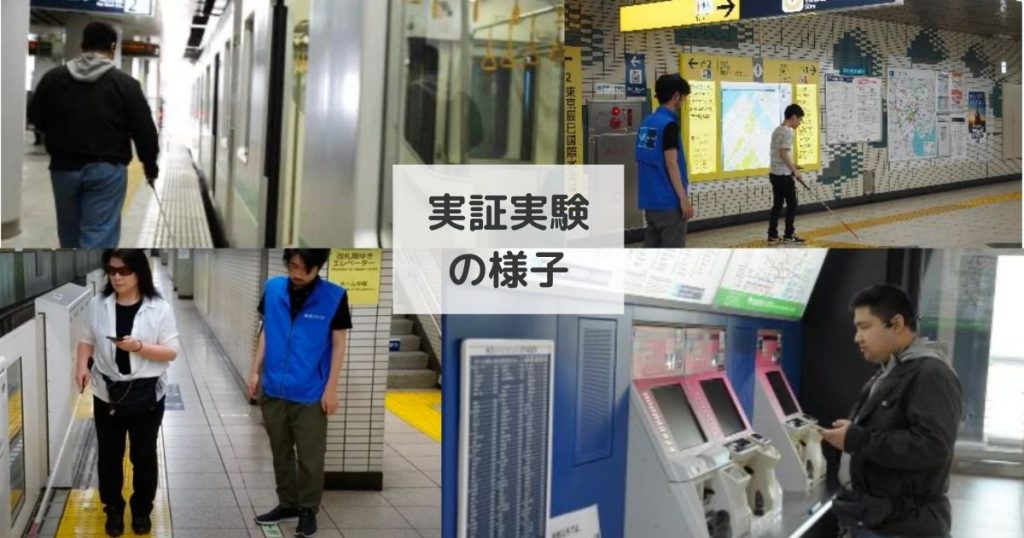
Experiments using mock stations owned by Tokyo MetroWe repeated the process. At first, we pursued Bluetooth Low Energy Beacon (Beacon) technology for self-location to improve the accuracy of where we were standing, but we just couldn't get the accuracy to a practical level. We assumed that the system would be used only on platforms with platform doors and that passengers would move along Braille blocks, so there would be no danger, but we just could not improve the accuracy of the navigation. For fall prevention, we conducted research using AI. Detecting platform edges in a mobile environment was still limited in accuracy. Tokyo Metro also planned to install platform doors on all platforms, so we shelved the AI tool for fall prevention.
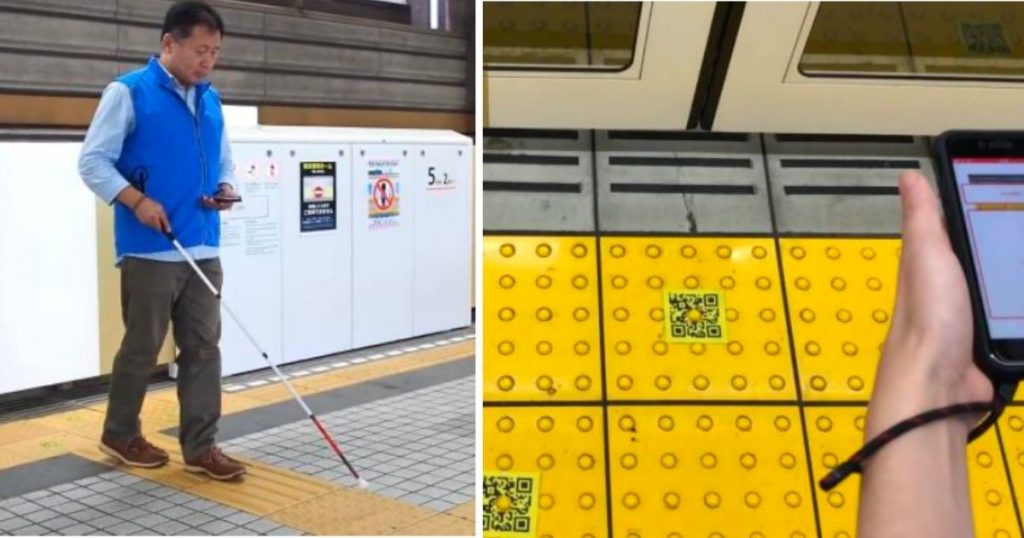
We continued to wonder if there was a better way to provide navigation for the visually impaired, and considered WiFi and UWB. We also had to consider the constraints of relatively low-cost deployment. After much deliberation, we arrived at a solution using QR codes. Originally, we were thinking of moving along Braille blocks, but Braille blocks have warning blocks (dot blocks) at dangerous points, such as at junctions and in front of stairs.
Tokyo Metro seemed to have a similarly positive response. After verifying the system at a mock station, it was decided to conduct the verification test at an actual station (Tatsumi Station on the Yurakucho Line). From there, we repeated the verification and completed a system in which approximately 1,000 to 2,000 QR codes are attached to the Braille blocks at a single station, and voice navigation to the place you want to go or exit is provided by simply holding your smartphone up to the ground in a cursory manner. In other words,The entire station was digitized so that you can see exactly where you are and the direction you are facing.The first is the
For example, if you instruct "shikAI" to go to the restroom at a train station, it will navigate you precisely to each point: "5 meters to the right," "Down stairs, 10 steps," "Straight ahead 5 meters," "You have reached the restroom," and so on. If you deviate from the route, the system tells you that you are going in the wrong direction, so you will not get lost.
Moreover,QR code reading accuracy is very high, so developed to recognize and read QR well even when walking fastWe have been We were able to walk blindfolded in our tests and still get where we wanted to go, and we have actually had over 400 visually impaired people participate in our tests,Highly appreciated by most peopleWe received the following
Open Innovation with Tokyo Metro, starting with 9 stations in Tokyo to implement a system of high social significance.

-I think it was tough on the stamina of a startup to conduct a demonstration experiment over a long period of time. What was the reason you were able to continue without giving up?
first (of all)First, because we felt that the visually impaired people really liked the app we developed.Is it? We have been asking every time that we are making progress with blood, and we really appreciate it if you are honest with us if it is a bad thing, but all the parties involved told us that this is a good thing and they want us to do our best. In addition, the possibility of social implementation gradually increased and the number of allies gradually grew.
Although we are collaborating with Tokyo Metro, this project is not just about gaining the trust of Tokyo Metro. It was not easy to gain the acceptance of the new technology by the stakeholders involved, including the organizations of the visually impaired, other railroad operators, and the Ministry of Land, Infrastructure, Transport and Tourism, so we had to continue to lobby steadily.
But little by little, more and more people became interested in the project and agreed with me,Many people, including executives from Tokyo Metro and the Ministry of Land, Infrastructure, Transport and Tourism, came to the pre-implementation experience.The result of this effort was a new, more efficient, and more effective way of doing business. It was worth it,Currently implemented at 9 stations in Tokyo, including Meiji-jingumae, Nishiwaseda, and Shinkiba Stations.has begun.
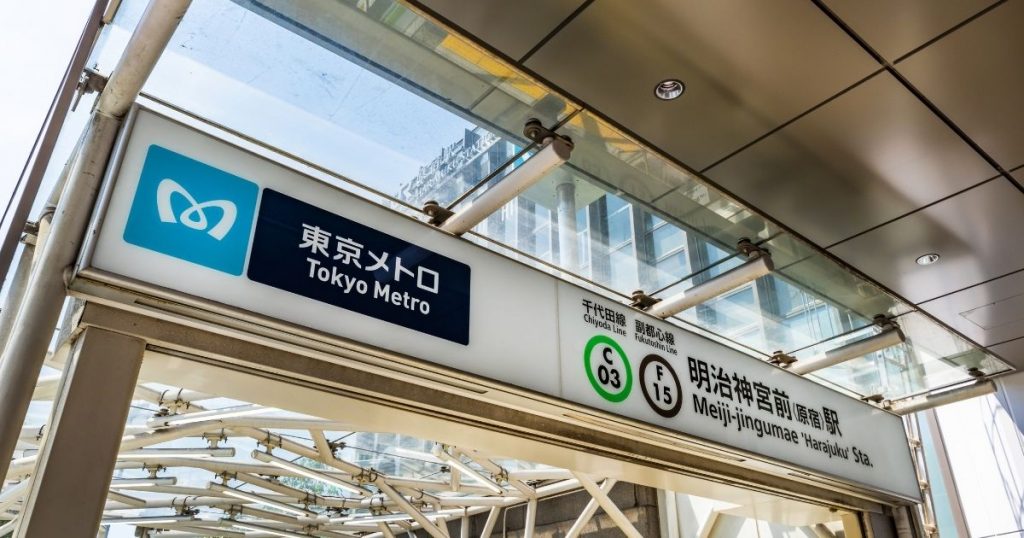
-I understand that there are 9 stations to start with, but are you aiming to eventually implement this at all stations in Tokyo?
Originally, the system was to be implemented at several stations starting with the 2020 Tokyo Olympics, with the intention of eventually rolling it out to all stations. However, the situation changed drastically due to the new coronavirus. This was another major hurdle for us.
However, there is no doubt that the shikAI project is a necessary part of society, and we would like to continue discussions with all parties concerned to see how far we can expand it.
Not only railroads, but also roads, bus stops and cab stands. To help those who are really in need.
-Are you thinking of collaborating with other railroad companies or other agencies besides Tokyo Metro?
With JR West, we conducted a demonstration experiment at Shin-Kobe Station. Although not for the visually impaired, we also conducted a demonstration experiment with JR East at Tokyo Station on a web application that guides visitors from overseas or from rural areas by scanning a QR code so that they can navigate around the station without getting lost.
Other,We have received inquiries from regional railroad companies and several government offices in the 23 wards of Tokyo.In addition, Toshima City has recently implemented a QR navigation system to guide visitors from Higashi-Ikebukuro Station to the city office.
Since many visually impaired people use buses, we would very much like to digitalize the Braille blocks from the station to the bus stop. The same applies from the station to the cab stand.
However, we have done the best we can as a start-up so far,To take it from here, we will need the support of well-funded organizations and large corporations.I am thinking about this. I hope that people will agree with "shikAI" for its social contribution and continue to help those who are truly in need, even if only a little.
The key to leveraging open innovation is to identify the challenges companies face.
-What advice would you give to startups who want to collaborate with major companies in the future?
Do the major companies really have an issue or a place they want to go and are they serious about facing it? is very important!I think it is. I often feel that there are people who are simply looking for new business ideas for startups, or people who are just following the current trend and are not committed to performance and results. We should work with people who are prepared to face the start-up timeline (if we don't produce results, the company will disappear). If we collaborate with people who are not like that, we may feel like we are doing something, but unfortunately nothing will come out of it.
If we can put it together well, we can certainly do more than we could have done on our own!I think it was very valuable for us to be able to make good use of Tokyo Metro's resources to realize the ideal image for society. By making good use of Tokyo Metro's resources, we were able to realize the ideal image for society, and I think it was very valuable for us to be able to make a big appeal.
(Date of writing: May 25, 2021)
| name of company | LiNKX, Inc. |
| Establishment | July 15, 2020 |
| Location | Kazama Building 5F, 2-19-5 Nishi-Shinbashi, Minato-ku, Tokyo |
| Chairman and Representative Director | Yuichi Konishi |
| Business Overview | Product and Solution Consulting Software Solutions: Cloud, Mobile, AI Hardware Solutions: Collaborative Robotics, IoT |
| uniform resouce locator | https://www.linkx.dev/ |





 JA
 EN
