


What's VR/AR/MR?
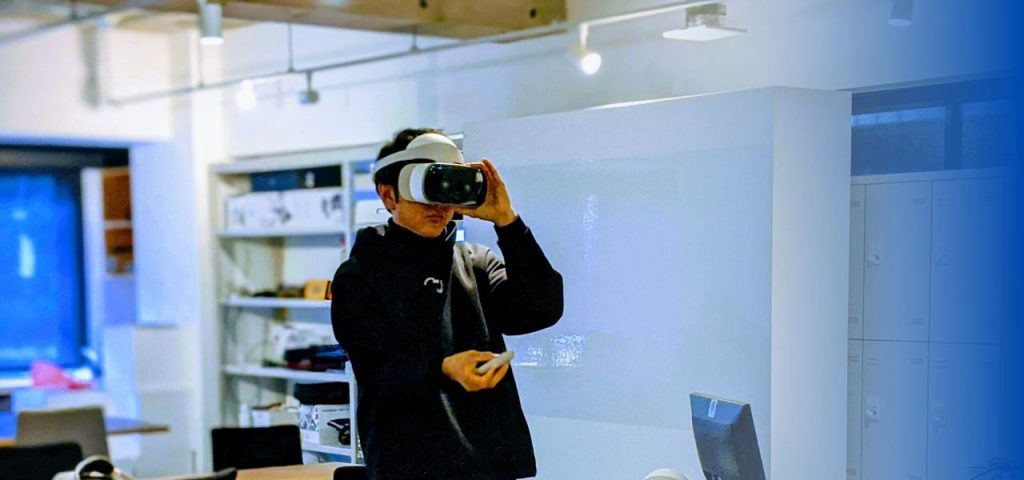
VR (Virtual Reality) is a technology that creates a virtual world on a computer. In 2016, the first year of VR, a variety of VR goggles were created and are being used in various fields such as gaming, education, and sports.
AR (Augmented AR (Augmented Reality) is a technology that "augments" the real world by superimposing virtual worlds on the real world. 3D images and characters created by computer graphics are superimposed on real scenery, allowing users to experience the appearance of CG characters in the real world. A simple example is Niantic's "Pokémon GO.
MR (Mixed Realit6) is a mixed reality technology that combines the virtual world of VR and the real world of AR. MR is expected to grow in all fields from entertainment to business because it enables multiple people in the same MR space to experience the same thing at the same time.
STYLY," which has overwhelmingly lowered the barriers to VR/MR production, distribution, and viewing.
-What possibilities do you see for VR /MR?
I was on the team that popularized the virtual space game "Second Life" in Japan around 2006, and I have long believed that VR would change human lifestyles dramatically. In fact, the market has changed dramatically between 2006 and 2016, when I founded Psychic VR Lab. The hardware has evolved more than expected and the amount of investment in the industry has increased, and the world is expecting more. In fact, the hardware to experience VR was as expensive as 600,000 yen four years ago, but now it is inexpensive, with 30,000 yen being enough to experience it.
In this market, we are developing a VR/MR business specializing in fashion, art, and music. After the company was founded, we immediately started receiving about 100 interview requests a year, mainly from overseas, as well as many contacts from overseas students asking us to allow them to intern with us. We are currently collaborating with people and companies around the world, creating a new culture together.
-What exactly is your business?
What we are offering is "STYLY," a creative platform that allows artists to create VR /MR spaces and distribute them easily. With "STYLY," you can create VR /MR spaces for free, and anyone can freely view the published spaces. A variety of spaces have been created, from artistic works to 3D cartoons, fashion shows, and more.
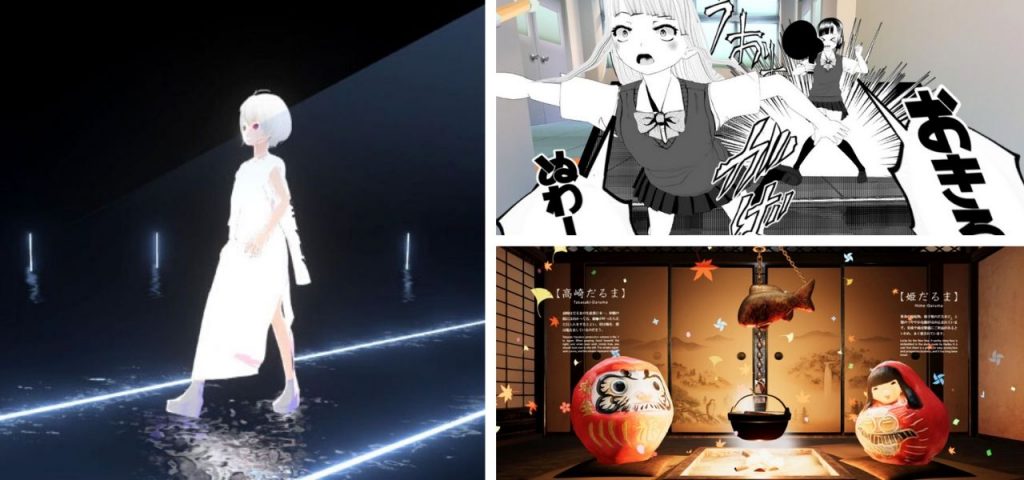
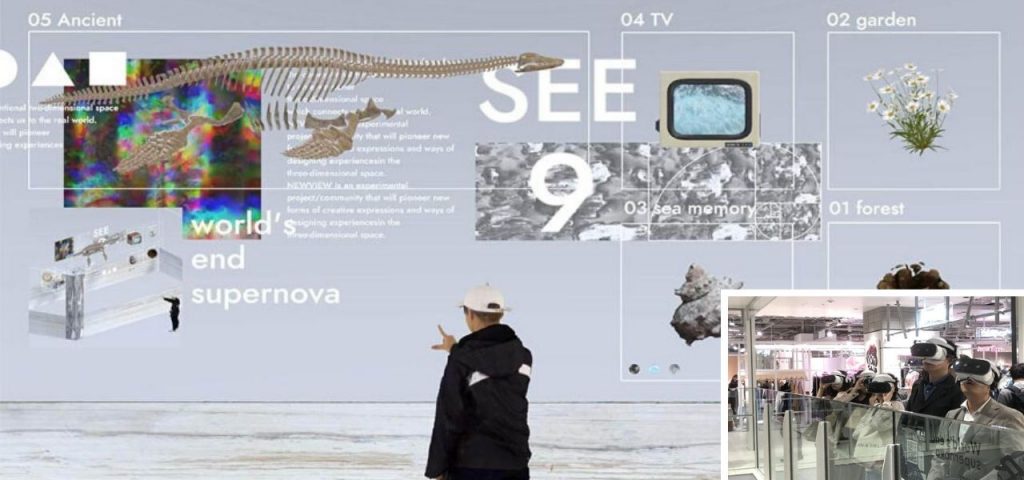
We also run schools in Kyoto and Tokyo to train artists who can create VR /MR spaces, and we hold a global VR content award, NEWVIEW, once a year. What attracts many works from around the world is the fact that the Gold Prize is a $20,000 prize, but there is also the fact that it creates an outlet for artists. The PARCO Prize allows winning artists to exhibit their work as a virtual showcase at Shibuya Parco, which can be viewed with the VR glasses provided or with the "STYLY" app installed on your smartphone. In other words, you can exhibit your work permanently at Parco In the month of December, 25,000 people visited the xR Museum, which is unique in the world. We are also offering many prizes such as Hideki Matsutake's music prize and the right to exhibit at Media Ambition Tokyo.
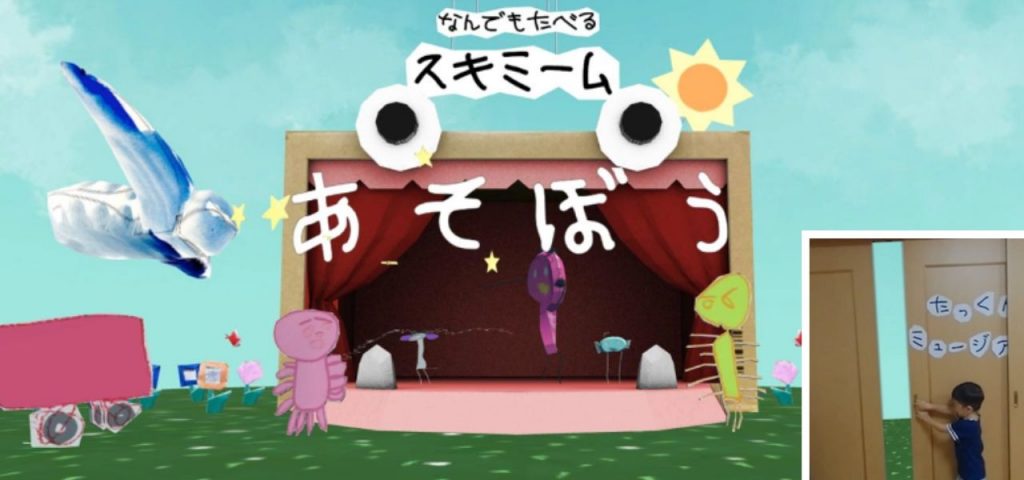
The best work of 2019 was the "Takkun Museum," which was created by scattering pictures, creations, and memories drawn by the child from birth to now. This work can be said to be a form of three-dimensional photo album that is one step ahead of its time.
STYLY" is characterized by the fact that it has lowered the hurdle for creating and distributing VR/MR spaces, which used to require high costs. /MR space production and distribution used to require high costs, but the hurdle has been lowered dramatically. Artists can create for free, and when we hold workshops for elementary school students, even they enjoy creating VR spaces.
We have also lowered the viewing hurdle by making it possible to view them through smartphone apps and the web, even without VR equipment. As a result, there are now more than 10,000 spaces open to the public on "STYLY" and more than 20,000 registered artists.
With the penetration of MR space, the world will be unimaginable in 5 to 10 years.
-Will the real and virtual worlds overlap more and permeate society in the future?
I believe so. I think people's behavior and experiences will change dramatically as the real and virtual intertwine and the boundary between the two is lost.
For example, in an elementary school social studies class, the value of the experience is much higher if the students see dynamic ruins in a three-dimensional VR /MR space in 360 degrees than if the ruins are explained in a photograph. I believe that meetings and business trips that involve travel will also be replaced. This would change both business scenes and lifestyles.
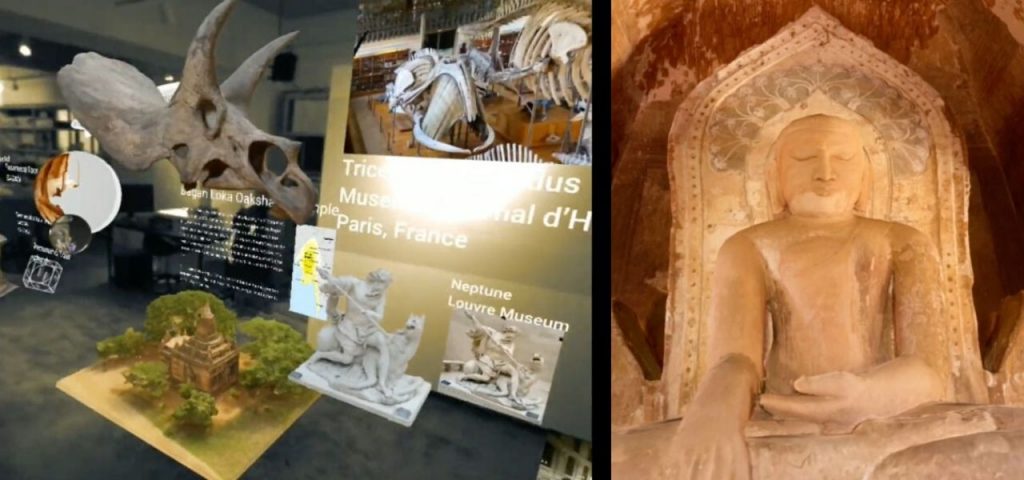
Just as the Walkman transformed music into something you can carry around with you, and the iPhone changed our lives by enabling us to be constantly connected to the Internet, we want to create a world where all people can easily create and deliver "wearable spaces" through VR/MR.
-How do you think our lives will change depending on the penetration of VR/MR?
For example, if MR glasses were equipped with a camera, earphones, and an automatic translation function, users would be able to experience events overseas while in Japan. Tickets that allow you to jack-in to local people and a new profession of virtual guide may be born.
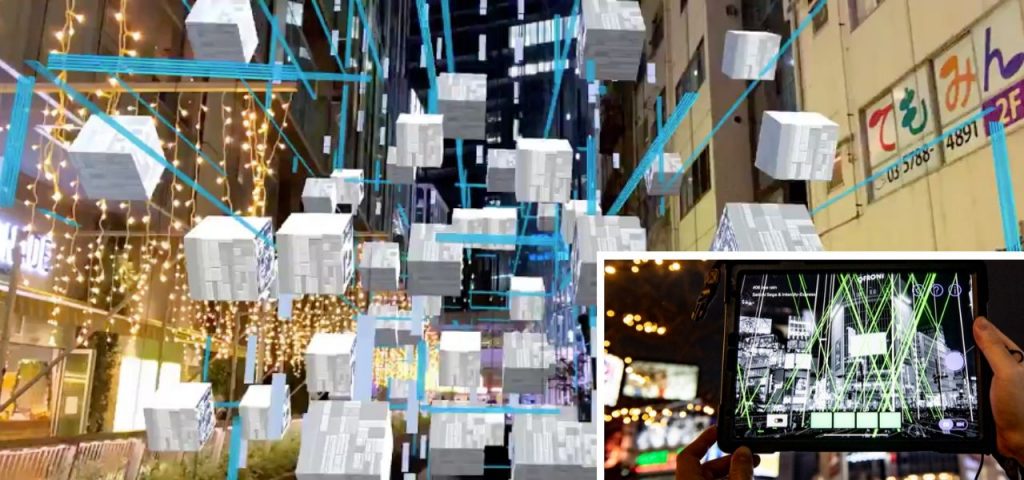
There are already many "digital art exhibitions" and events held in the city that can only be viewed with MR glasses. In fact, together with KDDI, we have held an art exhibit using the streets of Shibuya and an augmented experience event utilizing 5G that allows visitors to slip back in time to 1964 in front of Shibuya Station and experience the streets of Shibuya in the past.
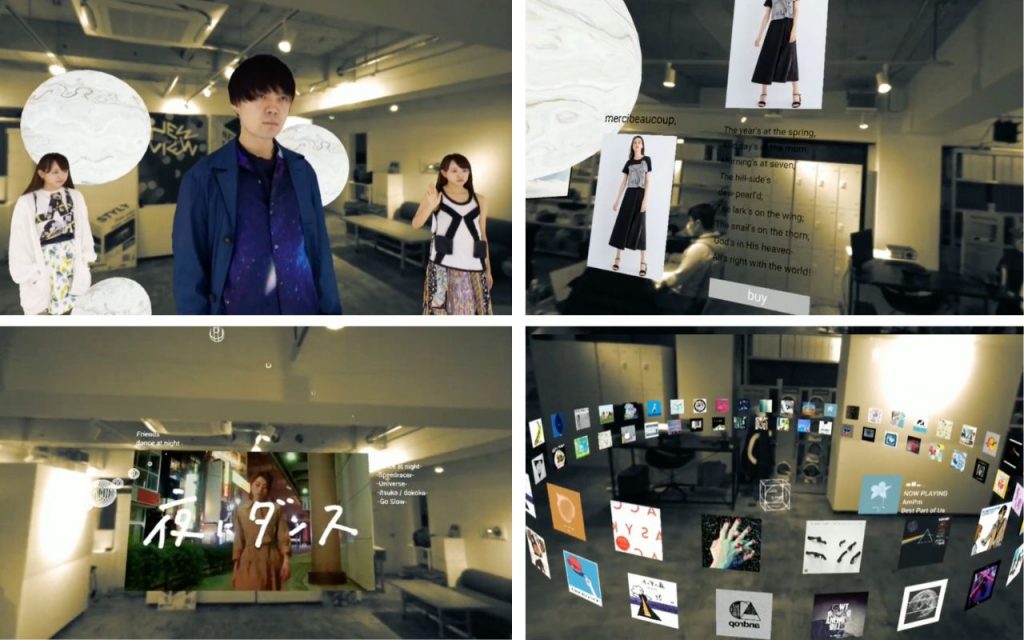
When listening to music, a "playlist" of CD albums will be lined up in a space, from which you can select and play what you like, and online stores will also allow you to buy clothes displayed in a space and viewed from the front, back, left, and right. It will also be possible to view live concerts and artists from any angle you like, 360 degrees. If this becomes the norm, our lives will change.
Of course, technological advances will change advertising expression, and I believe that the world will be an unimaginable place five to ten years from now.
Promote collaborations with overseas companies and spread them in Japan in the next few years
-I understand that the Psychic VR Lab collaborates with a variety of companies. What kind of companies do you collaborate with most?
We often collaborate with domestic and international telecommunication carriers, hardware companies, apparel brands, musicians, and artists. We have also begun collaborating with NTT Data NJK in the BtoB area.
I think it will be a while before Japanese schools accept VR/MR content, but it has already been implemented in Taiwan and China, where everyone goes to the Jurassic period to see dinosaurs and experience ruins around the world during class.
The area of education can be realized by collaborating with companies that make illustrated books and DVDs, so we would like to explore such possibilities. However, since we receive so many more offers from overseas than from Japan, we would like to first create many examples overseas and then make them permeate the Japanese market.
-I understand that you are doing a lot of collaborations with overseas companies. What do you think are the challenges of open innovation in Japan?
The challenge for large companies is that security barriers are high. The more things you "can't disclose" to the outside world, the less your startup can do. It is important to protect security, but we should think about how we can go beyond the boundaries of our company's common sense and rules.
We think about how to move the company and the industry to change the rules, and major companies and startups play to each other's strengths on an equal footing to create something new. And if they are fruitful, they will share them. I believe that we will not be able to make progress unless we shift to this kind of thinking.
However, compared to a few years ago, I feel that major companies are starting to change little by little, and I believe that more and more young people are interested in collaborating with startups to transform their companies into companies that create new things. Therefore, I believe that if we can increase the number of successful cases by communicating from major companies on an equal footing, "Let's work together to create this kind of future and utilize these assets to achieve it," Japan will become a country where innovation can take place.
 Mr. Nobuhiko Watanabe Director and COO, Psychic VR Lab, Inc.
Responsible for digital strategy of financial institutions at a major Sierra, Executive Officer in 2006,
In 2011, he served as Director of the Open Innovation Institute, and was involved in the development of the Metaverse business as one of the driving forces behind the Second Life boom. In February 2017, he was appointed COO of Psychic VR Lab, where he currently serves. He is also a professor at the Graduate School of Project Design and a founder of "one + nation," a music festival for regional development.
| name of company | Psychic VR Lab, Inc. |
| Establishment | May 19, 2016 |
| Location | 2F MORIAURA, 1-34-2 Shinjuku, Shinjuku-ku, Tokyo |
| representative | Seihiro Yamaguchi |
| Business Overview | VR (Virtual Reality) space production tools and distribution platform business specializing in lifestyle such as fashion, art, culture, and music |
| uniform resouce locator | https://psychic-vr-lab.com/ |
 Tomomi Tamura
He joined Snow Brand Milk Industry in 2000. He then worked for an advertising agency and as a sole proprietor before joining BizReach in 2012. Engaged in content creation, he joined NewsPicks in 2016 as an editor on the BrandDesign team, and is now a freelance writer and editor.




 JA
 EN
