


*This article is a reprint of an article published by Story Design house in PR Compass on December 3, 2019.
Story Design house held an event titled "PR Strategies for Fundraising and Going Public: Interview with a Pioneering Startup CFO" with two guests, the former CFO and current PR manager of Money Forward, Inc.
Just making good products is not enough to reach users."
- The first speaker is Naoya Kanesaka, former CFO of MoneyForward and current President of MoneyForward SYNCA, Inc. MoneyFoward is involved in a wide range of businesses, but how did the company develop and take the steps to go public? Mr. Kanasaka talks about the importance of public relations as something that makes up for the lack of quality products alone.
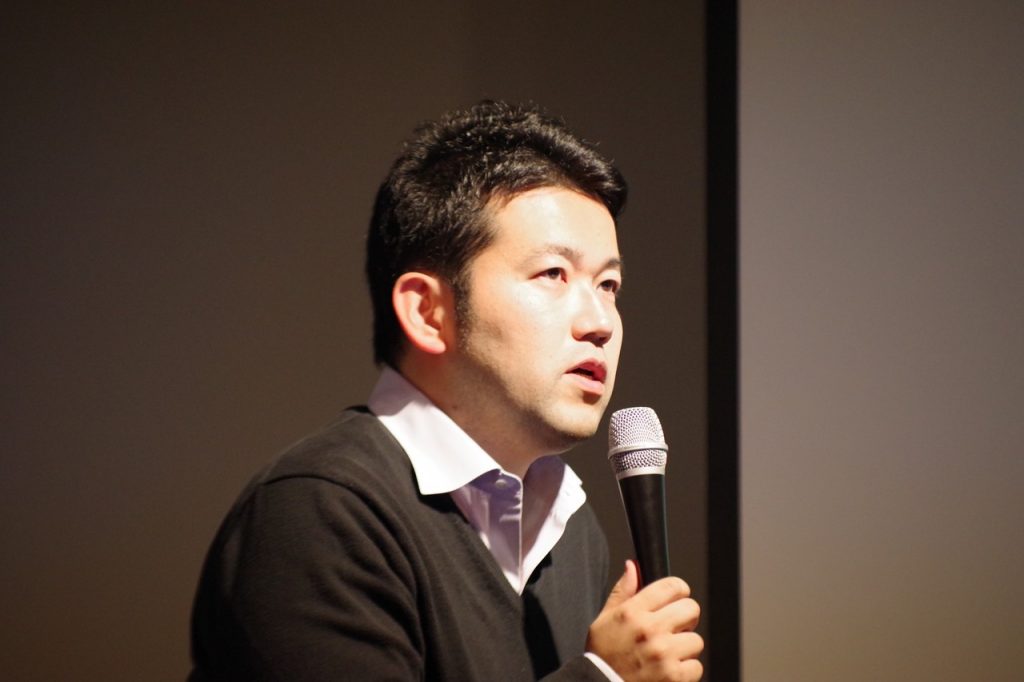
Graduated from the University of Tokyo in 2007 with a degree in Economics. Mr. Kuroda worked at Goldman Sachs Japan for about 8 years in the Tokyo and San Francisco offices. He was involved in cross-border M&A and capital raising advisory services mainly in the technology and financial industries, as well as investment and portfolio company value enhancement services through investment funds managed by Goldman Sachs He joined MoneyForward in 2014 and served as CFO from 2015 to 2019. In September 2019, he established the group company Money Forward SYNCA, Inc. and assumed the position of Representative Director.
Kinzaka:I joined Money Forward in 2014 and served as CFO from 2015 to 2019. In September of this year, I founded and became the president of Money Forward SYNCA, Inc, a company that advises growing ventures from a financial perspective, and we are currently supporting about 10 companies.
MoneyForward was founded in 2012 by its president, Yosuke Tsuji, and is now an organization of over 600 people. Its main business areas include back-office SaaS for corporations, household and asset management and automatic savings services for individuals, joint ventures with financial institutions, and financial businesses such as online lending and deferred payment settlement.
We have been in business since the beginning.Just making good products is not enough to reach users."This is what we have been striving to achieve. Our goal is to achieve not only solid sales and marketing, but also customer success.
-The topic that followed was the listing of the company as the first SaaS company in Japan and its strategy.
Kinzaka:What makes our listing unique is that we are the first Fintech/SaaS company in Japan to have an IPO.
SaaS requires up-front investment, so it is loss-making at the start. However, it is a business model that will grow and generate profits in the future. Today, the number of SaaS companies has increased, and many people understand the concept, but at that time there were still very few companies that did so. That is why we decided to go public,It was imperative that the business model and profit structure be well explained to investors.As CFO, I think I had over several hundred meetings with investors a year.
Since before and after its IPO, MoneyForward has been accelerating its business expansion through aggressive M&A, strengthening its finance business, and establishing funds. MoneyForward SYNCA, of which I am the president, is also part of this cycle.
We also believe that the company is characterized by its ability to make good use of the funds raised and continue to expand its business rather than stop at a public listing.
Unify the story around the vision
- The second speaker was Ms. Aya Kashiwagi, Director of Public Relations, Money Forward.

Graduated from the University of Tokyo, Faculty of Economics in 2009. He worked for a major event management company, where he was in charge of marketing and PR for overseas media. He joined MoneyForward in March 2014. After working in corporate sales and setting up the Osaka branch office for about 2 years, he joined MoneyForward in 2016 as a full-time public relations specialist.
- Mr. Kashiwagi recalled that the key to MoneyForward's PR strategy was how to spread the word "Fintech" throughout society and expand the market. One of the measures to achieve this was the MoneyForward Fintech Research Institute, which conducts research and analysis on Fintech. Toshio Taki, a founding member of the company, published numerous blog articles and held lectures throughout Japan.
oak-treeMoneyForward's public relations efforts were aimed at expanding awareness of Fintech.
I have lectured many times to politicians and ministries, and they have recognized that Mr. Taki is a very knowledgeable person about Fintech.
We also held regular lectures for reporters who had been assigned to financial affairs due to personnel changes, and took a "Ask Taki anything about Fintech" approach to the media.
Whenever we receive a request for a related interview, whether or not Money Forward's name appears in the article, we continue to accept all requests as long as they are important to the industry.
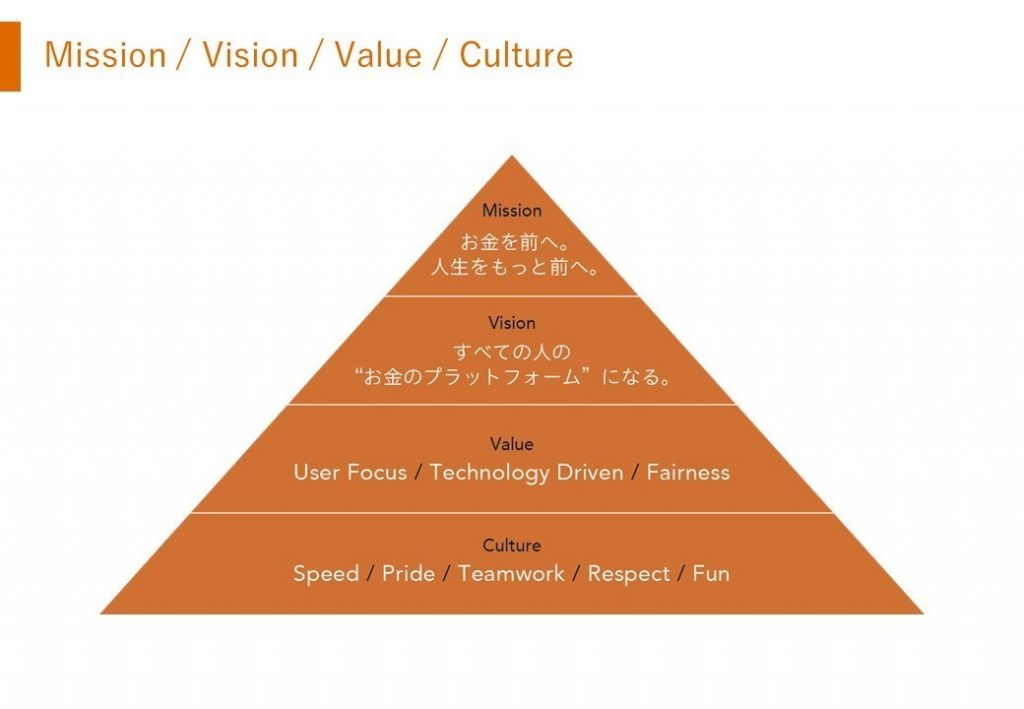
oak-tree: In our fourth year of business, we revised the company's "Mission, Vision, and Values". It was one of the best things we did before we went public.
Money Forward's mission is "Money Forward. Move your life forward. Our vision is to be the "Money Platform" for everyone. Our vision is to be the "Money Platform" for everyone.
The mission and vision have not changed, but the values and culture have changed drastically. There were about 10 values before, but no one remembers them properly (laughs).
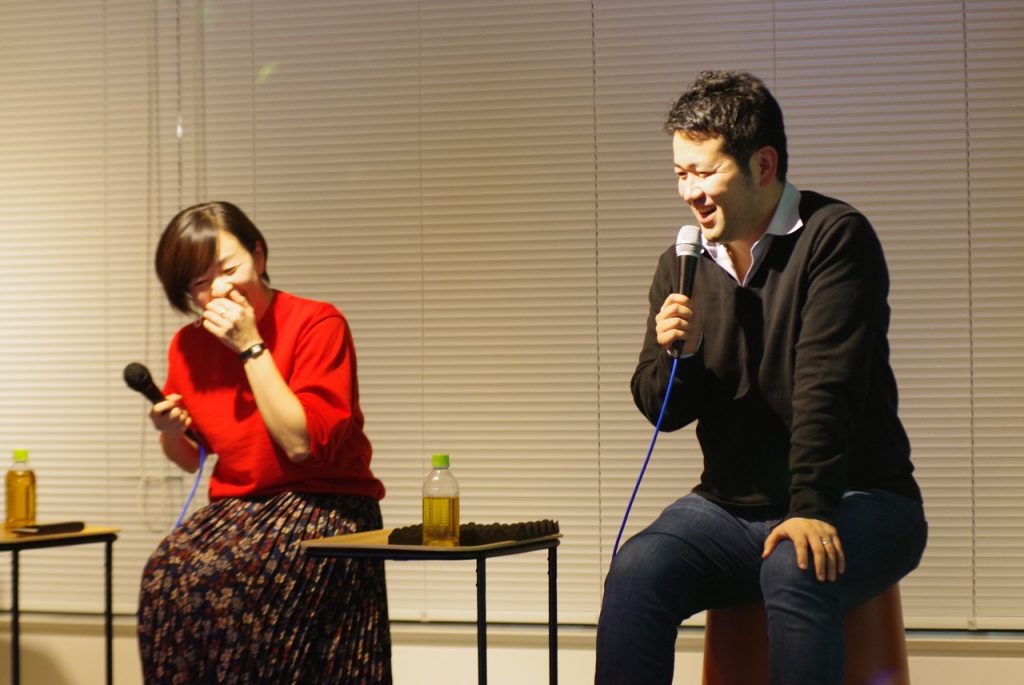
Therefore, designers in charge of corporate branding, human resources, and members who volunteered from across the company took the lead in unifying the message.
Not only has this facilitated communication within the organization, but it has also allowed us to tell a consistent story when communicating outside the company.
We are now able to respond to interview interviews in line with our mission, vision, and values, and it is easier for us to communicate what we are trying to achieve.
To build a collaborative relationship with the media
- As a story of his own failures, he talked about how he made proposals to the media and the nature of his relationship with them. The fact that he had approached the company as if he were selling it to the media with a sales approach. He made one-patterned proposals to the media, whether it was a business newspaper or a women's magazine.
Mr. Kashiwagi suggests a viewpoint that sees the media as a partner as a way to learn from failure.
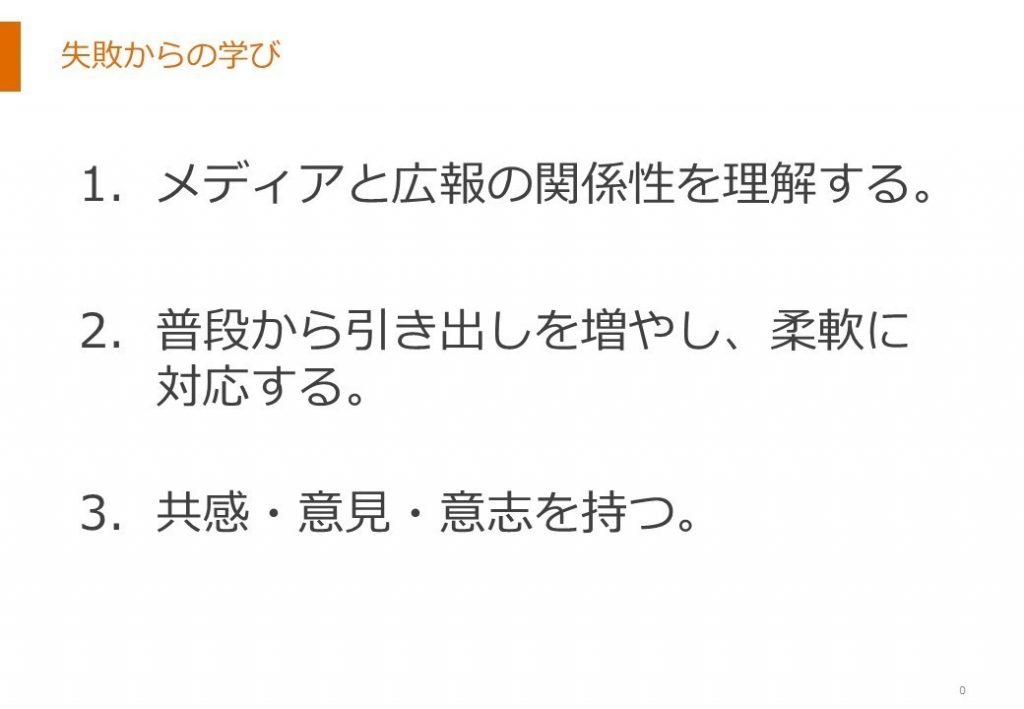
oak-treeThe first thing I learned from my mistakes is to understand the relationship between the media and public relations. I believe that the media and public relations are partners in improving society together. To do this, we must know each and every reporter.
We try to hear their unique perspectives, such as "Why did this person become a reporter?
Rather than speaking yourself, ask the other person to speak and draw out their needs from there. Through such dialogue, we can discover the person's strengths and aspirations.
Second, I usually try to increase the number of drawers and be flexible. I try to talk with various people and create articles together.
oak-treeThe third is to have empathy, opinion, and will. Empathy with the company's vision is a prerequisite. If you don't truly empathize with the company, it is difficult to convey its value in your own words. I believe that having one's own opinion is also an important PR skill. You must be able to discuss flatly the article that the reporter wants to produce. If I feel that my company's name should not appear in the article, I will frankly tell the reporter that it does not need to be mentioned.
And to have a will. I try to first have a viewpoint of what kind of society I and my company want to create, and then think about what we should do to achieve that goal.
I feel that the output is very good when it is created together with journalists who share the same will and are able to give frank opinions.
The value of new things is communicated at the point of contact with the world.
- The third speaker was Hitoko Kumamoto, President of Story Design house. Kumamoto pointed out the difficulty of communicating the value of one's business as a challenge for startups. In order to cope with this, she said, it is necessary to "change the other party's perspective.
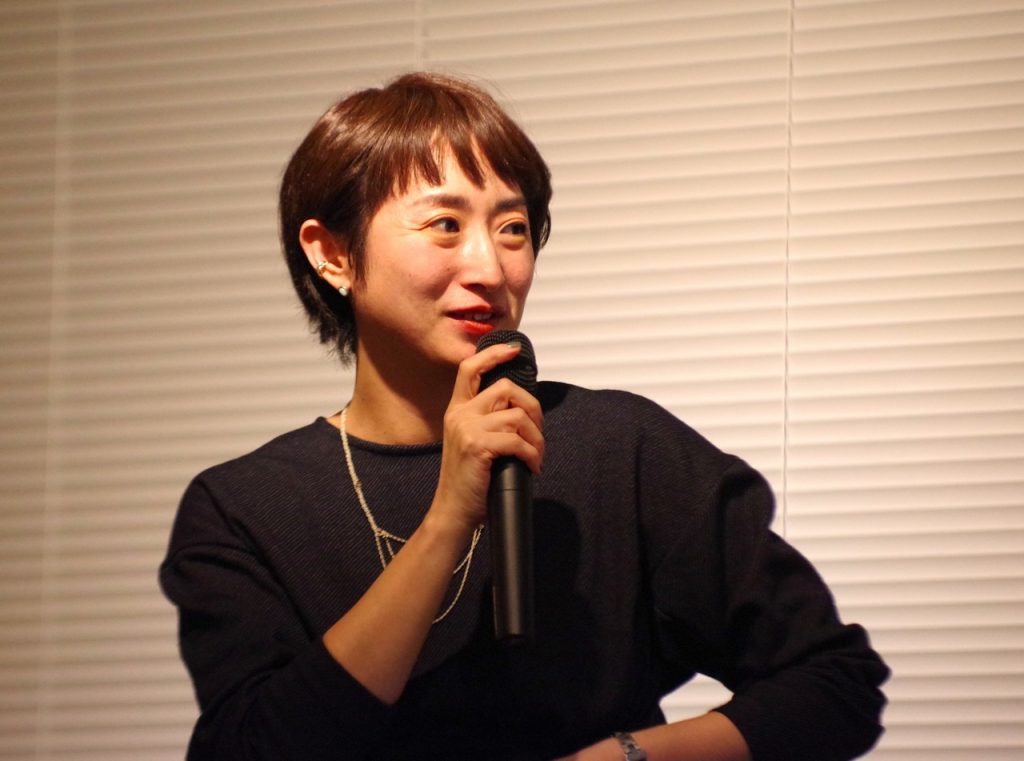
After working for a video production and strategic PR company, he established Story Design house in 2014. From startups to new business development for large corporations, he works on new business growth from the communication domain.
KumamotoStory Design house has worked with a number of startups in the past. More than 70% of the projects we have worked on have involved startups and their supporting organizations. We help people who are trying to build new businesses.
What is needed in public relations and PR for startups,"It's about changing the way they look at you."It is. For example, instead of just telling them about the current business development, we will show them the growth potential of the business. Instead of just showing them the present that is in front of them, we ask them to look into their future, which will lead to their evaluation of us.

There are three key points to communicate in order to change the way they look at you.
The first point is,Why is it necessary now?
We will explore the points of contact with the world, look at current trends and the big picture, and communicate why we are necessary in that context.
The second point,Why should we pay attention to it?
This is something I am sure everyone thinks about on a regular basis. It means communicating how excellent our services and business are in an easy-to-understand manner.
And the third point,What possibilities does it bring to the world in the future?
In order to be of interest to the media, which has a strong interest in "how the world will change in the future," we need to communicate what value we can offer to the world.
- He then discussed the problem that startups tend to have of "not having much to communicate (as a business)," and the importance of paying attention to current trends and finding as many points of contact as possible with the company's business. The key word in public relations strategy is message.
KumamotoAs Mr. Kashiwagi mentioned earlier, it is very important as a public relations strategy to send out a unified message.
Creating a message is the first step in raising expectations for the company. Once the message is conveyed to the media and picked up by them, the circle of sympathy will continue to expand. The role of PR and public relations is also to accelerate the business cycle.

KumamotoNote: Incidentally, I believe that some startups have gained considerable exposure simply by responding to inquiries from the media and do not need to actively engage in public relations.
However, if we are passive to the media, we may not be able to convey what we really want to convey. It is important to take the initiative and communicate the information you want to deliver.
- A recurring theme at this event was the importance of having a message and the need for a perspective of working with the media.
(Includes event held at Treasure Data on November 15, 2019. Edited by Ryoichi Suzuki and Mitsuki Hara; composed by Miyu Izuda)
 Story Design houseWith the mission of "Where there is a will, there is a way", we work as a communication strategy partner for companies and organizations.



 JA
 EN
