


*This article is reprinted from an article published in CREW MAGAZINE on February 15, 2016.
Why use the open innovation platform Creww?
-I know that you have approached other companies on your own, but was there any difference between that and the creww accelerator program?
The advantage of using the accelerator program is that we are able to communicate with them with a certain degree of solidification of issues and topics before we meet, and the inclusion of a third party, Creww Inc., allows us to smoothly interact with large companies even though we are a venture.
-Did you ever experience a lack of understanding of startups when pursuing open innovation and accelerator programs?
I don't think so. I think it is the personality and chemistry of the company and the person in charge. As for my career before starting my own business, I worked for Goldman Sachs for 10 years. For the first four years, I was in charge of major financial institutions called "institutional investors" and sold Japanese stocks. After that, I worked in the Business Corporations Department, where I did everything related to management and finance, including fund-raising support, joint investment proposals, and risk management proposals, so I did not feel any difficulties in that area.
Realizing a dream I had as a college student 10 years later
-You have been with Goldman Sachs for 10 years, what made you decide to start your own business? After working there for 10 years, you must be hesitant to change the environment, right?
Of course, I thought about it a lot. I kept asking myself questions on a daily basis, ranging from "Can I really throw away my career in foreign finance?" and "I have been saying since I was a student that I would start my own business, but why?
However, I began to think that if I lived my life without starting a business, I would regret it when I die. I was able to make up my mind to take on this challenge, which I am convinced has social significance in creating a new lifestyle, and my dream of starting a business as a university student overlapped with my desire to do so.
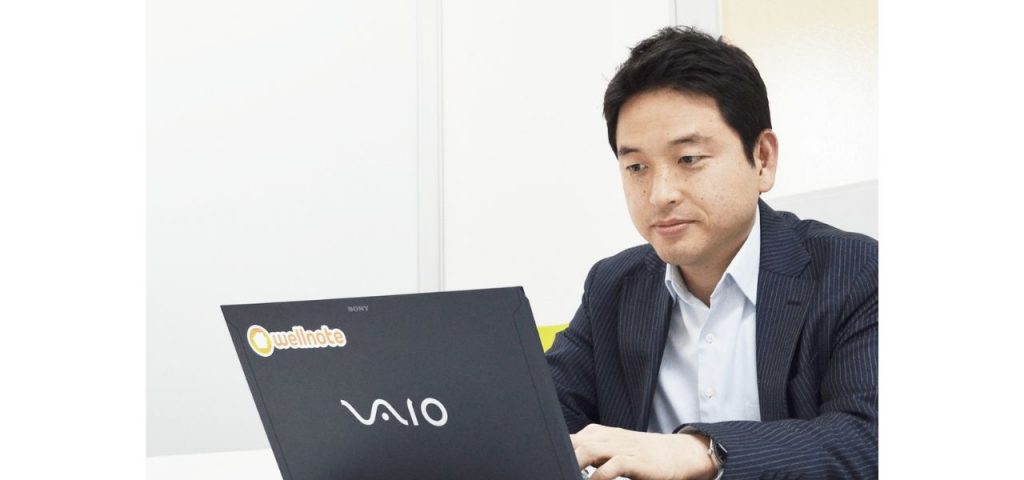
-So you have wanted to start a business since you were a college student.
That's right. It was the mid-1990s, and people were beginning to say that the Internet was going to change the world. My major at university was business administration, and while running a club that imitated entrepreneurship, my desire to study in Silicon Valley, the home of venture business, grew stronger by the day.
I looked into the university's exchange program and found that there was an exchange program at the University of Washington School of Business in Seattle on the West Coast, so I applied for it and did an exchange program.
In 1997, when I was studying abroad, Seattle was booming before the IT bubble. Bill Gates of Microsoft was there, and I wondered if Jeff Besos of Amazon.com was there. My dream of someday creating a business as big as theirs kept growing and growing. Laughs.
-You ran several clubs when you were at university in Japan, but you did not start a business out of the blue after graduation. Why did you choose investment banking as a step before starting your own business?
At the time, I was aware of a trend in the U.S. for the brightest students in college to enter management consulting or investment banking, such as Goldman Sachs on Wall Street, to gain a few years of experience, and then start their own businesses after earning an MBA.
Lifestyles changed by goods and services
-How did it go for you to start your own business after you left the company?
I knew it would be tough, but there were more hard times than smooth ones. LOL.
I left the company not in preparation for anything in particular, but only with the viewpoint that I would need a family social networking service because I had a child of my own and wanted to share the growth with my parents, so I started by looking for an engineer who could build the service. This was not easy to find. It took me a long time to get started because I had decided, "I will not start developing the service until I find an engineer.
-In 2012, you officially released "wellnote," a family-only social networking service based on the concept of "recreating a tea room in a real place on the Internet," and this type of closed social networking service is increasing little by little.
We feel that such a new lifestyle is finally being created. We are moving from e-mail to social networking and chat tools such as Facebook, and in addition to these, I believe that closed social networking between couples and families will become more necessary. I believe that the future trend will be to use different tools depending on the nature of the relationship and the content of the communication.
For example, it is common for people raising children to post photos and videos about their children. However, there are cases where one must consider various risks, such as privacy and mood. This is what is called "social networking fatigue" or "Facebook fatigue. There are ways to deal with this, such as limiting the scope of posting, but I think people are often confused by the settings and feel discouraged from posting.
That said, with chat tools, the exchange will flow. So there is also a need for asynchronous communication, where something should remain and remain as a memory, rather than synchronous communication that requires a response right now.
Devices are also changing: in 2010, PCs and mobile phones were the mainstream for e-mail, but now smartphones are on the rise, and social networking and chat applications are on the rise. Tablets will also become more and more common.
I believe it is important to develop services with an awareness not of the function of the product or service itself, but of how the product or service will change lifestyles.
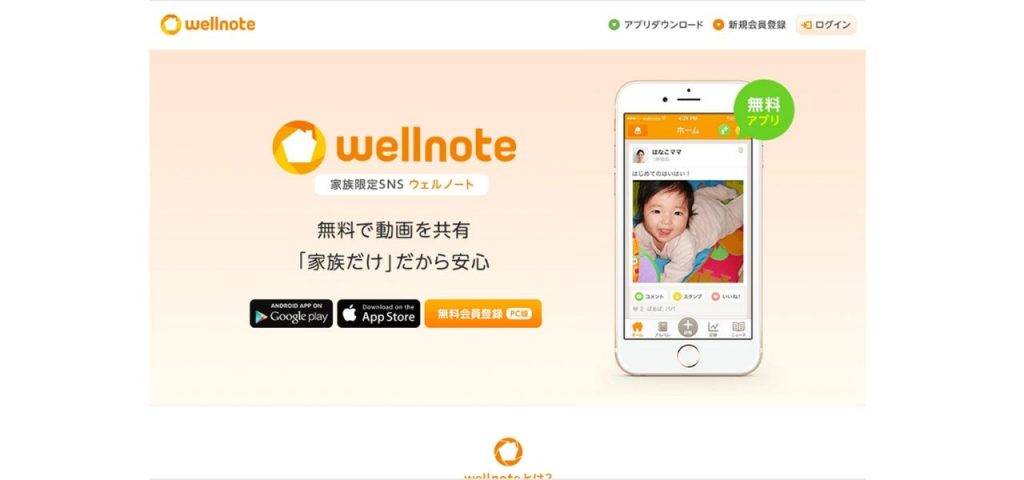
-In order to keep up with the changes, open innovation is essential. What are your goals while doing open innovation?
First of all, we want wellnote to be used by families all over Japan. We want to increase the number of happy families by doing so. We believe that if we can create new lifestyles in the world by building a socially meaningful platform and infrastructure, profits will follow.
 PORT Editorial Office
PORT" is an open innovation media for startups, entrepreneurs, entrepreneurs in recovery, and companies aiming to create new businesses on the theme of social issues, operated by Creww, Inc.




 JA
 EN
