


Technology to sterilize instruments without the use of chemicals
What was the impetus for founding Tabetek?
-What prompted you to establish Tabetek, a company that addresses food loss issues?
Tabetech is a Kyushu University venture company established in 2018. I originally ran a dental clinic, and in 2016 Kyushu University approached me saying, "We have a technology that can sterilize instruments without using chemicals. Can we apply this in dentistry?" This is when I was approached by the university. They asked me if I would like to start a business using this technology.
But at the time, I was very unsure about starting a business because I had no technical knowledge at all. That's when I spilled a chemical used to sterilize instruments in the backyard of a dental clinic. The chemical is a deleterious chemical that irritates the nose and eyes. Sure enough, I got sick when I was wiping up the spilled chemicals.
At that time, I thought, "Well, if this technology can sterilize instruments without using drugs, it might be useful for medical professionals like me," and decided to start my own business.
-I had no connection to technology, but the hands-on experience made me hungry for it.
That's right. So we started out by developing a device to sterilize medical instruments. But the medical field is highly regulated, and the development required a huge cost. Then, a university professor told us, "We are at the practical stage of developing a sterilization technology for agricultural products. Why don't we implement that technology in society first?" We changed our company name to Tabetek and here we are today.
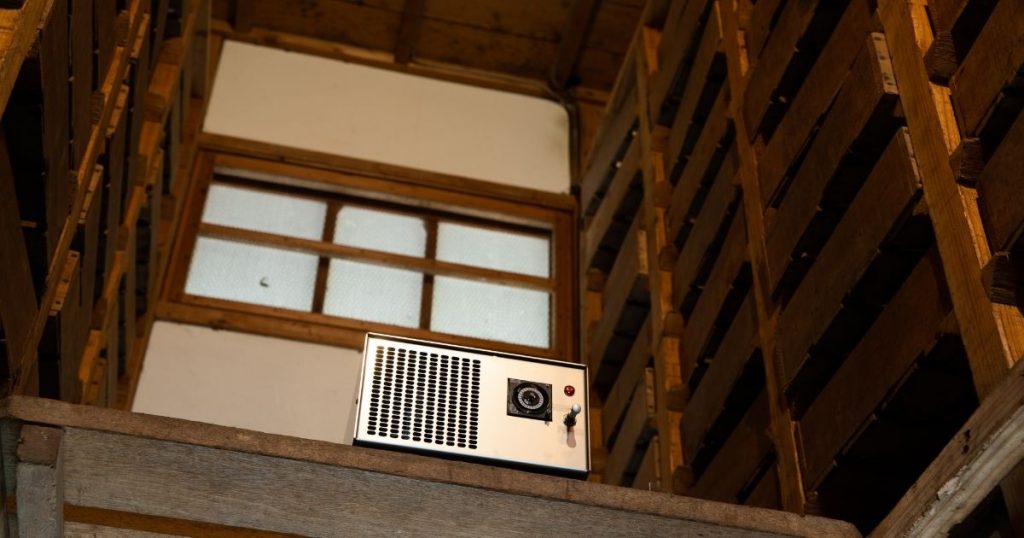
Plasma sterilization system significantly reduces loss rate of oranges stored for long periods of time
Aiming for social implementation through a series of demonstration experiments
-After steering the course toward crop sterilization technology, did you aim for social implementation through a series of demonstration tests?
Yes, that's right. What was developed at the university was a device to sterilize the surface of fruits by generating plasma in a space, but the initial version was very complicated and not affordable for farmers to install. So we spent nearly a year improving it and brought it to a public citrus research institute in Saga Prefecture to begin demonstration tests.
Saga Prefecture produces the largest amount of greenhouse oranges in Japan and is the only region where oranges are produced year-round. So, as a result of repeated demonstration tests throughout the year, we were able to prove that oranges stored for long periods of time in room temperature warehouses retain their freshness with the plasma sterilization device.
-Specifically, what are the effects of sterilization with a plasma device?
In the 2020 demonstration, we examined the loss rate of oranges after 3 months of storage multiple times. You found that the loss rate at the location where the equipment was not placed was 25%, while the loss rate at the location where it was installed was 7%.
In other words, by utilizing the plasma sterilization system, the number of mandarin oranges that had been unavoidably discarded due to mold growth after long-term storage could be reduced to less than one-third of what it used to be. We realized that we could grow our business together with communities and farmers who produce crops on a large scale.
Large-scale farm of a subsidiary of Saga Television began demonstration testing.
Inspired by participation in a regional accelerator program
-Saga Prefecture, at the timing of the repeated demonstration tests from 2020 to 2021.Accelerator ProgramDid you find the
The biggest challenge in research and development is how to obtain funds for development. when I was selected for the Tokyo Metropolitan Government Women's Venture Growth Promotion Project in 2020, and with its help, I was looking for a partner to collaborate with for the project,Saga Accelerator ProgramI found the
Moreover, the participating company, Saga TV Co,startupI immediately applied for the position because I had set my sights on "developing and promoting products that contribute to beauty and health from high-quality agricultural products of Saga through the sixth industrialization of local orchards (mandarin oranges, etc.)" as the area I wanted to target.
What is -Saga TV?cooperative industryHave you done the following?
Actually, the investment from Saga TV did not materialize,Demonstration at a subsidiary's large-scale orchardWe were able to move forward with the The efforts are still ongoing, and this year we were allowed to place four units of equipment and export oranges to the Singapore base of a major travel agency. The business has finally begun to run.
In the future, we would like to build a business in cooperation with local electric power companies so that we can realize profitable agriculture without burdening farmers with initial costs.
Long-term transportation of food products eliminates losses and contributes to environmental issues
Potential for overseas development of house mandarin oranges, which had been confined to domestic distribution
-Why did they export to Singapore?
House oranges produced in the summer were only distributed domestically because they would be damaged while being exported overseas. But if they can be exported year-round, farmers will be able to make money.
The strength of the plasma sterilizer is that it can preserve citrus fruits at room temperature for a long period of time. So, in the area of long-term transportation, we have been developing our business and exporting mandarin oranges to Singapore in the form of a contract between a travel agency and a farmer who has installed a plasma sterilization device. based on the results from February 2022, we have seen that we can drastically reduce the loss rate even during the summer months.
However, this alone was not enough to scale the project, so together with JICA, we proceeded to survey areas in developing countries where citrus fruits are produced on a large scale. We found that the amount of citrus loss during long-distance transportation was still an issue.
Moreover, people in developing countries also want to eliminate food loss due to long-term transportation, but there is no other way to do so than to rely on disinfectants and preservatives. Although they have no choice but to use chemicals, the loss is still generated. That is why we would like to spread TABETECH's technology to developing countries with large citrus production and growing production populations.
-It is not enough to use chemicals.
That's right, and I was astonished when I heard about it in a developing country. Among the chemicals used in food products were the same chemicals that I used to sterilize instruments in my dental practice. In other words, the lives of Japanese people, who depend on imports for many foodstuffs, are built on the destruction of the health and environment of people in developing countries.
Originally, my goal was to develop a device that could maintain freshness at room temperature in areas without refrigerators, but now that I know the realities of developing countries, I also want to contribute to protecting the health and environment of people in developing countries.
Partner with domestic and international companies to grow business globally
Career change from dental practice to startup
-What were some of the challenges of starting a business in an area completely different from dentistry?
It was really tough at first because we started from the beginning, where we were instructed by a university professor on everything from basic knowledge to technical knowledge. I had to face the professor head-on, so our opinions would differ and we would have big arguments (laughs).
Nevertheless, they understood that the world the teacher saw and the world I saw were the same, and gradually my circle of friends grew and my circle of support expanded to include JICA and lawyers.
What was the driving force behind commercialization in a new area?
-What was the driving force behind your decision not to give up and commercialize a business in an area you had no knowledge of?
This was because I knew that farmers were also using the chemicals I was using at the dental clinic. I believed that if I implemented the plasma sterilization system in society, I could contribute to environmental issues and human health, which is why I was able to continue.
Now, we want many people to know through this project that our lives are made possible at the expense of the health and environment of people in developing countries, and we want to solve this problem as quickly as possible.
-Do you have any plans to expand your business beyond citrus in the future?
We are now in the process of developing the technology so that it can be applied horizontally to fruits with thinner skins than citrus fruits, and hope to establish the technology within three years, eventually contributing to the long-distance transportation and long-term preservation of food products in general.
Especially in developing countries, it is difficult for producers to purchase large refrigerators, so we would like to install plasma sterilizers in cool, dark places such as warehouses to create conditions that allow food to be stored for long periods of time while maintaining its freshness.
-open innovationWhat do you think about the acceleration of business by
We believe that we are now entering a phase of collaboration with companies that share TABETECH's aspirations, rather than a demonstration phase through the accelerator program. We are talking about business partnerships with companies in Japan and overseas, and we are also preparing for fundraising, so we would like to continue to grow our business.
 Ms. Mayo Tanae Representative Director, Tabetek Corporation
MBA in industrial management from Kyushu University, Faculty of Economics (born in 1971), with practical experience in business restructuring and M&A. She is a licensed real estate agent and dental hygienist. Family of three: husband (dentist) and son (high school student). Hobby is reading.
| name of company | Tabetek Corporation |
| Establishment | February 2018 |
| Location | 1-3-11 Fujimi, Chiyoda-ku, Tokyo |
| representative | Mayo Tanae |
| Business Overview | Development of plasma sterilization equipment to maintain freshness of agricultural products at room temperature |
| uniform resouce locator | https://tabetech.com/index.html |





 JA
 EN
