


With the funds raised this time, we aim to improve the performance* of existing lithium-ion batteries by establishing a manufacturing system for GMS, a conductivity aid for lithium-ion batteries that utilizes GMS.

List of Underwriters (titles omitted, in no particular order)
Mitsubishi UFJ Capital Limited Partnership (Mitsubishi UFJ Capital No. 9 Investment Limited Partnership)
ANRI Corporation (ANRI-GREEN No.1 Investment Limited Partnership)
Takasago Industries, Ltd.
Sony Innovation Fund
KSP Corporation (NextG Investment Limited Partnership)
CBC Corporation
Akatsuki Ventures Corporation (Dawn Capital No.1 Investment Limited Partnership)
SMBC Venture Capital Limited Partnership (SMBC Venture Capital No.7 Investment Limited Partnership)
Funding Background
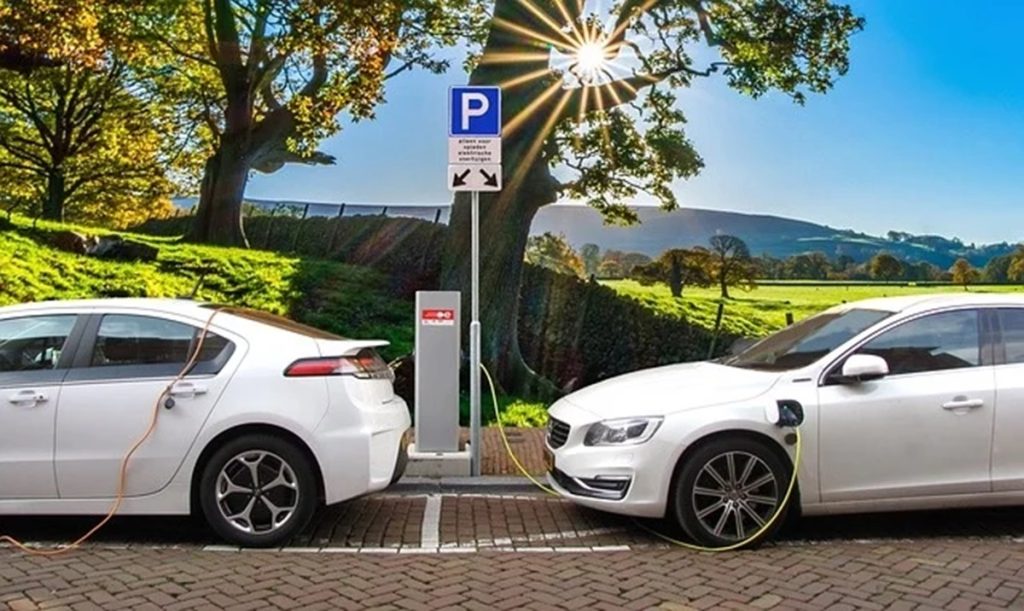
Much attention is being paid to the area of carbon neutrality in order to realize a sustainable society. One of the means to achieve carbon neutrality is the electrification of society, and lithium-ion batteries are expected to be the key to electrification. Lithium-ion batteries can be smaller and last longer than other rechargeable batteries, and are expected to play an important role in the spread of EVs and the increased adoption of renewable energy. However, to truly achieve carbon neutrality, the performance of lithium-ion batteries needs to be further improved.
Since the invention of lithium-ion batteries, various studies have been conducted to improve their performance (e.g., the amount of electricity that can be stored in a single charge). However, research has not been straightforward due to the dilemma of "one performance improvement leads to another performance degradation. The GMS developed by 3DC is expected to contribute to resolving this trade-off.
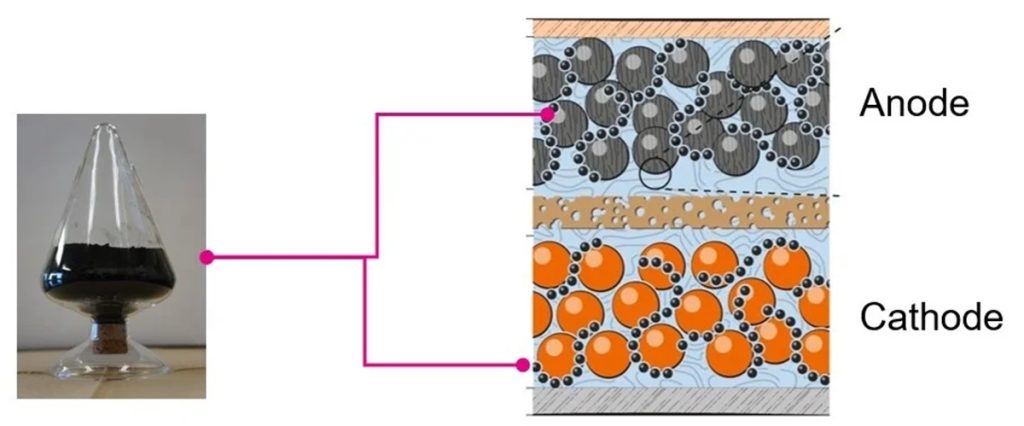
In lithium-ion batteries, a material called "conductivity aid" must be placed near the active material to increase the conductivity of the electrodes. 3DC has been conducting research and development of GMS for conductivity aid, a conductivity aid for lithium-ion batteries using GMS, since its establishment. As a result, the development of GMS for conductivity aid has shown promise, and 3DC has now raised new funds to establish a full-scale manufacturing system for the product.
Future Development
Data shows that mass production of GMS for conductive aids and their incorporation into lithium-ion battery electrodes can eliminate the traditional trade-offs and significantly improve their performance. 3DC's GMS for Conductive Auxiliaries fundamentally improves the performance of lithium-ion batteries, creating batteries that contribute significantly to carbon neutrality.
What is "GMS"?

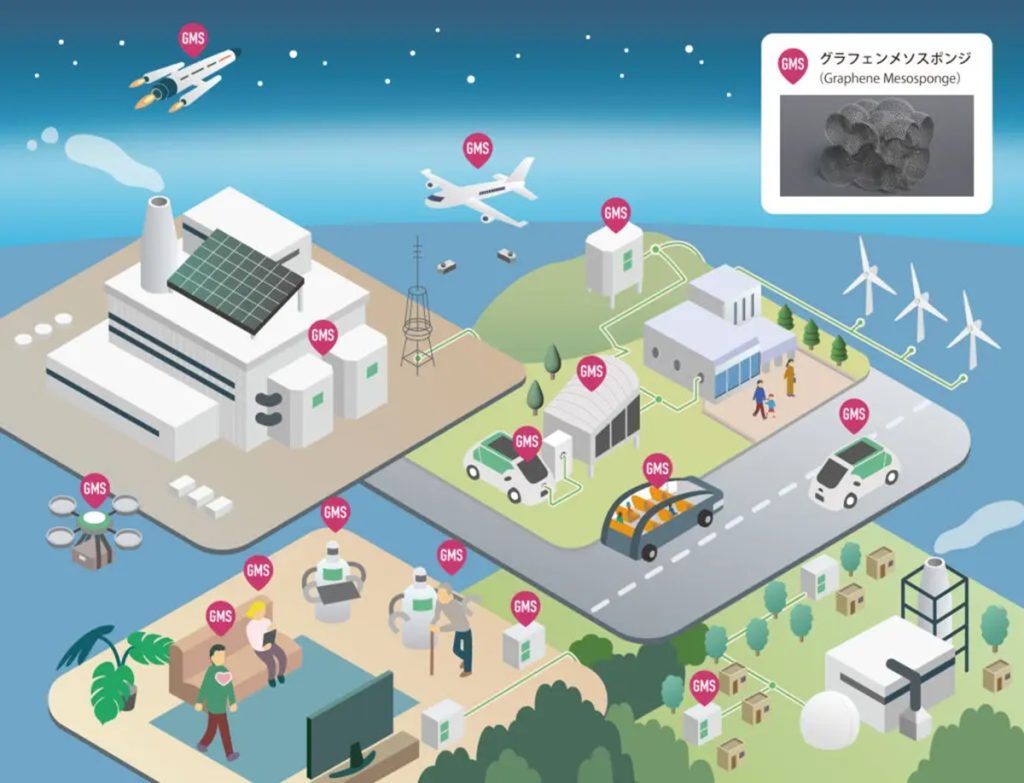
GMS is a true "three-dimensional graphene" material, with a sponge-like three-dimensional structure at a thickness of one atom of carbon. Most noteworthy is its flexibility: it deforms elastically like rubber and can easily accommodate the violent structural changes that accompany battery charging and discharging. 3DC is the only company in the world that has developed such an "elastically deformable carbon material. In addition to flexibility, GMS also has porosity, conductivity, and corrosion resistance derived from its material and structure. Because it is an innovative material with multiple excellent properties, GMS is attracting worldwide attention as a carbon material that can solve the trade-off problem of improving the capacity of lithium-ion batteries by reducing other properties.

What is "GMS for Conductive Auxiliaries"?
3DC's GMS for conductive auxiliaries has a unique structure that efficiently forms good conductive paths, which contributes to the improvement of the performance of high-voltage, high-rate cathodes and silicon-based anodes that are expected to have high energy density. This allows the addition of a smaller amount than conventional conductivity aids such as carbon black and carbon nanotubes, and contributes to improved performance of high-voltage, high-rate cathodes and silicon-based anodes, which are expected to have a high energy density.
Comments from investors
<Mr. Guy Kikuchi, Deputy General Manager, Investment Department 1, Investment Division 1, Mitsubishi UFJ Capital Co.
We are very pleased to participate in the funding round of 3DC, a Deep Tech startup of great social significance that contributes to longer battery life and higher performance. Furthermore, we expect that the social implementation of 3DC's technology will be a dream material that has the potential to bring about a major change in the entire battery industry, which has a broad base.
We will continue to support 3DC for further business growth by making the most of MUFG's resources.
<Mr. Yuta Motoshima, Principal, ANRI, Inc.
This time, we were able to get many investors to participate in this project in the form of a second close! Battery development is a long industry that cannot be accomplished by one company alone. The number of investors as well as business partners and researchers is steadily increasing, and we are really looking forward to the future. Let's join forces with many people and deliver new batteries to the world with technology originating in Japan!
<Mr. Tatsuya Suzuki, Representative Director of Takasago Industries, Inc.
3DC's GMS is a novel 3D structured carbon material with excellent features not found in existing carbon materials, and is an innovative material that is expected to improve the performance of lithium-ion batteries and breakthroughs in next-generation batteries. The company has received requests from many domestic and foreign companies to provide samples, and its future activities are expected to attract much attention. We are pleased to have the opportunity to be a part of the innovation that GMS is bringing to the world's attention. We are also confident that the company will deliver excitement and inspiration as it grows and develops!
<Kazuto Hatano, President and CEO, Sony Ventures, Inc.
We feel that GMS, a new carbon material developed by 3DC, has potential as a material because it can be used as a conductive aid in batteries, thereby contributing to improving their performance and extending their service life.
We will support the company's further development and growth as the demand for batteries increases further in the future.
<Tomohiro Otsuki, Incubation Manager, KSP Inc.
We have joined 3DC as a shareholder, which was highly acclaimed in the "Kawasaki Deep Tech Accelerator," a support program implemented by Kawasaki City and our company. We will strongly support the company, which is fundamentally improving the sustainability of energy storage devices with its electrochemically and mechanically superior materials.
<Mr. Haruo Ieda, Executive Officer, CBC Co.
Like pickaxes in the gold rush of old, and GPUs in generative AI more recently, we are confident that 3DC's innovative carbon materials will become key materials essential for next-generation batteries and future industries.
As an industrial partner of 3DC, we will do our utmost to implement GMS in society.
<Yoshinori Yanagisawa, Senior Associate, Dawn Capital
Lithium-ion batteries, which are widely used in electric vehicles and household appliances, are indispensable in supporting our daily lives. 3DC's GMS is a battery material that not only improves battery performance but also extends its service life, making it superior in terms of sustainability. We believe that this is a product from Japan that can contribute to a large global industry, and we believe that we are the team that can make it happen. We will do our utmost to support you! Let's win in the world!
<Junya Yasuda, General Manager, Investment Sales Department IV, and Hayato Magome, Deputy General Manager, Investment Sales Department IV, SMBC Venture Capital Co.
As electrification progresses toward a sustainable society, there is a need for superior carbon materials that can advance batteries. In this context, 3DC's GMS is a carbon material with unique properties different from conventional ones and has great potential to accelerate the update of batteries. The SMBC Group is committed to supporting this challenge as much as possible.

Takuma Kuroda, Representative Director and CEO of 3DC Comments
The lithium-ion battery and its materials business has been tried by various start-ups around the world, but only a few companies have succeeded. This is an extremely difficult challenge. However, I believe that there is no other market where so many important assets lie dormant for the purpose of providing value from Japan to the world in the future. We are honored to have the support of so many investors and to be able to take on the challenge of this highly challenging but important business. Together with a great team, great investors, and great stakeholders, we will surely create a business that delivers value to the world!
About 3DC
3DC is a Tohoku University venture company developing Graphene Mesosponge® (GMS), a new carbon material used in electrodes for energy storage and power generation devices such as lithium-ion batteries, next-generation batteries, capacitors, and fuel cells, which are essential for achieving carbon neutrality.
3DC is currently working with domestic and overseas manufacturers of batteries, battery materials, capacitors, and automobiles to demonstrate the introduction of GMS in preparation for full-scale market entry in 2026 and beyond. We have been able to produce superior data to existing products, including those for lithium-ion batteries, and we are being actively approached by battery manufacturers and others.
In January 2024, we raised 250 million yen in pre-series A 1st close. In February 2024, we began shipping GMS for conductivity aid, which contributes to improving the performance of lithium-ion batteries, and are now vigorously preparing to establish a manufacturing system for this product.
In addition to Tohoku University, 3DC is currently conducting joint research with Yokohama National University, Osaka University, and Konan University. In the future, we intend to further increase the number of joint research partners and demonstrate the effectiveness of GMS by utilizing cutting-edge university technology.
In the future, we hope to realize a future society that is friendly to the environment and people, where GMS plays an active role in all aspects of storing and using electric energy.
3DC Corporation|Company Profile
| name of company | 3DC Corporation |
| Establishment | February 2022 |
| Location | Tohoku University, 2-1-1 Katahira, Aoba-ku, Sendai-shi, Miyagi Advanced Materials Research and Development Center for Industry-Academia Collaboration |
| representative | Takuma Kuroda, Hirotomo Nishihara |
| Business Overview | Development and sales of carbon materials |
| uniform resouce locator | https://www.3dc.co.jp/ |





 JA
 EN
