


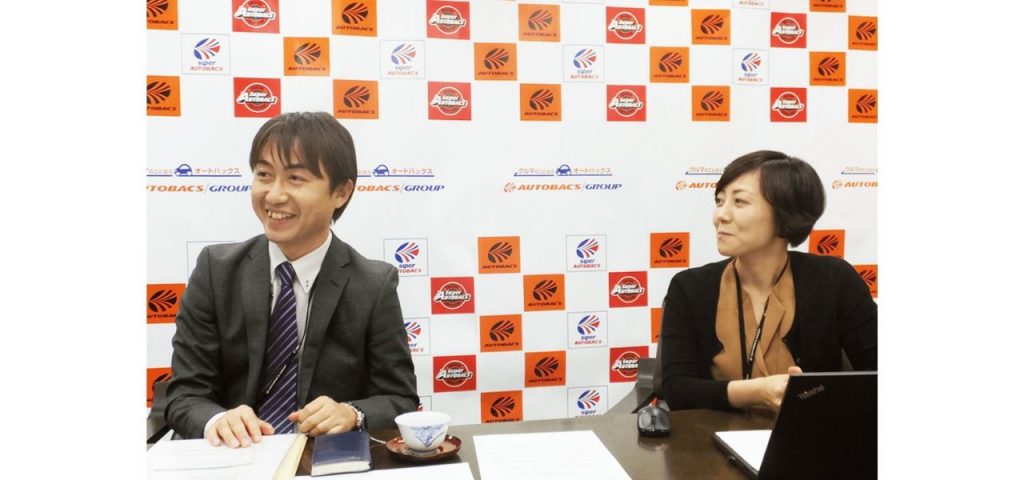
We spoke with Susumu Sakuma, executive officer who heads the business development division at the company, and Katsuhito Ohki and Junko Naito of the business development department about the current status and prospects for collaboration.
*This article is reprinted from an article published in CREW MAGAZINE on December 14, 2015.
The theme sought for the startup was "Proposing a smart car life.
- How did you first encounter Creww?
Our president was told about the company by one of our business partners. While the creation of new businesses and services had been an issue within the company, the president introduced us to the Business Development Department. In fact, the Business Development Division had been seeking contacts with startups, participating in venture events and matching parties, and looking for people to work with. That is why I immediately met with the person in charge at Creww. At first, I was under the impression that he was a young president, dressed very casually (laughs).
- Autobacs Seven is a large company listed on the first section of the Tokyo Stock Exchange with more than 4,200 consolidated employees.
We have been working on new businesses and services within our company, but we felt that it is difficult for businessmen to make big innovations. Startups are trying to accomplish something from nothing, from zero, with their lives and assets. It is difficult to find people within a company who can work with such passion and ambition.
Another important factor was that we could start with a relatively affordable budget, and that the company would make appropriate proposals based on its understanding of our business and follow up with us throughout the duration of the accelerator program.
- What was the reaction within the company to your open innovation efforts?
Our company did not have much of a culture of collaboration with people outside the company, and some people responded, "Are we going to spend money on this?" But in the end, we "leaned out" and managed to get a "Go" and we were able to start the project. Then, once we started the initiative, we tried to involve the board members one by one, saying, "We want you to listen carefully to the startups and make a decision at the final presentation within the company.
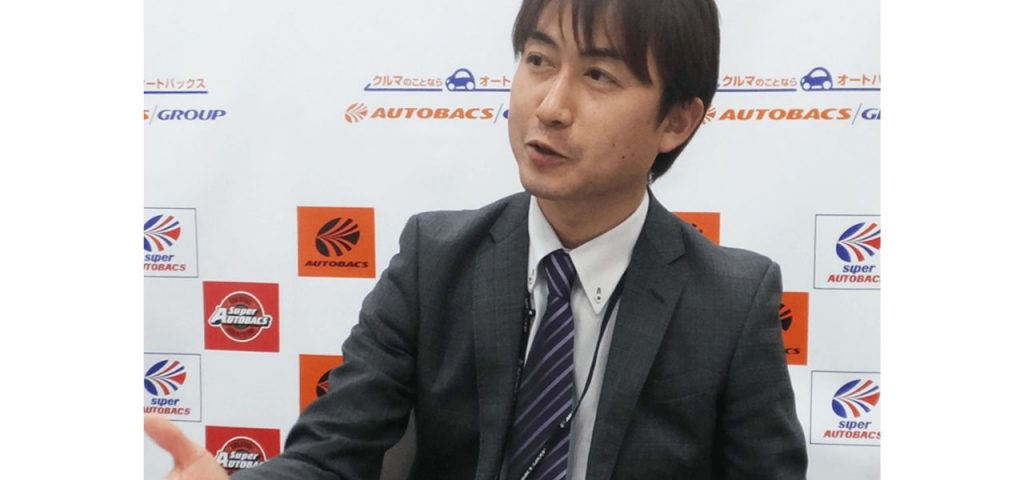
- In August 2015, we started an accelerator program under the theme "Smart Car Life Proposal"
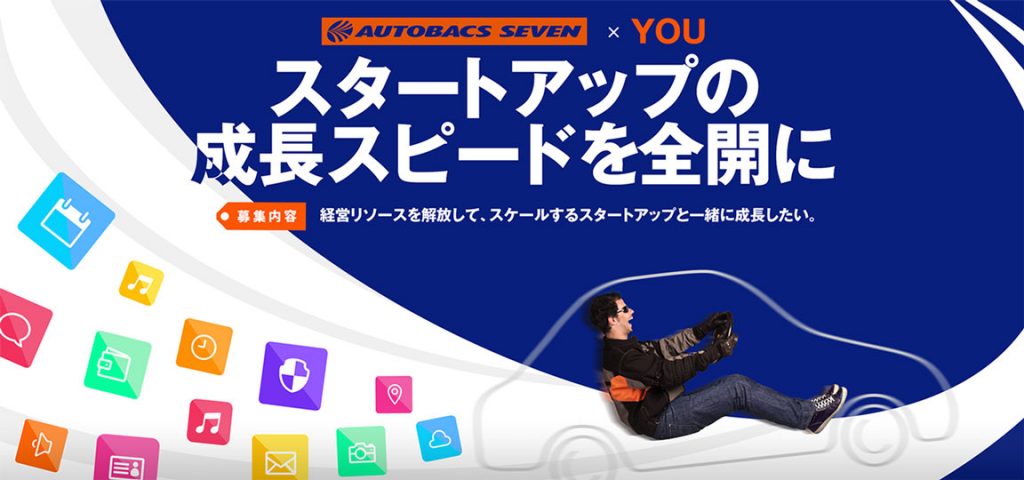
We received 46 applications, as the theme was quite broad.
At first, myself (Mr. Ohki) and Naito were responsible for scrutinizing the proposals and liaising with the startups, but we were short-handed, so we urgently asked our boss, Sakuma (the executive officer in charge), to increase the number of staff. In the end, out of a department with only seven members, five became involved, but it still took two weeks.
Partly because there were so many attractive proposals, and partly because we wanted to eliminate preconceptions by judging the proposals with many eyes. Above all, we needed the manpower to make a serious decision without forgetting our gratitude to all the startups who submitted proposals.
- How did you narrow down the list of 46 proposals?
As we actually interact with each other through chats and other means, we inevitably tend to push for the startups that we have been assigned to. For this reason, I tried to keep the following five perspectives in mind.
(1) Does the concept fit?
(2) Is there a social need?
(3) What kind of person (manager) is he/she?
(4) What about feasibility?
(5) What is the scale and future potential of the company?
On the other hand, since we were attempting to grow together with startups, we were not too conscious of synergies with our business.
- And we'll narrow it down to five final companies.
The five companies with which we have started collaboration this time are Kids Star (President: Masahiro Hirata), a hands-on educational app; CAMELORS (President: Yasuyuki Tane), an IoT-related company; LifeShare Works (President: Hiroaki Shiba), a car sharing service between individuals; Warrantee (President: Yusuke Shono), a service to digitize warranty certificates; and FacePeer (President: Hidehiko Tada), a video chat platform. (President: Yusuke Shono), and FacePeer (President: Hidehiko Tada), a video chat platform.
Some of these initiatives have yet to be launched, but we plan to gradually bring them to fruition. Since the future is important, we would like to proceed with more involvement from within the company.
- This was your first time working on open innovation. What was the most challenging aspect?
This is part of how we evaluate startups and their proposals. With absolutely no objective criteria or know-how within the company, this was all new to us. I was anxious, but I was able to overcome that and now I feel confident.
On the other hand, there are challenges and reflections. For example, we set up the presentation in such a way that all the executives were lined up in a row, which made the startups nervous. It was also the first time for us to communicate with startups via chat or e-mail, so we sometimes wondered if it was the right way to do so. We would be very grateful if Creww could give us some advice in these areas as well.
- What advice would you give to companies that are thinking about starting Open Innovation?
This is not so much advice, but in fact, at first we too wondered if it would be possible to make a decision based solely on our own criteria without any know-how, but we managed to do so. I think it is important to try it out. If you actually try it out, you will be able to create a "chemical reaction" within the company, which will further increase the likelihood of new business opportunities.
- Thank you very much.
 PORT Editorial Office
PORT" is an open innovation media for startups, entrepreneurs, entrepreneurs in recovery, and companies aiming to create new businesses on the theme of social issues, operated by Creww, Inc.



 JA
 EN
