


In addition to building an energy management system that includes support for the introduction of EV vehicles and chargers, the company aims to reduce CO2 emissions by 30,000 tons/year through consumer outreach efforts such as the display of CO2 reductions through "GO.
The project will provide operational support to approximately 100 cab operators nationwide, mainly in urban areas, by generating recharging plans based on the characteristics of cab operations in each area, as well as providing support in terms of facilities, such as the provision of vehicles and rechargers.
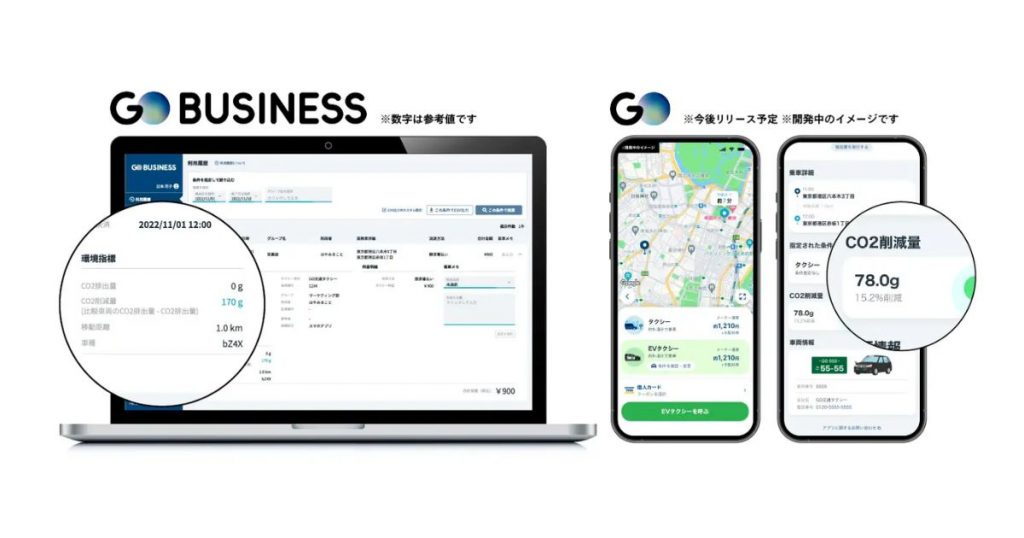
In addition, for cab users and corporate customers who pay attention to ESG management, we will launch a service that displays the amount of CO2 reductions achieved by riding EV vehicles on the "GO" cab app and the "GO BUSINESS" corporate service screen.
The EV vehicles will be decorated with original wrapping advertisements to raise public awareness through the sight of cabs driving in the city.
Through these efforts, we aim to reduce CO2 emissions by 30,000 tons/year* by 2027 and decarbonize the entire industry.
Estimated from the difference in CO2 emissions between Crown Comfort, which has the largest number of vehicles, and EV vehicles, based on the annual mileage of 87,372km from Taxi Today by the National Federation of Taxi and Hire Taxi Associations.
The challenge of a major social issue of decarbonization, changing social consciousness from the cab, a landscape of the city.
Hiroshi Nakajima, President and CEO, Mobility Technologies, Inc.

GX initiatives are urgently needed in the mobility sector in the face of the major theme of decarbonization, which needs to be solved by society as a whole.
However, decarbonization cannot be solved simply by introducing EV vehicles, but can only be reached by solving highly complex events, such as the optimization of operational operations and recharge/discharge, in addition to coordination with power generation and transmission.
Along with the efforts of service providers, it is also essential to work to shift the consciousness of users toward decarbonization. The key assumption for such a highly complex and dynamic decarbonization of the entire industry is "whether or not DX is achieved before GX".
Given this premise, the decarbonization of the cab industry is a theme that requires the very assets that MoT possesses. As a realization of our mission, "Making people happy through mobility," we are committed to the decarbonization of the taxi industry. We will do our utmost to decarbonize the cab industry, which is a familiar and familiar part of the cityscape, as a means of realizing our mission of "making people happy through mobility," and to help move the general public's awareness toward decarbonization.
Project Details
1. Establishment of energy management system
We will develop and provide an optimal system for EV operation management and energy management by developing and verifying technology for an AI system that generates recharging plans that do not impair operational efficiency, taking into account the actual operating distance according to the characteristics of the area and the actual cab operation practices, by 2031 at the maximum.
<Major Issues
The timing of the charging time is extremely limited, such as during crew breaks, and it is necessary to install the chargers in conjunction with the operation.
If the timing of recharging is set freely, recharging may occur at times when electricity costs are rising.
In the cab industry, where the daily driving distance is approximately seven times greater than that of private cars, it is difficult for cab operators to manage recharging operations on their own over long distances. MoT will solve these issues for the introduction of EVs. By providing recharging services at appropriate times from the wholesale electricity market at a low cost, MoT will achieve greater efficiency than the operation of recharging equipment alone, thereby realizing comprehensive CO2 reduction in the cab sector.
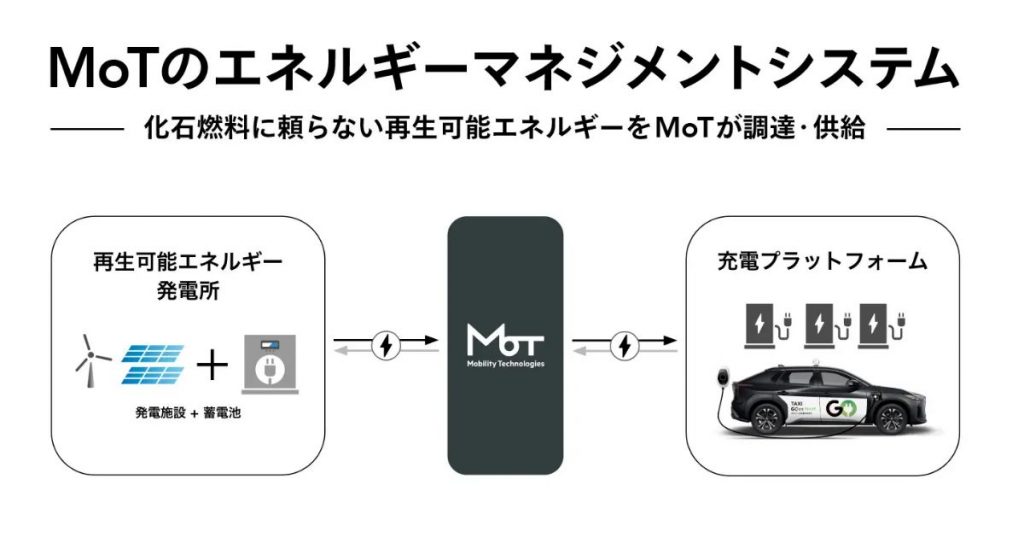
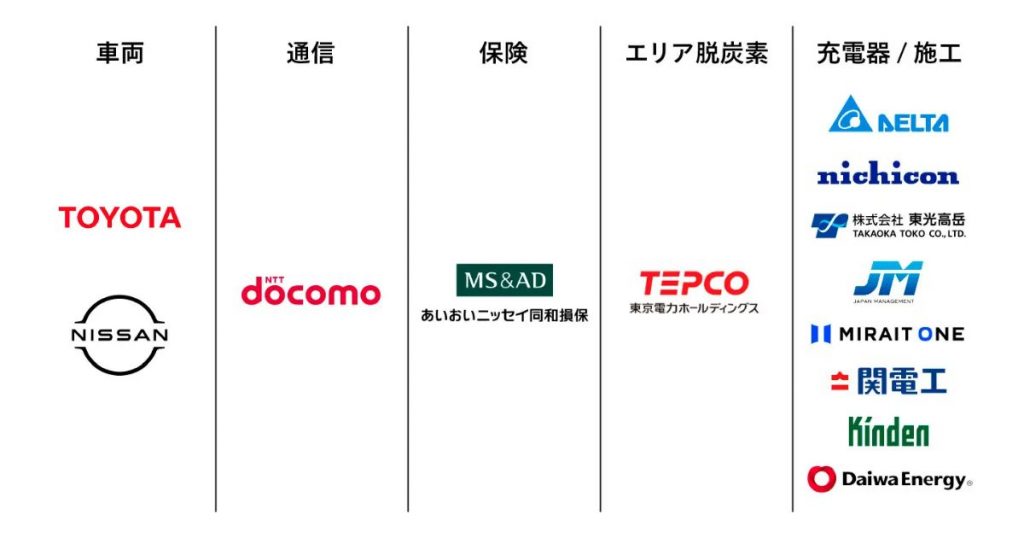
In collaboration with Tokyo Electric Power Company Holdings, Inc., we will decarbonize the offices where EV Taxis will be introduced. MoT will also prepare a new insurance menu, planned and developed with Aioi Nissay Dowa Insurance Company, to compensate for risks such as economic damage caused by the failure of equipment such as chargers and accumulators or the inability to operate due to equipment malfunction.
2. Provision of EV vehicle leasing and charging equipment to cab operators
The following will be provided to GO member businesses (as of December 2022) that have pledged to participate in the project.
<Offerings
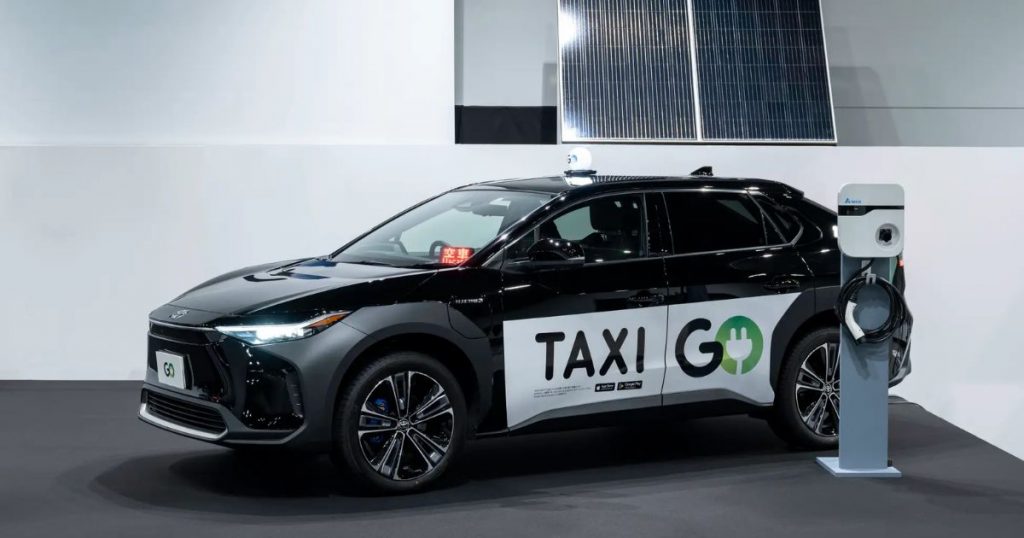
Leased vehicles: Up to 2,500 Toyota's bZ4X, Nissan's LEAF and Aria, etc. until 2031 (up to 2/3 of each vehicle will be subsidized by the GI Fund; the number of eligible vehicles will be expanded in the future)
Chargers: Provision and installation of 400 quick chargers and 2,500 regular chargers (maximum total of 2,900) at each business location (no real cost to operators by utilizing GI Fund subsidies, etc.)
In addition to designing a system that effectively recharges taxis by using quick chargers during breaks in the operation plan and regular chargers during non-operating hours, we will also consider installing recharging equipment outside the cab office according to the cab operation plan in the future. Cab operators will pay MoT a charge service fee based on the amount of recharging.
3. Visualization of CO2 reductions
The GO BUSINESS service for corporate users of the GO cab app displays the amount of CO2 emissions per EV cab vehicle on the GO BUSINESS management screen, making it possible to visualize the amount of CO2 emissions reduction.
As an initiative for ESG management, which is expected to attract more attention in the future, we will not only visualize the information on the "GO BUSINESS" application for corporate users, but also plan to display the same information on the "GO" cab application screen for general users in the future.
*Specific calculation criteria for CO2 emission reductionshttps://mo-t.force.com/gobusiness/s/article/40050?language=ja
For the future
By providing vehicles and chargers and building an effective energy management system specifically for cab operations, CO2 emissions can be reduced by almost 100% and 30,000 tons/year.
In the future, this initiative will be expanded to all cab operators to further reduce CO2 emissions, with the aim of raising decarbonization awareness throughout Japan through cab GX.
The project will also generate carbon credits from CO2 emission reductions to accelerate the decarbonization of the cab industry, as well as the decarbonization of the rest of the mobility industry.
List of cooperating businesses
(1) Taxi operators: Ebara Kotsu Corporation / Nihon Kotsu Yokohama Corporation / Fukuoka Kotsu Corporation / Bunka Taxi Corporation and approximately 100 other companies
(2) Cooperating Companies:
-Area Decarbonization : Tokyo Electric Power Company Holdings, Inc.
-Risk Assessment: Aioi Nissay Dowa Insurance Co.
-Communication Solutions for GX Business: NTT DOCOMO, INC.
Supported by: National Federation of Taxi & Hire Companies
Adoption of Green Innovation Fund Project
https://mo-t.com/news/pr/2022/07/19/3xxjwued3t4x3nnvcji8lk
Mobility makes people happy. About Mobility Technologies, Inc.

Mobility Technologies is a provider of a variety of IT services to update Japan's mobility industry with the mission of "Making people happy through mobility. Mobility Technologies provides a variety of IT services to update the mobility industry in Japan.
| name of company | Mobility Technologies Inc. |
| Establishment | August 1977 |
| Location | Nagatacho GRiD, 2-5-3 Hirakawacho, Chiyoda-ku, Tokyo |
| representative | Hiroshi Nakajima |
| Business Overview | Businesses aimed at solving social issues through upcycling, etc. |
| uniform resouce locator | https://somete.jp/ |






 JA
 EN
