



Seeking new technologies for a "first-buy, first-serve" DX that provides the highest level of security.
--What is Gaspar's business?
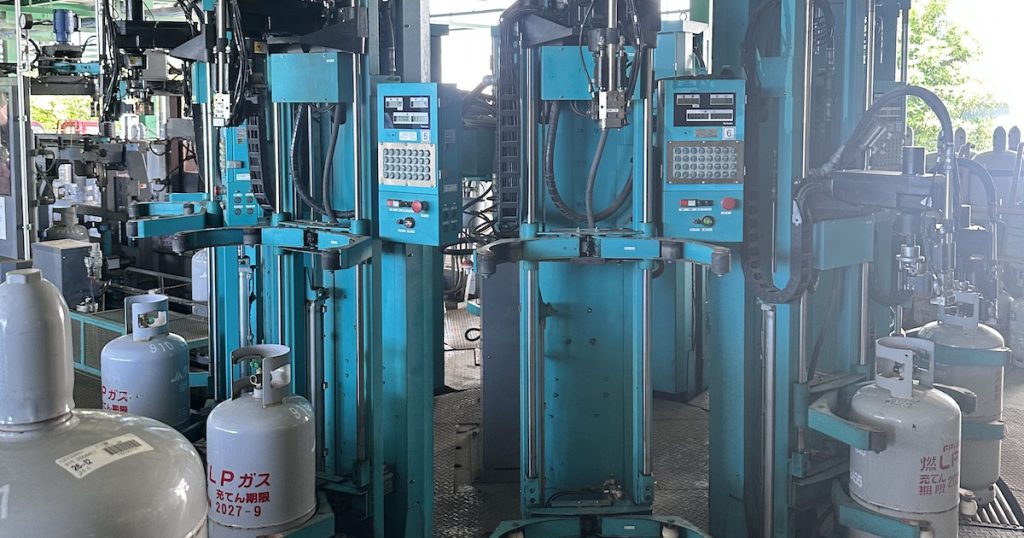
As a member of the Daito Kensetsu Group, Gas Pal is involved in the LP gas supply and sales business, supplying LP gas to more than 400,000 customers at approximately 100 business locations nationwide. We are developing various businesses with the aim of becoming a comprehensive energy company as well as a company that supports people's "way of life.
--Please tell us about the background of your participation in the matching program organized by KERI (Korea Electric Research Institute) in Korea this time.
As a result of discussions with management on how GASPAL should promote DX, we decided to promote bottom-up DX as a first step, and we have been promoting DX measures that will lead to reforms in the way people work in the field by designating a part of the Kyushu area as a special DX zone. As a first step, we decided to promote DX in a bottom-up manner.
In the course of the project, we came to believe that not only bottom-up but also top-down DX was necessary, and we decided to start top-down DX in the second year.
What is the top-down approach? The management philosophy of the company is "first-purchase, second-benefit", or the concept of profiting by providing the highest level of security and service, and we are now working on a DX that will strengthen the gas business as a whole.
Since this could not be achieved by our company alone, when we were thinking of engaging in open innovation by gaining exposure to the technologies and services of startups, we learned of the existence of a program that brought together technologies from Korean startups and decided to participate.
As a result, we received entries from more than a dozen companies and decided to proceed with collaboration with four companies.
GIF KORIA's products are revolutionary, with no alternatives in Japan. Intuition led to collaboration
--What were the points that led to GIF KORIA's selection among those four companies?
We actually met GIF KORIA at a pitch event that was included in the program, and when we spoke with them individually and saw the technology and products they were handling, we had a gut feeling that we could use this in our business. From there, we decided to collaborate with them.
--Is the actual collaboration close to the introduction of the service?
Yes, that is correct. However, rather than simply introducing the service, we have begun a collaboration in which GIF KORIA will develop a product for use with our LP gas and conduct a demonstration test, and we will then proceed to consider how we can utilize and sell that product.
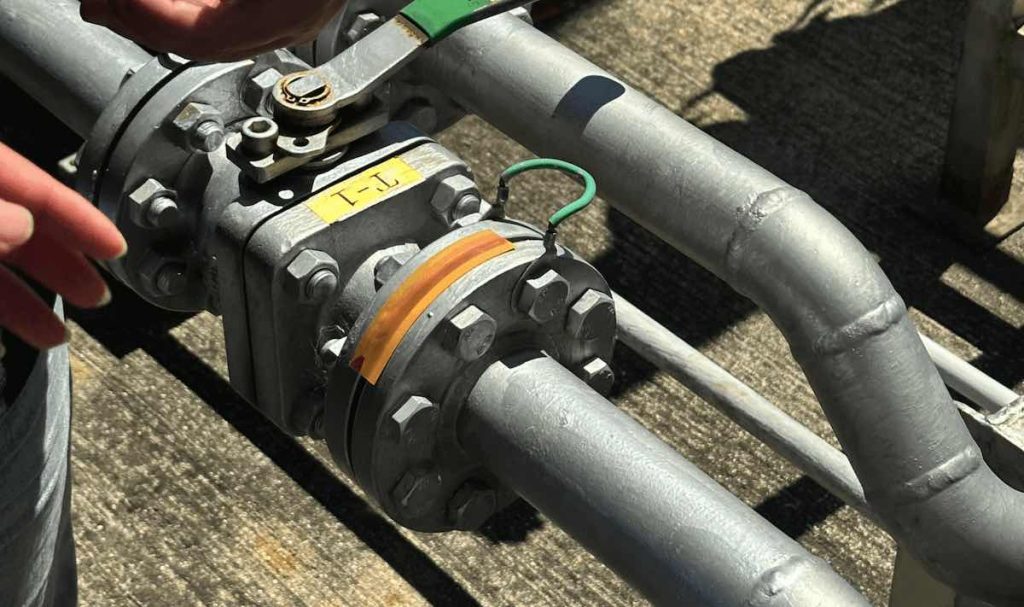
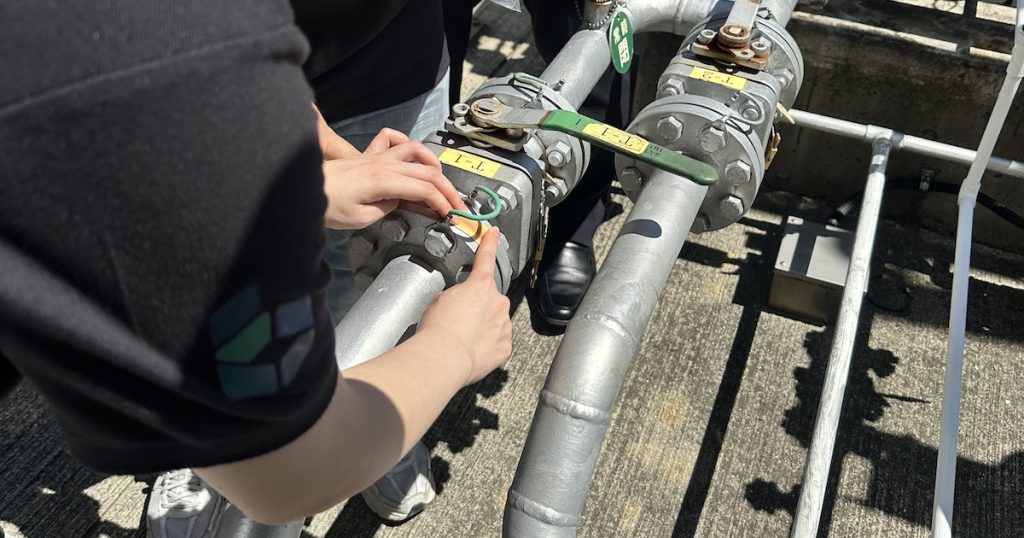
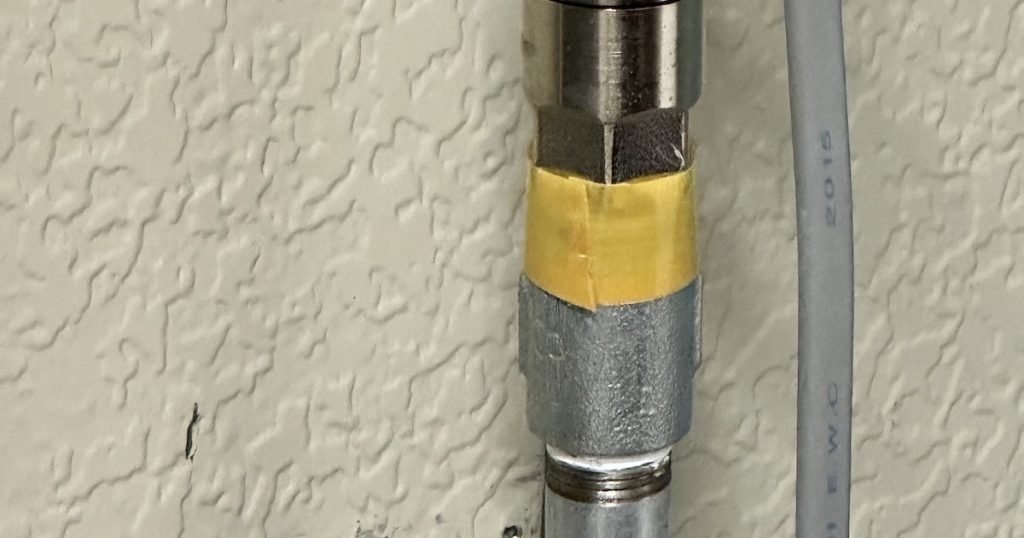
Specifically, GIF KORIA has developed a tape that changes color when it detects toxic gases, which has already been used in factories and other facilities in Korea. This tape is a very simple but highly sophisticated product that can identify gas leaks that cannot be seen by simply wrapping it around the connection of gas pipes that may leak gas, using the color change.
We would like to have this product developed to react with Japanese LP gas, and we would like to conduct demonstration tests at Japanese gas facilities to verify and redevelop the product, leading to commercialization, patent acquisition, and sales expansion.
To begin with, there is no similar product in Japan, and gas facilities in Japan must be manually inspected one by one on a regular basis for leaks from gas piping sections using a gas detector. If this can be replaced with a tape, inspections can be omitted and made more efficient, and even if there is an actual leak, it can be quickly confirmed by the change in color of the tape.
In many cases, when gas leakage is very small, the leak is diffused by the atmosphere and the location of the leak cannot be identified. If the location of the leak can be clearly identified by the color change of the tape, we believe this could be applied not only to gas companies but also to Japanese society at large.
-There is no alternative in Japan, is there?
There are devices that use cameras to visually check gas and identify leaks through images and video, but they are very expensive and it is not realistic to install them at all of the gas facilities we manage. With tape, we can introduce such equipment at a much lower cost, which we consider to be a very innovative product.
Successful development for Japan will expand sales channels not only to gas utilities but also to commercial facilities and buildings
--I understand that it is being developed for Japan, but are there any differences in composition between Korean LP gas and Japanese LP gas?
It is not a tape that reacts to the gas component itself, but to the odorant attached to the gas, which is said to be slightly different in Korea and Japan. We asked the company to develop a tape that reacts to the odorant in Japanese LP gas.
--What stage of development are you at?
From January to June 2025, we developed a tape that reacts to Japanese LP gas and conducted a demonstration test on site to see if it could actually be used. As a result, some of the results were as expected, but when we compiled opinions from the field, some issues emerged, so we entered another phase to improve the prototype.
It is uncertain whether the product will reach the level we are looking for in the future, but we need to determine where we both land and what level of product we can sell and utilize, so the actual commercialization and patent acquisition phase will require six months to a year.
--What kind of venues do you envision for the introduction and utilization of the product once it is actually commercialized and its sales are expanded?
Basically, we believe there is value in using this service with LP gas companies. There are about 16,000 companies in Japan that sell LP gas like we do, serving about 20 million households, so it could be used for such facilities.
In addition, we believe there is potential to expand to end users of gas pipes, such as large theme parks, commercial facilities, buildings, and general users.
--The market size is large, isn't it?
Yes, it is. If it works out, the market size will be large, but how well we can develop products that match the needs of the field is a challenge for the future. If we can clear that up, I expect it to become a very large sales channel.
--Did you encounter any barriers, including language differences, in working with a Korean company this time around?
Creww Koria acted as an interpreter between us and GIF KORIA, and we didn't need to hire a special interpreter since we had people who were fluent in Japanese for the other projects we collaborated with.
So communication is very smooth, and I don't feel any difference in business practices between Korea and Japan. We are able to communicate well by using translation tools when exchanging e-mails.
Developed a tape that makes toxic substances visible, taking advantage of accident prevention and Korea's unique "color" feature.
We then interviewed GIF KORIA, Inc.
--GIF What is KORIA's business and what has it done so far?
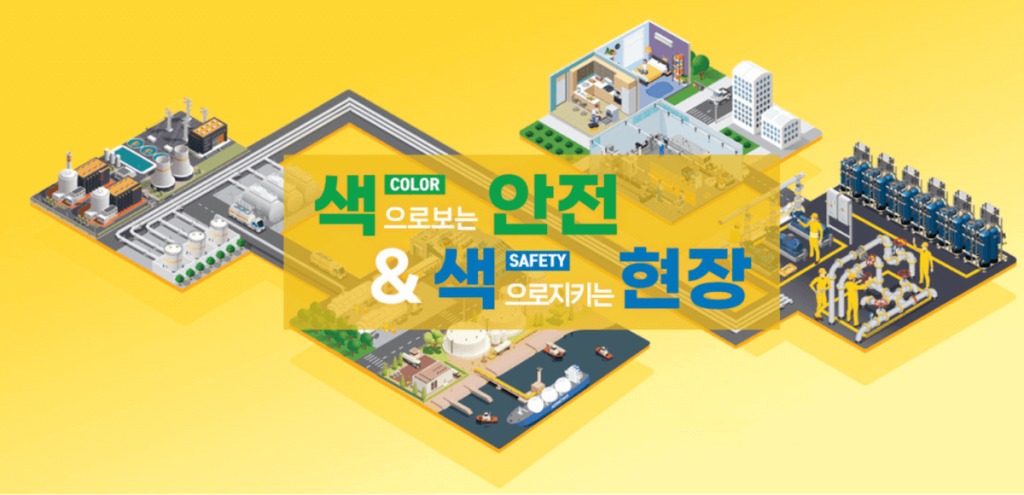
In Korea, it is common practice to use colors to indicate necessary information, for example, at highway junctions to indicate the destination in colors, or to indicate the path leading to an emergency passageway in colors when a dangerous situation occurs at a factory. In addition, a change in mindset has occurred, whereby instead of solving problems after a major accident has occurred, thorough prevention is sought before an accident occurs.
Therefore, from the viewpoint of accident prevention and taking advantage of the Korean "color" feature, we have developed a tape that allows hazardous substances to be visually detected by color change. The two features of the tape are that it does not use electricity, so it does not malfunction, and that anyone can visually detect the danger by the change in color.
In Japan, our tapes are being used to detect hazardous substances in factories that make Samsung and LG displays, ships, power plants, and factory sprinklers. We have a distributor contract with a company in Japan, and we are expanding to China and Taiwan.
Other applications include air conditioners and dishwashers for general household use, and we have recently developed protective clothing that changes color in response to hazardous substances to meet the need for "personal safety.
Other products under development include tapes that react to water and ammonia, products related to LP gas and LNG, and an AI monitoring system that sounds an alarm when a change in the color of the tape occurs to warn of danger.
--When should this tape be reapplied or replaced?
The indoor standard will be replaced within one year. It will be replaced each time there is exposure.
Aiming for commercialization in mid-2026, the company is taking on the challenge of developing a tape that is tailored to the needs of Japan.
--What is the background of your participation in the matching program between Korean startups and Japanese companies?
I was introduced to this matching program after receiving an award from another program conducted by the Institute of Electrical Research, and decided to participate.
--What made you want to team up with Gaspar?
I had been developing products related to LP gas before I met the Japanese company, and the main reason was that I thought we could create better products together if we teamed up with Gas Pal, which sells LP gas and city gas while managing safety aspects in a hard way.
--What are your impressions of the demonstration experiment?
I had the opportunity to inspect the locations where outdoor gas facilities are installed for this demonstration, and learned that in Japan, inspections are on a cycle of once every four years, as safety is thoroughly enforced and gas leaks rarely occur in the first place. Since our tapes are replaced every year, I realized that we need to adjust to the Japanese level.
In addition, we have visited Gaspar's sales offices and partners and have confirmed that our tapes can be installed at quite a few points. We feel that if we reconsider and develop the product well in the future, it can be applied to quite a few companies and households, and since Gaspar is treating us with a strong will to make it applicable, we would like to continue working together to realize a good product.
--How long do you think it will take to achieve this?
Our assumption is that by the end of 2025, a prototype of the product with the improvements resolved will be completed. We will conduct on-site demonstration tests with it, and if all goes well, we expect to be able to commercialize and sell the product by mid-2026. Please look forward to future developments.
| name of company | Gas Pal Corporation |
| Establishment | June 27, 2002 (Heisei 14) |
| Location | Tennozu Central Tower 11F, 2-2-24, Higashi-Shinagawa, Shinagawa-ku, Tokyo 140-0002, Japan |
| representative | Toshiaki Hashimoto, President and Representative Director |
| Business Overview | Energy business (LP gas, city gas, solar power), laundromat business, LP gas facility construction |
| uniform resouce locator | https://www.gas-pal.com/ |
| name of company | GIF KOREA Corporation |
| Establishment | February 2016 |
| Location | 1145 216, Bangeojin Circulation Road, Dong-gu, Ulsan Metropolitan City, Republic of Korea |
| representative | Ahn, Hyun-soo. |
| Business Overview | Philosophy: To provide a safe environment where everyone can intuitively detect abnormalities through a method of visualizing safety using color. |
| uniform resouce locator | https://www.gifkorea.co.kr/html/index.html |
 Mr. Masaya Iyoki Deputy General Manager, DX Promotion Office, Gaspal Corporation
In September 2004, he joined Gas Pal Co. After joining the company, he gained work experience in a variety of workplaces and worked at the head office from 2009, where he worked in the Security Management Department, Corporate Strategy Office, and Information System Department before joining the DX Promotion Office in 2022. He is engaged in the planning, promotion, and implementation of improvements and streamlining of safety operations, as well as project manager of system development.
 Mr. Hyun-Soo Ahn Representative of GIF KORIA
G.I.F. Korea provides innovative solutions to ensure worker safety by utilizing sensor technology that visualizes gas and chemical leaks by color. We assist in the immediate detection of gas and chemical leaks through sensor color changes. The technology, which was jointly developed with Samsung Electronics, is particularly useful in improving safety in the chemical plant, plant, gas facility, and refrigerant facility industries. This innovative company is expected to expand its market.





 JA
 EN
