


From the real voices of companies, Kanto Bureau of Economy, Trade and Industry becomes the hub
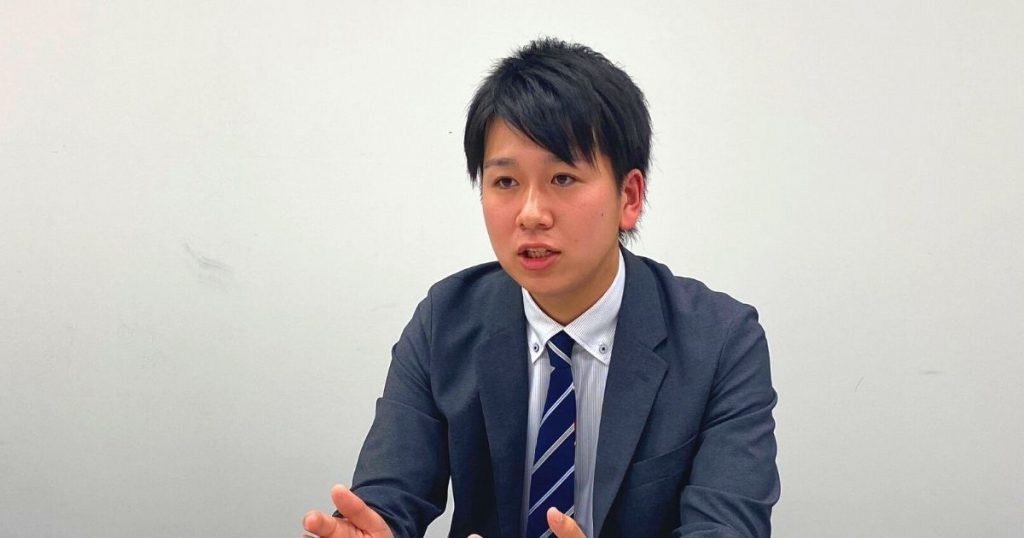
-Please give us an overview of the Kanto Bureau of Economy, Trade and Industry and the background behind your promotion of open innovation.
The Kanto Bureau of Economy, Trade and Industry (METI-Kanto) is a regional branch of the Ministry of Economy, Trade and Industry (METI-Kanto). With the mission of revitalizing the regional economy, METI-Kanto has jurisdiction over the greater Kanto region (Ibaraki, Tochigi, Gunma, Saitama, Chiba, Tokyo, Kanagawa, Niigata, Yamanashi, Nagano and Shizuoka prefectures) and is engaged in implementing a variety of economic and industrial policies. In addition to implementing policies, we also strive to propose better policies and formulate new policies by catching your needs and requests in the field.
Among them, the Division has been promoting open innovation for the past three years, aiming to create new added value and improve "earning power" by encouraging companies to take on the challenge of inter-corporate collaboration that goes beyond the conventional framework.
The impetus came from a major company that once told us, "We have connections in the supply chain, but not beyond that, and we don't know where to find the technology and partners we really want," and "We don't know how to efficiently search for companies or conduct business meetings.
We interviewed a variety of companies, including major corporations, small and midsize companies, and start-ups, and found that they all had the same concerns. Some small and midsize companies said that they did not have access to major companies, while some start-ups said that the speed of decision-making was slow due to the size of their organizations, making it difficult to collaborate with them.
This is where the Open Innovation Promotion Program began, with the authorities acting as a hub to bring together large companies, small and midsize companies, and startups.
Initially, we have promoted open innovation among companies by holding "Dialogue-Oriented Matching," in which major companies and other organizations are asked to propose cross-industry technology challenges to small and medium-sized companies and start-ups, and by holding "Open Innovation Promoters Exchange Meetings" to build face-to-face relationships among people in charge of open innovation at companies and support organizations. We have also promoted open innovation among companies by holding "Open Innovation Promoters Exchange Meetings" to build face-to-face relationships among people in charge of open innovation at companies and support organizations.
And from 2019, in collaboration with the Kanto Headquarters of the Organization for Small & Medium Enterprises and Regional Innovation, we have established a web-based platform called Open Innovation Matching Square (OIMS) to help many companies improve their "earning power" through "creation of new added value" through open innovation. OIMS is a web-based platform that enables companies to efficiently and effectively create new added value and improve their earning power. Through this platform, we are working to promote open innovation among companies in an efficient and effective manner.
Providing numerous opportunities for co-creation through open innovation by various mechanisms

-Please tell us about specific matching cases so far.
Here is a case study of collaboration composition in 2018 between JR West and Komatsu, a developer and manufacturer of construction, agricultural, and medical equipment in Nagano Prefecture.
At the time, JR West told us that the burden on station staff was an issue because when a person in a wheelchair boards a train, two people are needed: one to install the ramp and the other to push the wheelchair.
He said that even if they could handle a few times a day, the Osaka station alone would have to handle more than 180 times a day and make round trips to and from unmanned stations. He presented that with the declining labor force, this is not an issue limited to JR West, but one that should be solved by all railroads.
To solve this issue, Komatsu invited proposals from small and medium-sized companies and startups across Japan, and Komatsu was selected. Komatsu has jointly developed a device with JR West that allows people in wheelchairs to board trains themselves, and in December 2019, the company jointly unveiled Demonstration Unit 2 at the Railway Technology Exhibition in Makuhari, and now Demonstration Unit 3 is being built, and other efforts are underway for social implementation.
The other is the case of KSJ in Tokyo, an environmental solutions business with ENEOS Holdings, which was matched in 2019.
ENEOS Holdings, as a group, emits 30 million tons per year (2017), or 2.51 TP3T of Japan's total CO2 emissions, so there was a need to collaborate with a company that has the technology to fix 15 million tons per year by 2040.
Therefore, we solicited proposals from small and medium enterprises and start-ups across Japan, and out of about 40 proposals, we matched them with KSJ, which has a technology that can immobilize CO2 in construction sludge. We have started a co-creation dialogue with the aim of immobilizing CO2 emitted from ENEOS Holdings' refineries and other facilities into construction sludge in the future.
We want to show that open innovation is effective for the growth of small and medium-sized companies in the region.
-As you continue your own efforts, what prompted you to introduce Creww's Accelerator Program?
As an example of open innovation, we have probably heard a lot about the combination of large companies and startups. On the other hand, small and midsize local companies have the potential to make faster management decisions and have access to local business areas, making them attractive partners for startups. However, the current situation is that there has been an overwhelming lack of contact between the two, as local companies are not necessarily as well known as major companies, and the open innovation method has not yet penetrated the region.
Therefore, through this program, we hope to demonstrate the effectiveness of the accelerator program as a method for practicing open innovation between local companies and startups, and to horizontally expand co-creation cases to the region.
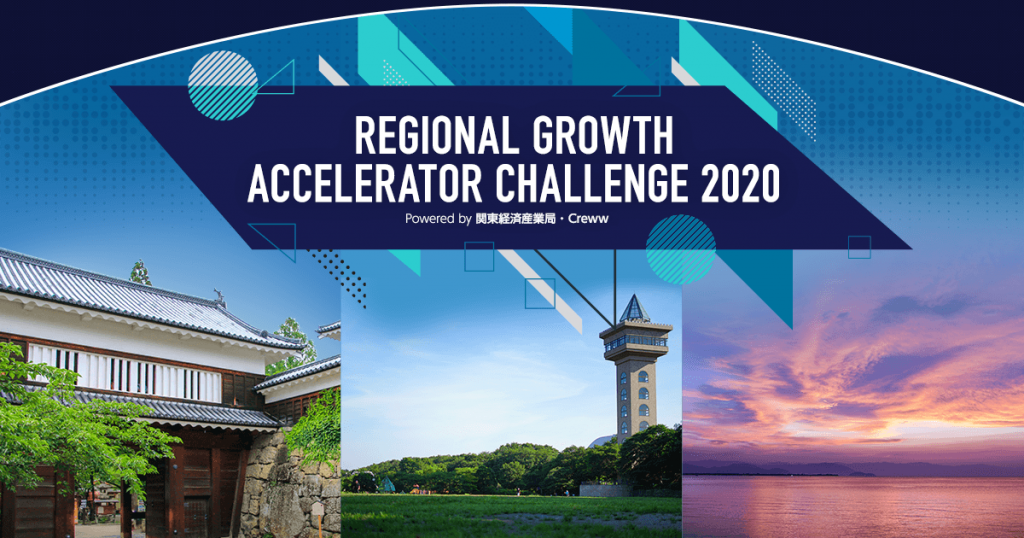
The three companies selected to represent local companies are Sanyu Plant Service in Sagamihara City, Kanagawa Prefecture, Shinano Kenshi in Ueda City, Nagano Prefecture, and Otsuka Sangyo Material in Nagahama City, Shiga Prefecture. All of the companies have either their presidents or executives participating in the project, which we believe will enable a sense of speedy co-creation.
REGIONAL GROWTH ACCELERATOR CHALLENGE 2020" Overview
▶︎ Application period: Tuesday, November 24, 2020 - Friday, December 4, 2020
▶︎How to enter: Please submit your collaboration proposal of 2,500 words or less at the following URL (dedicated website on the Creww website).
URL:https://accele.creww.me/collaboration/kanto-2020-11
▶︎ Target companies: all domestic and international startups. Any industry.
▶︎ Organized by Kanto Bureau of Economy, Trade and Industry, Creww
▶︎ Objective: To create new businesses in the region by co-creating new value through the co-creation of small and medium-sized local companies and start-ups.
Times of rapid change are the time to plant seeds.

-Is the need for open innovation increasing with the Corona Disaster?
During the period when the state of emergency was declared, there was a decrease due to business uncertainty and other factors, but since July I feel that it has gradually returned. I think that this is because we are in an era in which it is no longer possible to continue with existing businesses alone and change is being demanded half-heartedly, and that a mindset is being fostered in which people should take new actions and prepare for changes in the business model.
In fact, when we interviewed companies, we heard many such comments. Some of them said, "It is precisely because we are in a period of uncertainty that we want to strengthen our existing businesses rather than engage in open innovation, which does not easily lead to sales. We would like to see open innovation used more actively than ever before as a method to achieve this.
Toward a society where collaboration with diverse players is the norm

-What are your plans for the Kanto Bureau of Economy, Trade and Industry in the future?
Nowadays, there are various frontiers through which companies recruit startups, but I do not think this is necessarily fair from the startups' point of view, because if it does not ultimately lead to collaboration, it will only take up their time. In addition, many local small and midsize companies are still asking, "What is an open innovation or accelerator program?" It is also true that there are still many companies that ask, "What is an open innovation and accelerator program?
In order for regional companies to achieve sustainable growth, it is important to break away from the subcontracting structure and work to create new value through innovation in collaboration with startups and other diverse players. That is why we would like to help small and midsize companies understand that open innovation can be a tool to enhance their own "earning power," and we will strive for a worldview in which innovation occurs one after another in the region.
We believe that the accelerator program is one of the actions we are taking to achieve this goal. By spreading awareness that startups are an effective partner for local companies, and by horizontally spreading co-creation cases throughout the region, we hope to demonstrate that local small and midsize companies can also become major players in open innovation.
(Reference)
■Efforts of the Kanto Bureau of Economy, Trade and Industry to promote open innovation
https://www.kanto.meti.go.jp/seisaku/open_innovation/
■Open Innovation Matching Square (OIMS)
https://jgoodtech2.smrj.go.jp/lp/oi-matchingsquare
Value Creation Challenge Project through collaboration between small and medium-sized enterprises and start-upshttps://www.kanto.meti.go.jp/seisaku/seizou/startup_challengejigyo.html





 JA
 EN
