


*This article is reprinted from an article published in STARTUPism on July 25, 2019.
Mr. Volosiov Igor Igholi, Founder, Like Pay, Inc.
Generally speaking, it is said that it is more difficult for foreigners to start a business in Japan than in other countries. Cumbersome administrative procedures, business customs, and labor law standards, in particular, pose significant barriers. However, for a growing number of foreign entrepreneurs, Japan is a "treasure trove," a veritable "ZIPANGU, the land of gold. In the eyes of Igor Volosiov, ZIPANGU is mysterious and fascinating. He is one of the people who discovered the seeds of business in this "treasure trove" by taking a hint from Japan's proud "Omotenashi Culture" and several other unique Japanese cultures.
I was fascinated by Japanese culture. I really wanted to live in Japan.
My first encounter with Japan dates back to when I was a student at Moscow State University. The second foreign language curriculum usually consisted of European languages such as German, French, and Spanish, but I wanted to learn something different, so I decided to take a Japanese language course, which was not yet an option at the time, with a few friends. While still in school, I visited Japan for the first time for the Japan-Russia Student Forum and still remember being impressed by the beauty of the city, the warmth of the people, and the hospitality culture.
Because of my personality to take action when I have an idea, I studied abroad at Sophia University for about six months while I was still in school, focusing on Japanese language. I was a member of the yacht club at the time, and I have very exciting memories of our weekend camps on Enoshima Island. I was the only foreigner in the club, so it was an interesting experience, and I made many good friends because everyone treated me with the same attitude as a Japanese person. I still keep in touch with them regularly.

After that, I returned to Russia once to graduate from Moscow State University and decided to work for a Japanese company in Moscow after graduation. However, although I was well on my way to the final interview, I could not give up my desire to live in Japan, so I declined the final interview and decided to enter the graduate school of the University of Tokyo. When I received the acceptance letter from the university, I couldn't help but exclaim, "Yay! I exclaimed (laugh).
Discover in Nippon
For me, life in Japan is really interesting because of the many discoveries I have made. There are three things that particularly impressed me. The first is the beauty salon. The cutting techniques are very good and the staff is very kind. The problem here, however, is that the prices are surprisingly high compared to overseas! As a student, this was a problem for me. As a student, I was worried about the price, but I was so happy that they always sent me a postcard saying "thank you" that I still go to the hair salon in Shibuya from Chiba. I was truly fascinated by the power of the "culture of hospitality.
Second, throughout my student life, everyone around me has spent a lot of time working part-time jobs. This may have something to do with the fact that Tokyo is an expensive place to live, even by global standards, but rather than working for their own convenience, they are working for the convenience of their part-time job. I started working part-time as a bartender to experience what a "part-time job" really is. However, despite the many hours a week that part-time work takes up, the treatment is not good at all (laughs). So I realized that many students work very hard to accumulate points in order to get discount coupons in order to reduce their expenses as much as possible. This was a surprise for me, because the point culture is not so common in Russia.
And the third is the use of SNS. Not only Russians but also Westerners post "themselves" through events, trips, etc., but Japanese people post "products and services they consume on a daily basis" rather than "themselves," such as food from a restaurant or the finished product from a nail salon. This made me think that this may be connected to the fact that Japanese, who are generally modest and self-controlled people, are not as good at asserting themselves and self-direction as Westerners, and thus do not show their faces on the Internet.
Founded "Like Pay" inspired by his discovery.
What may be commonplace for Japanese people became a hint to me. The aforementioned thoughts, including "synchronous behavior" such as queuing up at popular restaurants and buying what everyone else has, were new and very appealing to me. Then I hit upon the idea that it would be a win-win situation if we could support students' pocketbooks and also use it as a sales promotion tool for restaurants, beauty salons, and other stores. Like Pay" was conceived to convert the number of "Likes" into discount points.
Like Pay" is a service that allows users to post photos taken at restaurants, cafes, beauty salons, nail salons, etc. on social networking services such as Instagram and Twitter with the hashtag of the store. Like Pay" is a service that allows you to receive a discount on your next visit for the number of "Likes" on your post. The more "Likes! The more "Likes" you have, the higher the discount rate, which I think is a good deal for users, especially for students. Also, the more "Likes! is added, it is instantly converted in the app and can be used immediately. At first glance, this service may seem like a bargain for users, but in fact, we have designed it in such a way that it also benefits the stores. Generally speaking, more than 70% of small stores such as restaurants and beauty salons go bankrupt within three years, and it is said that most of the reasons for this are difficulties in attracting customers.
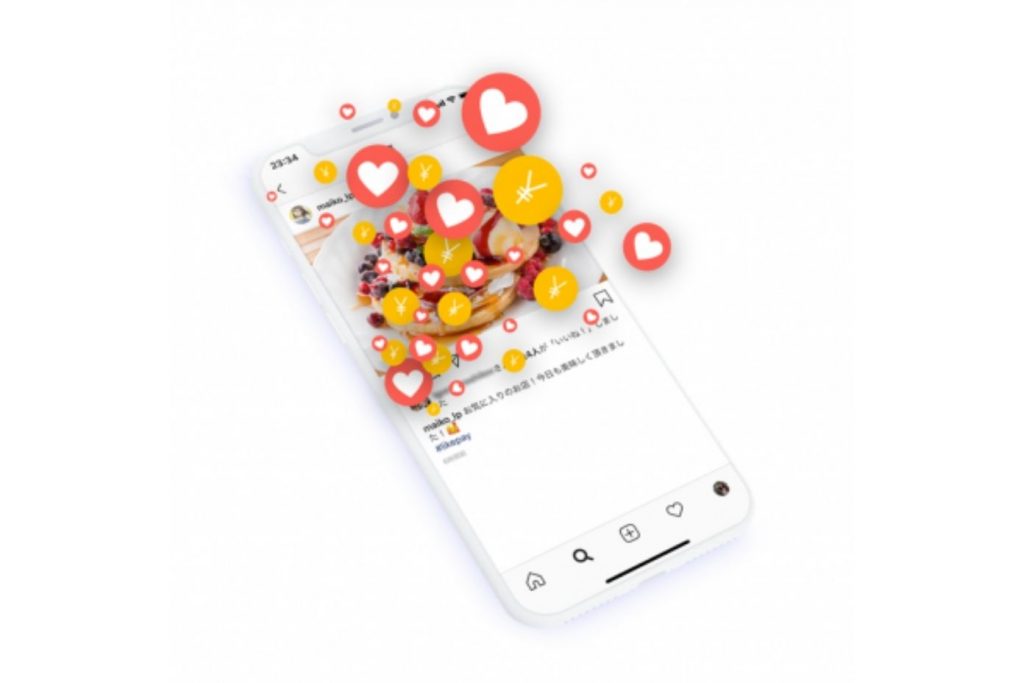
With "Like Pay," a wide range of people seeking discounts can spread the word on social networking services, making it possible to utilize the service for a wide range of sales promotion activities without spending huge amounts of money on advertising. The actual cost incurred by the store is set at 3% of the amount paid using the "Like Pay" discount, and the maximum number of points that can be used can be set for each store in consideration of the product or service unit price. Since promotions can be conducted without risk and within the range of profit, stores can immediately use the system as a sales promotion activity. In addition, we believe that promotion design centered on the user's perspective is a different form of advertising that can build good relationships with customers.
We want to create many wonderful stories.
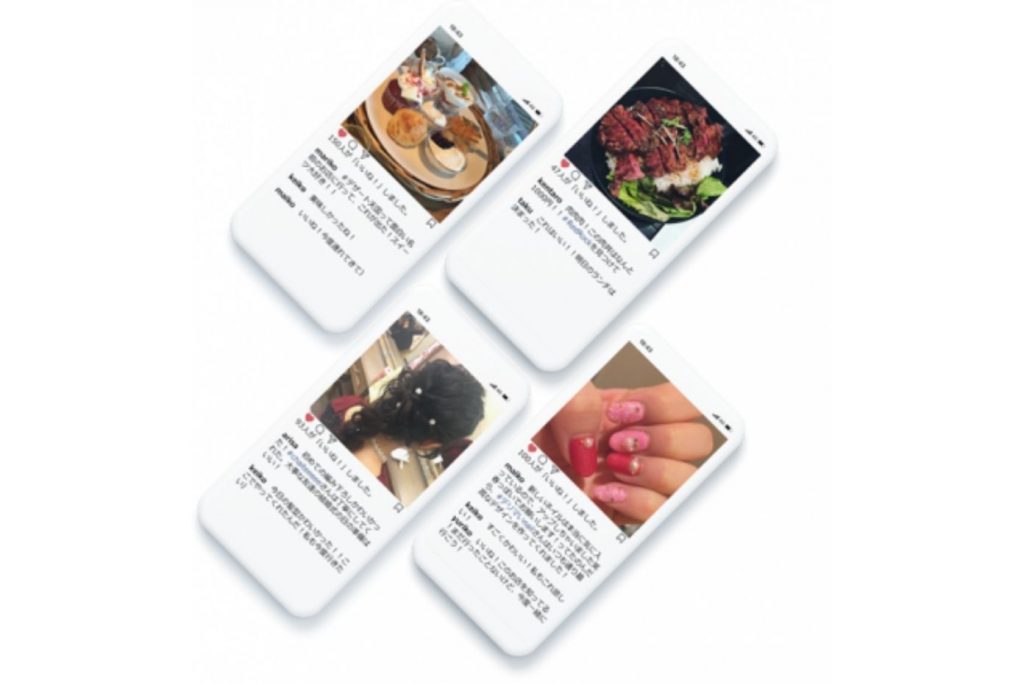
Currently, our products are mainly used by esthetic salons, nail salons, restaurants, and cafes in Tokyo, but in the future we would like to spread our business to other regions, including apparel, hotels, tourist attractions, and entertainment. In fact, just recently we decided to work with an agency to develop customers from Hokkaido. There are already many services and stores in urban areas, especially in Tokyo, which means that it is a very competitive market. In rural areas, the population is smaller than in Tokyo, and there are fewer of these stores and convenient services. If "Like Pay" can become a solution to the problems of rural areas, which are struggling to attract more customers due to population decline, and if its convenience spreads, we believe that nationwide expansion is not a pipe dream.

Anyway, our first priority right now is to popularize "Like Pay," but for further development, we think we need to explore new ways of monetization other than the current commissions generated by the stores. It is still just an idea, but we may be able to shift to a data business where we accumulate data on consumer trends by having many people experience the convenience anyway, and analyze it from data such as the content of posts and hashtags. This way, we may be able to reduce the fees charged to stores to zero yen in the future to reduce the burden as much as possible, so stores that seem to have closed regrettably may be able to survive.
Japan has many wonderful things to offer the world. The rich food culture, hospitality, punctuality, climate, beautiful seasons, and national character. The list is endless. But Japanese people don't think of it that way, do they? That is why I want Japanese people to be more aware of the wonderful culture and services that are unique to Japan. For example, wouldn't it be wonderful if stores that inherited Japan's unique culture could create as many wonderful stories with their customers as there are customers, just like the beauty salons I encountered when I first came to Japan? As the founder of Like Pay, I would be very happy if I could contribute to the realization of such a society, even if only a little.

| name of company | LikePay Inc. |
| Establishment | August 16, 2018 |
| Location | Shiroyama Trust Tower 4F, 3-1, Toranomon 4-chome, Minato-ku, Tokyo 105-0001, Japan |
| representative | Representative Director Volosiov Igor |
| Business Overview | LikePay Deployment |
| uniform resouce locator | https://www.likepay.co/ |





 JA
 EN
