


This article is a digest of the "Japan-China Corporate Innovation Exchange Meeting" jointly held by the Tsinghua University Science Park, which provides advanced business projects as one of the functions of the Tsinghua University Social Service in China, and Creww Inc. The event was held jointly by Tsinghua University Science Park, which provides advanced business projects, and Creww Co.
The social event lasted as long as five hours and was attended by numerous speakers and numerous participants. The event was extremely enthusiastic, with 10 startups from China visiting Japan. The event reached its climax with the participation of major investment institutions from Japan as well. We followed the efforts to transform Japan into an "advanced entrepreneurial country" as a center for new businesses between Japan and China.
*This article is reprinted from an article published in CREW MAGAZINE on May 7, 2018.
The Future of Acceleration: Starting with Startups, Creww's Ijichi Envisions a "Revitalization Strategy for Japan
Under the theme of "Innovation," the purpose of this exchange is to promote economic development between Japan and China by introducing and providing excellent technologies, products, and services of both countries to the markets of both sides.
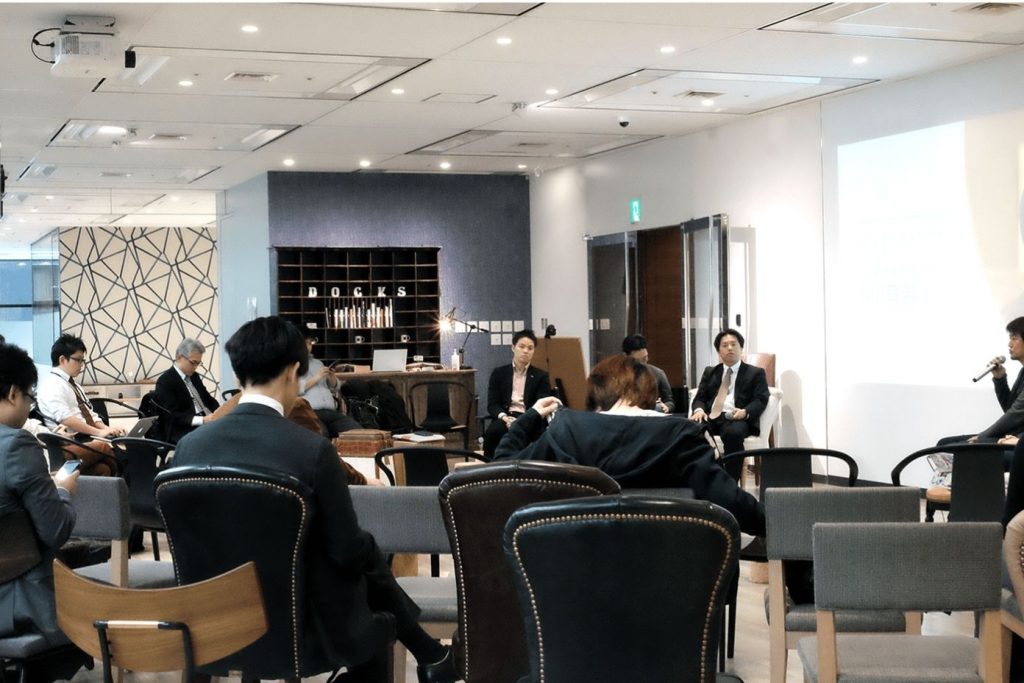
Tsinghua University Science Park, which is hosting the exchange along with Creww, was established to be the most innovative science park in China. By connecting its unique technological and human resources with innovative young entrepreneurs and providing excellent services to high-tech and R&D companies, it has become a hub for venture business at home and abroad.
The event brought together a variety of speakers from startups, major companies, university institutions, and incubation facilities. Many participants gathered at the venue to catch a glimpse of the cutting-edge business that is about to begin between Japan and China. The event was one of the most exciting ever held.
At the beginning of the session, Mr. Ijichi Tian, President of Creww, gave his opening remarks. I believe there is tremendous potential for collaboration between China and Japan. However, at present, the startup ecosystem in Japan is not yet mature," he said.
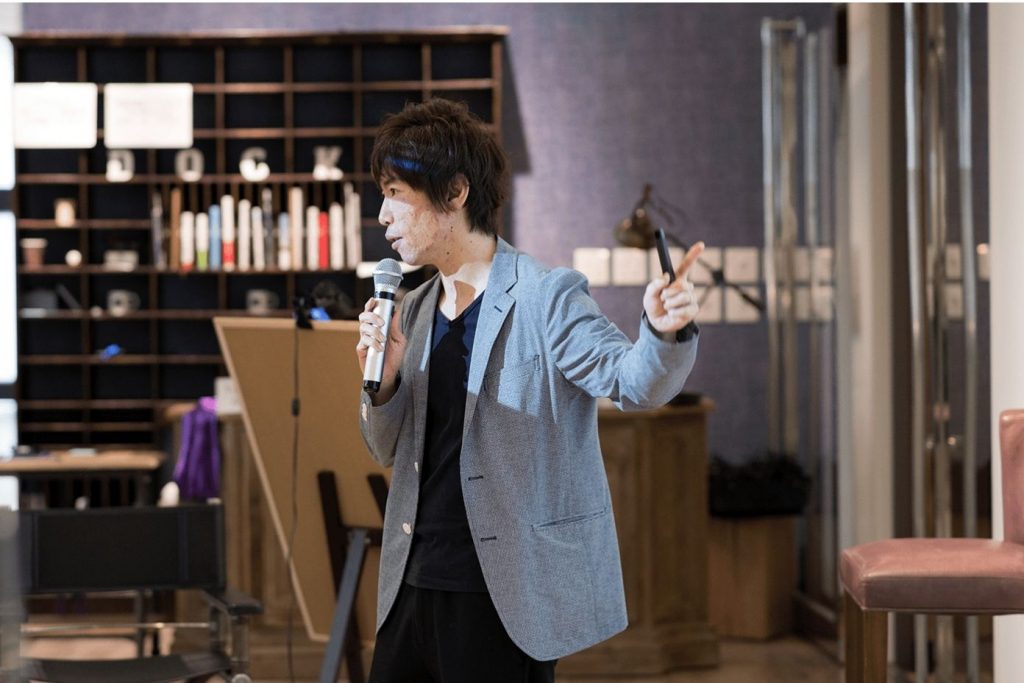
Alethea triandra var. japonica (variety of kangaroo grass)The top market capitalization of Japanese companies is almost always dominated by large corporations. However, if you look overseas, you will find fast-growing technology-driven companies and young companies that quickly rise to the top of the list. Japan is said to be a backward country in terms of companies, and there are also few VCs or investors to support young companies.
Creww was launched in 2012 in response to this situation. The challenge is to create a startup ecosystem in the private sector and to make the environment surrounding startups as good as possible.
We are committed to creating opportunities for growth and now have approximately 3,400 startups registered with Creww. We have created an environment where startups can share their knowledge and work hard together.
New business models are also being created through collaboration between major companies and startups. And in the future, we will also focus on real events. I hope that today's exchange meeting will be another opportunity for Japan to break out of its current lagging behind foreign countries and become a world leader as a country with advanced entrepreneurship.
Toward Japan, the Advanced Entrepreneurial Nation Investors and startups talk about the current situation and future of Japan
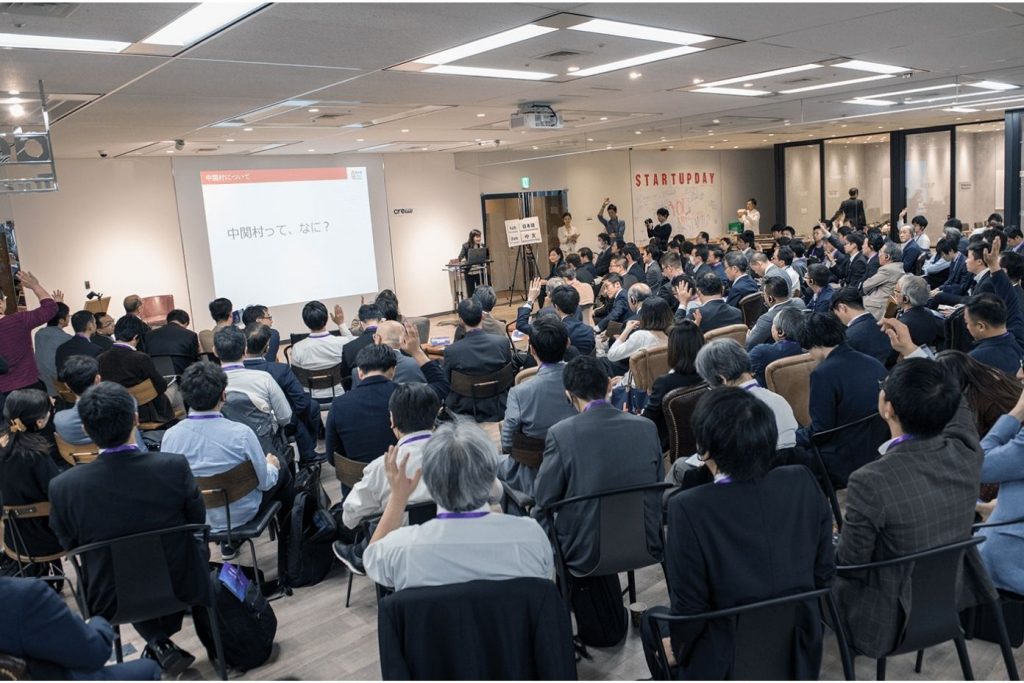
The first session of the event featured speakers from the University of Tokyo Edge Capital, Kanagawa Science Park, Development Bank of Japan (DBJ) Masaharu Nakagawa, Tokio Marine & Nichido Fire Insurance Shusuke Morioka, Seven Bank Masaaki Matsuhashi and Xiaoxue Wu, and Tsinghua Entrepreneurs Association (TEEC) Japan Branch Kong Lijie. They discussed the current situation and future prospects in Japan from the perspective of those who support the growth of startups.
Although the number of entrepreneurs is gradually increasing, the corporate environment is not taking root in Japan. Some even say that the bottleneck is the lack of capitalists. Increasing the number of both entrepreneurs and investors may be the first step toward becoming an advanced corporate nation.
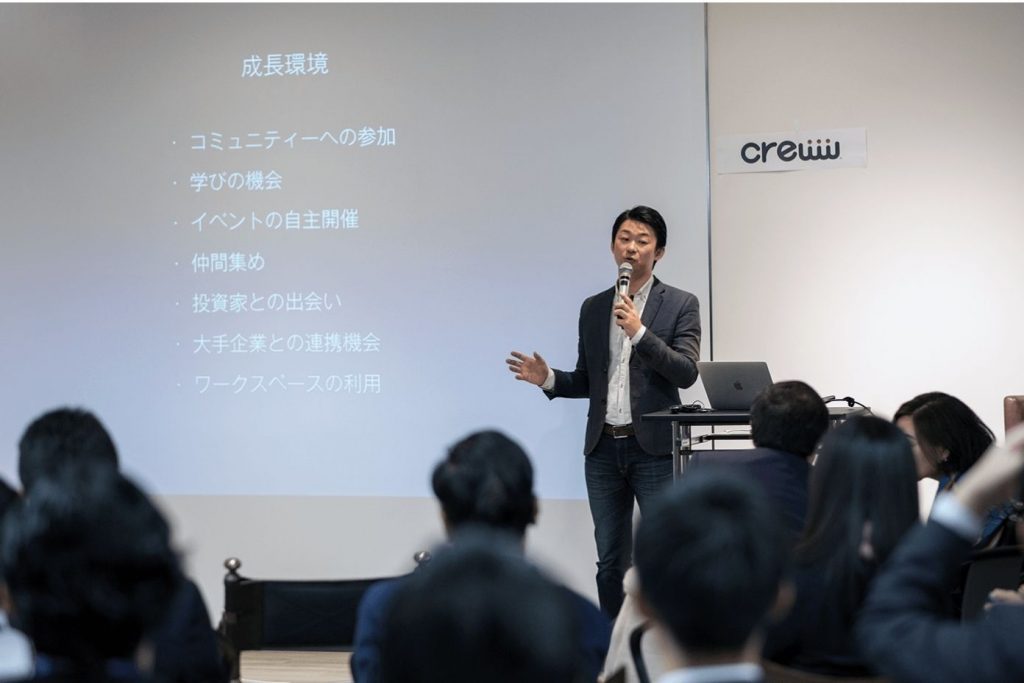
The following session, titled "Lectures on Business Matching," featured speakers Dong-Teol Lee from Creww, Kyung-Ho Kim from the Japan External Trade Organization (JETRO), Hong-Yan Wang from the Zhongguancun Liaison Office in Tokyo, and Liu Bo from Tus Star Incubator.
Mr. Kim of the Japan External Trade Organization (JETRO) said, "I had a yearning for Japan, so I studied in Japan and found a job in Japan. Currently, I work for the Japan External Trade Organization (JETRO) and provide support for companies entering the Japanese market and investing in Japan. I hope to discover areas where China and Japan can cooperate.
Ten Chinese startups then pitched. The consulting firm Boston Consulting Group (BCG), in collaboration with China Ali Research, Baidu Development Research Center, and DediPolicy Research Institute, presented the "China Startup Pitch.White Paper on China's Internet Economy: Deciphering the Characteristics of China's InternetAccording to "The number of unicorn companies in China and the speed at which they go from inception to unicorn status is striking.
Networking time was held after the pitches, and one could sense the enthusiasm for new businesses to be born from this place today.
If exchanges like this event become more and more active in the future, it is possible that Japan will also see the birth of unicorn companies with global operations. In addition, Chinese companies are likely to accelerate their entry into the Japanese market in the future.




 JA
 EN
