


Cyber attacks have been dramatically transformed by the evolution of AI, and the brunt of the attacks has shifted from systems to "people. No longer is a moment's carelessness on the part of your business partner or a project team member enough to uproot the trust and future revenue you have built up. In this paper, AironWorks, led by a former member of the Israel Defense Forces' elite unit, presents a firsthand look at the reality of "bad intentions" in the age of AI. And how you, as a driver of global innovation, should overcome this often overlooked "human vulnerability" to protect your company, your business, and your future dreams. "human firewallThe film goes to the heart of the most needed defensive strategy of the moment, called
Japan Lacks "Assumption of Maliciousness"--Cyberspace Becoming a Global "Battlefield
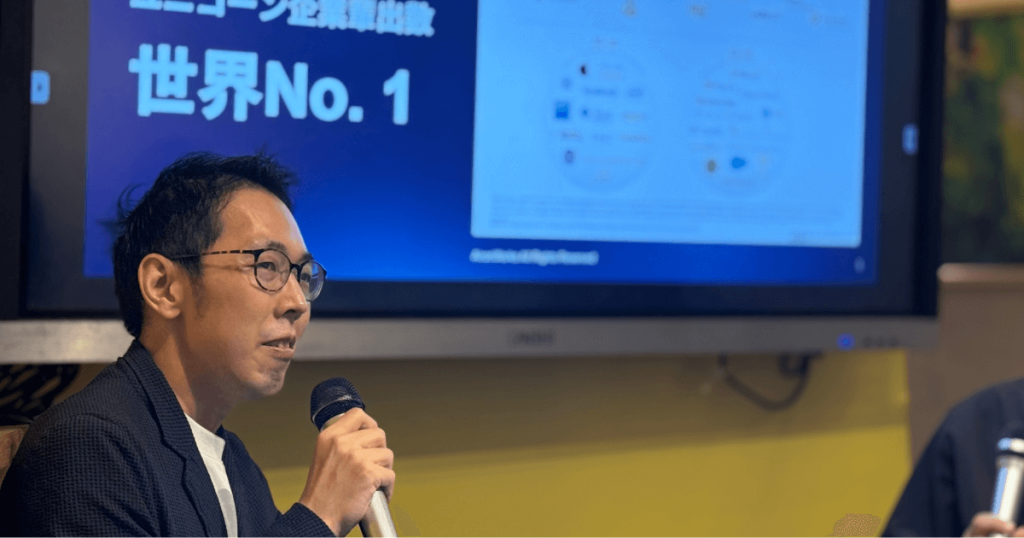
Israel. One only has to look at Unit 8200, the roots of AironWorks, to understand why this small country remains one of the world's leading cybersecurity powers. The DNA of this unit, which has produced many unicorn companies along with Google, Microsoft, and Stanford University, is based on the premise of "malicious intent" and exhaustive simulation.
Japan's cybersecurity has been too much of a benign act," said Mr. Ito. Japan's cybersecurity has been too much of a benign approach, focusing on preventing DoS attacks and accidental system errors, much like an IT infrastructure maintenance contractor," he said. However, cyberspace is now a "battlefield" populated by attackers with clear "malicious intent. They target confidential corporate information and funds, and sometimes become tools in the power game between nations.
The advent of AI has changed the face of this battlefield. Attacks are becoming more sophisticated and organized. It is no longer possible to compete at the level of "preventing minor mistakes. The starting point for corporate defense is military thinking, i.e., "know your enemy and assume malicious intent" realism.
The frontier of vulnerability goes to "people" - the "cheapest target" for hackers.
In the past, hackers took pleasure in exploiting gaps in the code of giant operating systems and browsers such as Windows and Chrome. However, now that software has become more robust, it is harder to get results from such "big boys. Business-like hackers have moved on to more efficient and "cheaper" targets. That is "people.
The shift is evident in the IPA's (Information-technology Promotion Agency, Japan) "10 Major Threats to Information Security. Ransomware and supply chain attacks topped the list, while system vulnerabilities receded. This is evidence that while companies have invested significant resources in system defense, the blind spot of "human vulnerability" has been neglected.
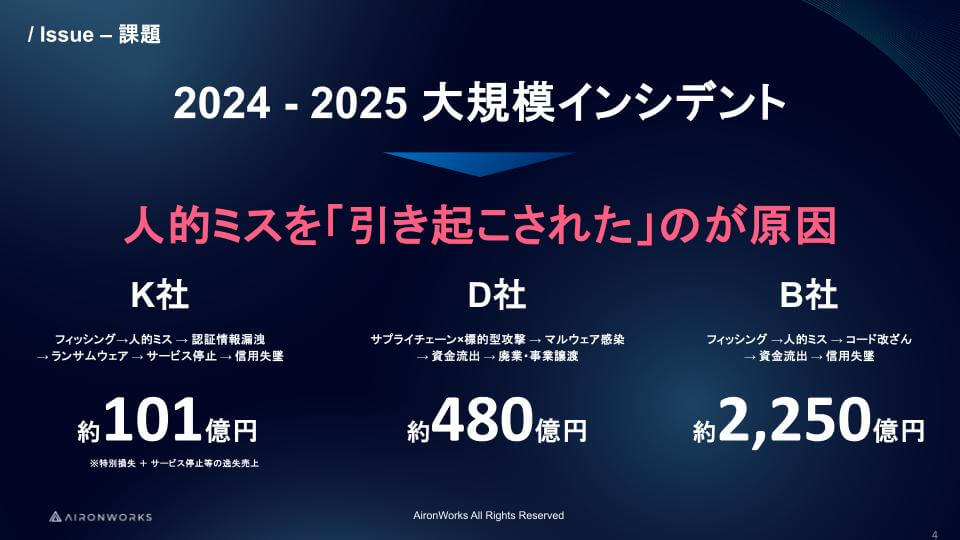
Company D, Company K, and cryptocurrency exchange Company B. In the background of the massive damage to these companies, "people" were always involved. Human error through phishing e-mails, malware infection via business partners in the supply chain. For attackers, it is far more "cost-effective" to fool a single employee than to breach a multi-billion yen system from scratch.
Hacker "DX" - $200/month AI will get you.
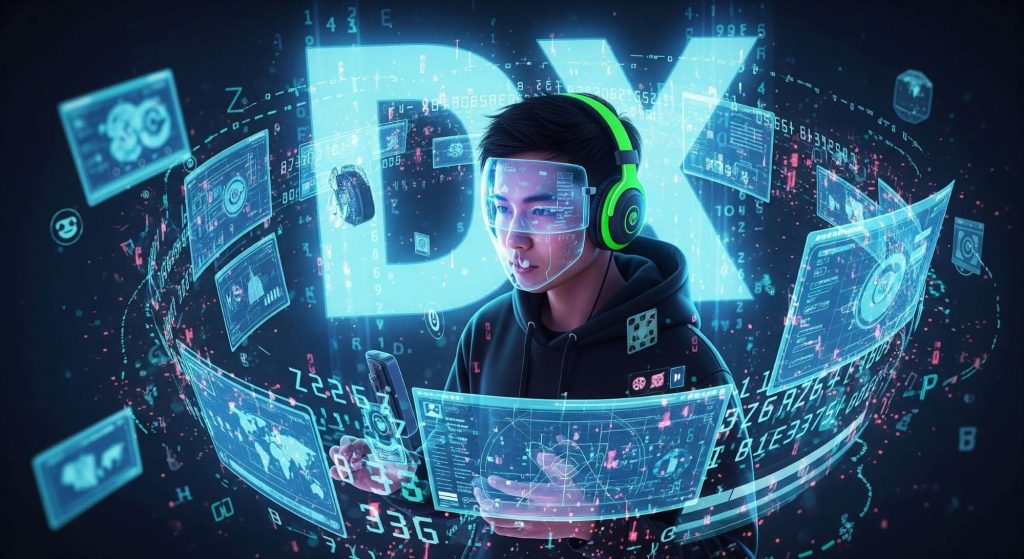
You are probably well aware that "DX" is the key word in business. But ironically, it is hackers who are advancing "DX" the most right now.
On the dark web, the "FraudGPT"WormGPT"DarkBERT"EvilGPTThese are truly Fraud-as-a-Service (FaaS) tools that allow users to generate malicious code, create hard-to-detect malware, and build phishing pages without hacking knowledge. These are truly Fraud-as-a-Service (FaaS), making it easy for anyone to perform "advanced" attacks such as generating malicious code, creating hard-to-detect malware, and building phishing pages without any hacking knowledge.
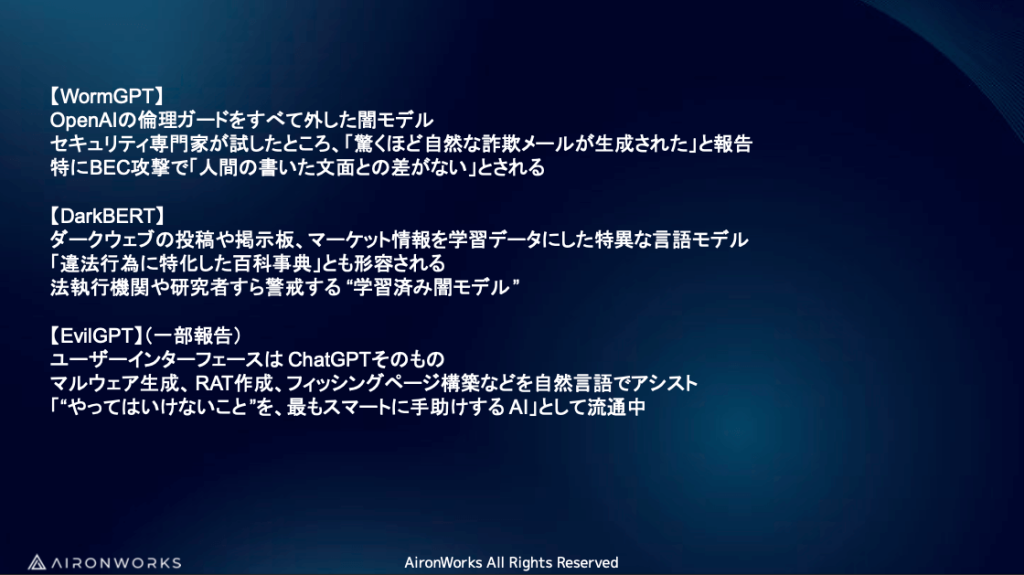
This "hacker DX" has radically changed the face of cyber attacks. The mainstream has shifted from "targeted attacks," which relentlessly target specific companies, to "ransomware attacks," in which a large number of people are targeted and easily ransomed. Hackers are no longer "craftsmen" who hide for long periods of time to steal confidential information. They are focused on ROI and view cyber-attacks as a "high-profit business" that can be completed in a few days. Surprisingly, the industry even speaks of "trust and integrity," saying that if they return the ransom properly, they will be paid next time.
The victim becomes the aggressor - when your trust becomes a weapon of aggression.

The most frightening essence of a phishing attack is the "Victims become perpetrators.The structure of the system is called "the system. Hackers are not after your personal or confidential information. What they really want is the "trust" that you have built up with your business partners.
They hijack poorly defended corporate accounts and impersonate their "legitimate senders. They easily slip past existing email filters and abuse "trust" based on long-standing business relationships to distribute sophisticated attack emails to partners in the supply chain. No matter how solid your company is, a vulnerability in a business partner can start a chain of attacks that ultimately puts your company at risk of being seen as the "attacker.
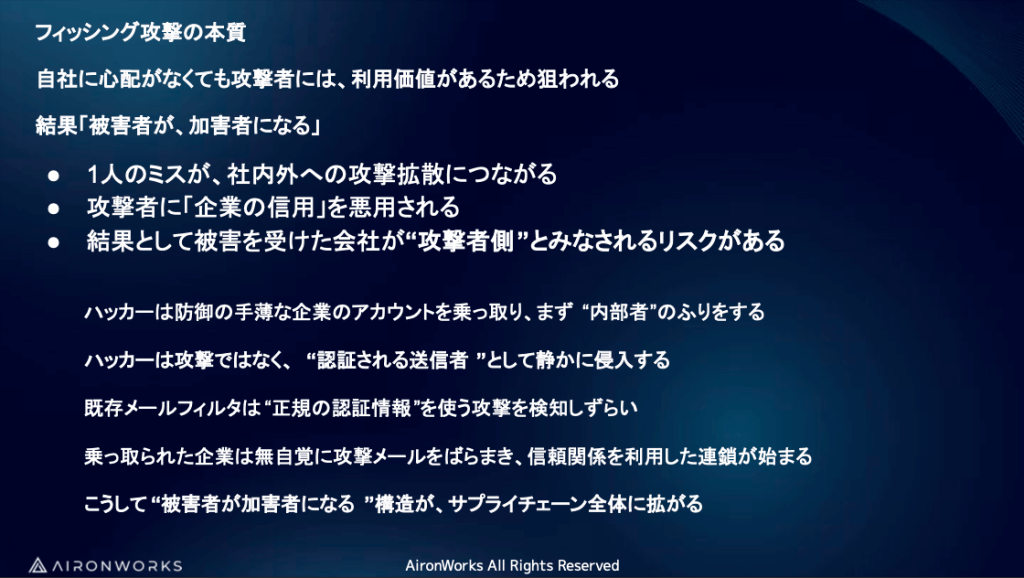
Open innovation and collaboration in new businessesThis risk is more likely to become apparent in the field of While speedy collaboration based on trust is required, the perception that "we have no information that can be stolen" is nothing but "easy prey" for hackers. What they are after is the brand equity of your company itself.
The Limit of Relying on Information Solution Providers: Time to Build a "Human Firewall" for the Entire Organization
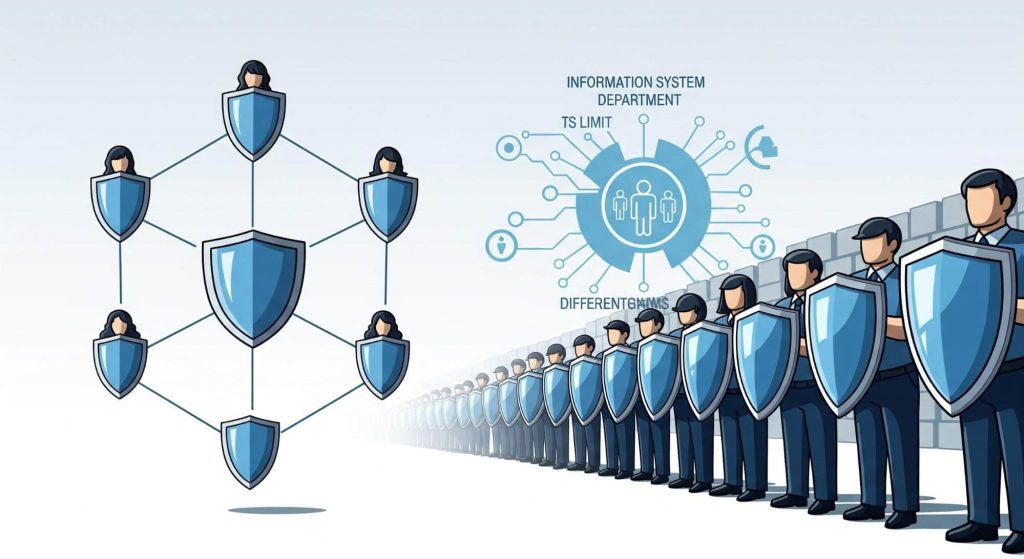
As AI attacks proliferate unchecked, it is no longer possible for the limited resources of the IT department to take charge of defense alone. This is where the urgent issue of "thehuman firewallThis is the concept of "the
A human firewall means that each employee raises security awareness and takes on the "function of defense" on his or her own. Rather than leaving it up to the IT department when an incident occurs, individual employees should be able to recognize the danger and take appropriate action, thereby raising the level of defense for the entire organization.
However, security training in many Japanese companies remains at a rudimentary level, such as "tax return notices. Hackers actually launch sophisticated "targeted" attacks that focus on corporate press releases, industry information, and even departments and individuals.
To close this gap, it is essential that employees experience "near-misses" and learn through them. It is important to increase the "report rate" rather than simply reduce the click rate. Appropriate recognition and praise for employees who report suspicious emails will encourage cooperation in cybersecurity and foster a security culture throughout the organization. This is also "democratization" that will prevent exhaustion of the information security staff and allow them to focus on more strategic tasks.
Global standard "NIST CSF" shows future management risk and "governance" perspectives
The National Institute of Standards and Technology's (NIST) Cybersecurity Framework (CSF), the international compass for cybersecurity, is undergoing its first major revision in six years in 2024. Notably, in addition to the five existing functions, a new "GovernThe addition of the "A" is a good thing.
This means that cybersecurity should be treated as a "management risk" on par with corporate finance and reputation, and that "people" management, or "governance," including employees and the entire supply chain, is essential.
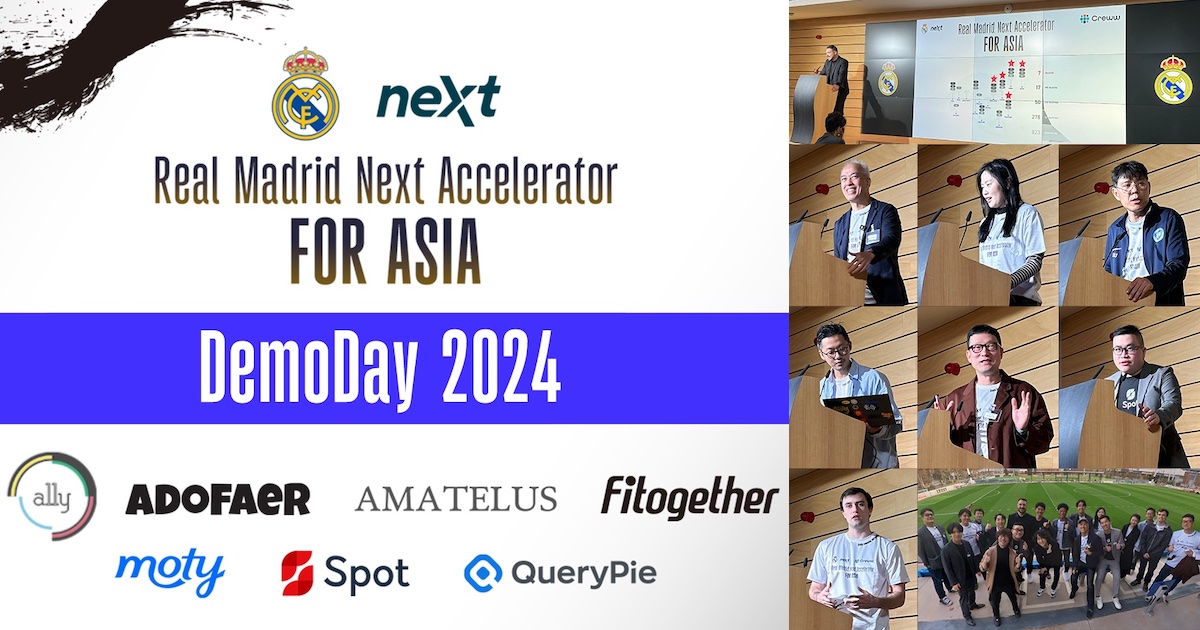
For startups looking to grow in the global marketplace and for companies seeking new business with foreign partners, compliance with this international standard is no longer a matter of "good intentions" but a necessity. For example, Creww's Real Madrid NextAs we have witnessed through our work with SECOM, Europe's data regulations are extremely strict. The evaluation of corporate governance systems through security scorecards and other means is becoming increasingly strict, and in many cases, if the system is inadequate, business transactions cannot begin. In promoting open innovation, raising security awareness not only within the company itself, but also across the entire organization, including employees of partners and contractors, will be the lifeline for business continuity and growth.
Summary: Cyber Resilience of "Your Company" to Survive the AI Era
Cyber-attacks are no longer a problem for "information system experts" alone; with the evolution of AI, hackers are targeting "people" with efficient and sophisticated means to penetrate their vulnerabilities. In order for companies to survive and grow in this asymmetric battle, each and every employee needs to be a "human".human firewallIt is essential that it function as a
Traditional classroom lectures and general training alone are not enough to deal with real-world threats. Security literacy should be enhanced through practical near-miss experiences, and a culture of proactively reporting suspicious events should be fostered. And to ensure that their efforts meet international security standards and enhance defenses throughout the supply chain. These are the core of the cybersecurity strategies required of startups and companies promoting new businesses that will survive in the age of AI.
How well can your company withstand the "malevolence" of the AI age? Now is the time to review your strategy for turning your employees from "the most vulnerable point" to "the most solid line of defense" as a top management priority.
For startup executives seeking to grow in the global marketplace, as well as for those in charge of operating companies who are taking on the challenge of creating new businesses.

Creww provides "human firewalls" to protect against increasingly sophisticated cyber-attacks, especially those that are essential for overseas expansion and open innovation promotion.Real Madrid Next Accelerator ProgramThrough its collaboration with Real Madrid Next, a sports club in Europe's top league, Real Madrid offers an excellent opportunity to expand your technology and services to the rest of the world.
Global expansion requires a robust security system that meets the regulations of each country, as well as the business aspects. This program will provide the knowledge and network necessary for success in overseas markets, and will also strengthen your ability to respond to security risks in an international business environment.
Please consider taking this opportunity to enter the Real Madrid Next Accelerator Program. Creww will strongly support you as you take on the challenge of expanding your company's horizons to the world.
 Akihiro Ito Japan Representative Executive Officer, AironWorks K.K.
In 2002, he joined NIFTY Corporation, where he was in charge of corporate sales. Thereafter, he served as project manager for a number of policy-related projects, including the Renewable Energy Promotion Project by the Agency for Natural Resources and Energy, the Future School Promotion Project by the Ministry of Internal Affairs and Communications, and the Cloud Technology Deployment Project in Southeast Asia by the Ministry of Economy, Trade and Industry. Later, he led the launch of GLOCZUS, a three-way JV between the Ministry of Economy, Trade and Industry, Innovation Network Corporation of Japan, and NIFTY. He managed local projects in Thailand, Indonesia, and Malaysia to support overseas expansion of SMEs.
In 2017, he joined Yelae Security (now GMO Cyber Security by Yelae) and became a director the following year. in 2023, he was appointed as the business manager of Luup Inc. and achieved dramatic growth, gaining the No. 1 market share in the industry. in 2025, he became AironWorks' Japan He has served as the business manager of AironWorks in Japan since 2025.
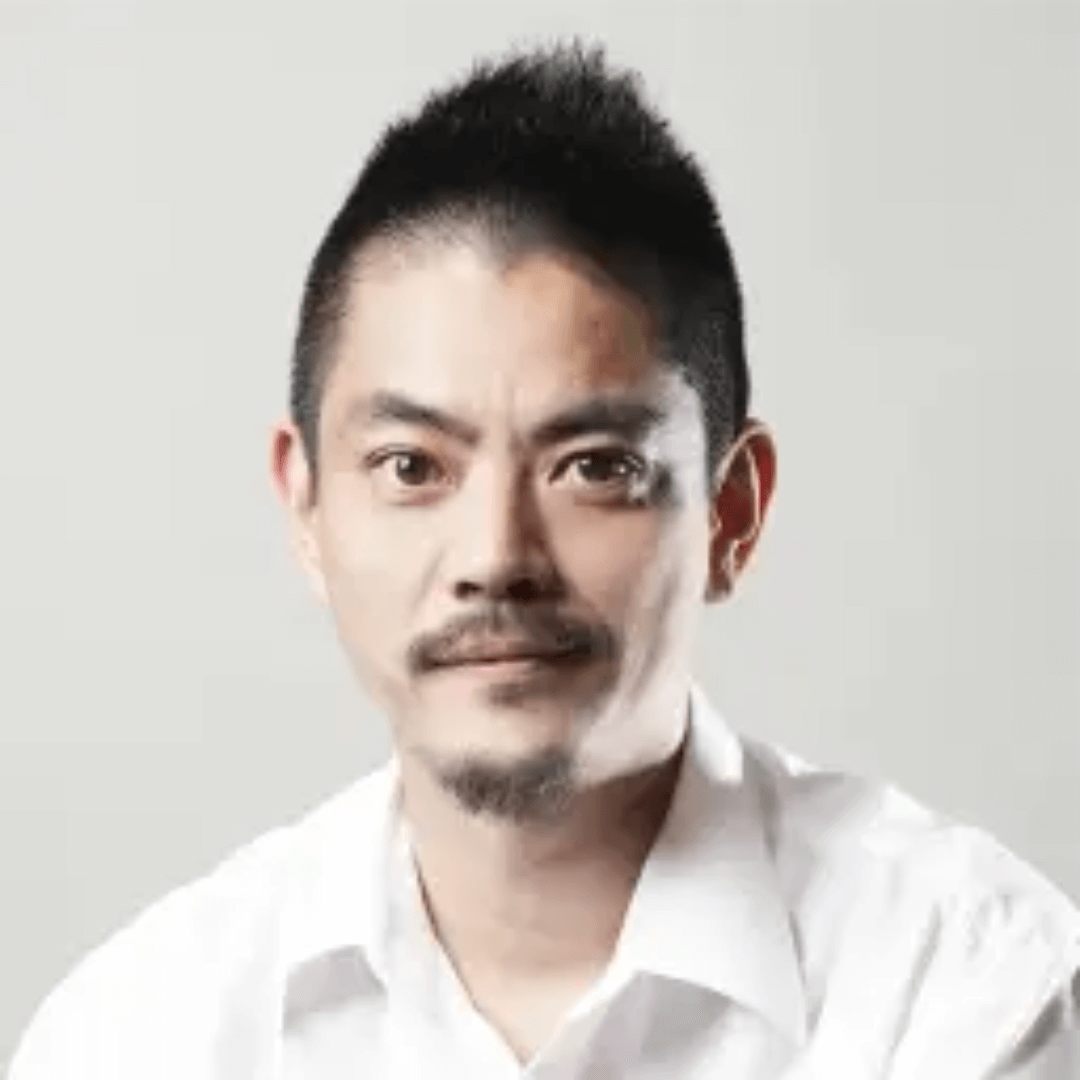 Hisatake Takada Director, CTO, Creww K.K.
Since 1994, he has been creating works using digital video distribution and real-time communication, and since then has continued to work on projects involving the space between video and communication. After working on multi-device service development, original MBaaS system development, O2O development, IoT watch-keeping service, engineer training business, and image processing artificial intelligence development, he joined Creww in 2021. He is responsible for the redevelopment of the infrastructure as well as the launch of new services.







 JA
 EN
