


Background of the introduction of Open Innovation: Declining demand for oil and the reality of having to change, and the connection with the community
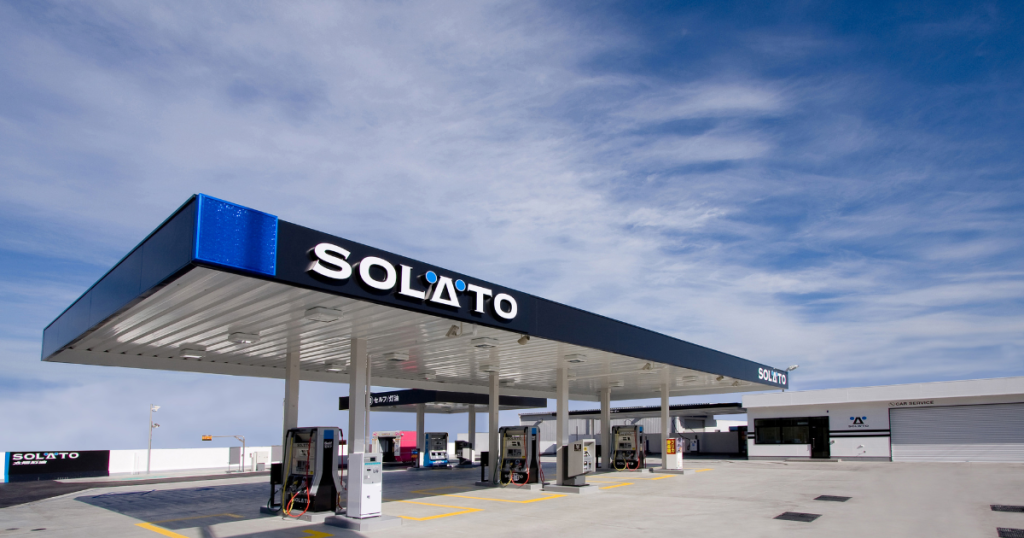
Frankly speaking, we felt that we were limited in our ability to do this in-house alone. It is really difficult to break out of the old business model of "gas stations. The image of a "gas station" as a place that sells gasoline is so strong that it is difficult to come up with new ideas. However, as you know, the demand for gasoline is decreasing in the petroleum industry as a whole. Electric vehicles are also on the rise, and I had a sense of crisis that if we did nothing, there would be no future for us.
SOLATO gas stations serve as community-based infrastructure. In rural areas, they are indispensable to local residents. That is why the role of gas stations must change with the changing times. They needed to evolve from being just a place to refuel to a more attractive place for local residents and a place that can support their daily lives.
However, it is not easy to change a business model that has been developed over many years. There were limits to the ideas we could come up with in-house, and a sense of stagnation was in the air. Something new needed to be breathed into the business. To do so, we felt we needed outside help. We thought that we could find new business opportunities by meeting and being stimulated by people with different perspectives and ideas from our own. Therefore, we made a bold decision to adopt a new method called open innovation. By combining our own resources with outside ideas, we decided to take on the challenge of exploring new possibilities for gas stations.
How to leverage Creww Growth: A series of struggles and lessons learned - The importance of involving the field
Creating new businesses through open innovation was a hands-on start. In our first accelerator program, we had a collaboration proposal with three finalists, but it did not lead to final commercialization. An important lesson learned from this experience was the need for early involvement of the sales subsidiaries and dealers responsible for "frontline" SS operations. Although the selection process was led by the head office, it did not adequately reflect the perspectives and sense of issues from those in charge of the frontline, who are familiar with SS operations and have daily contact with customers, and this was a barrier to commercialization.
Based on this reflection, for the second accelerator program using Creww Growth, we sought the cooperation of our sales subsidiary from the planning stage and asked them to be deeply involved in discussions on theme setting and selection criteria. This change in structure was successful, and as a result, two of the finalists' proposals were selected for commercialization. This was a positive outcome in achieving the goal of "at least two companies adopted," and provided an opportunity to reaffirm the importance of promoting the program while taking into account the needs of the field.
SS : Service Station
▶︎Past programs
SOLATO Accelerator Program 2023
SOLATO Accelerator Program 2024
New Business and Human Resource Development: The Double Effect of Open Innovation

The two objectives of this program, "new business creation" and "innovative human resource development," are steadily beginning to produce results.
First, in terms of new business creation, we are currently in the process of preparing for a proof-of-concept (PoC) experiment for the commercialization of the two selected proposals. Although still in the demonstration stage, it is a big step forward to be able to specifically explore the potential for new customer experiences and revenue sources by utilizing the existing asset of SS.
We are also seeing a clear response in the other objective, "development of innovative human resources. The people who participated in this program as members of the secretariat are mainly sales representatives of the Sales Management Department, which provides sales support to service stations. They usually deal mainly with existing business partners such as SS managers, operators, and trading companies, and have had few opportunities to directly interact with startups.
Through the program, they were exposed to the overwhelming sense of speed, quick response, and passion for business that startups possess, which was a very stimulating experience for them. Being exposed to perspectives and ways of thinking that differ from their usual work can be an opportunity to break down stereotypes and create new ideas. This was truly a valuable opportunity to foster an "innovation mindset," which is essential for promoting innovation within a company. I feel that each and every person in charge of the project felt something and learned something during the brush-up period leading up to the adoption of the project.
Challenges, Issues, and Prospects for the Future

The challenge of open innovation is always accompanied by new challenges. The demonstration testing of the adopted new business will now begin in earnest, but the way to proceed with the PoC is itself an unknown area in which we have no experience. We need to find the best way to proceed with each project in collaboration with a variety of stakeholders, including startups, internal departments, sales subsidiaries, and distributors. I feel that this is the biggest hurdle for me, as I do not have much experience.
In the future, we also intend to work more closely with our sales subsidiaries and distributors, with a view to implementing accelerator and matching programs that involve them as well, but there are many issues to be addressed, such as the difficulty of coordinating the timing of the various parties involved. However, in order to continuously create new businesses, it is essential to have contacts with more startups, and we intend to continue open innovation efforts in some form or another. We believe that platforms such as Creww Growth are an effective means of creating encounters with a diverse range of startups.
Our strength lies in the fact that we are developing community-based SS operations together with our dealers, even among Japanese petroleum wholesalers. SS are not just a fuel supply point, but also a place for local residents to gather and a place where they can solve their problems. SSs have the potential to be more than just a fuel supply point.
Creation of recruiting page
Call for co-creation ideas
Evaluation of Proposals
Message function
Online brush-up of co-creation ideas
Creation of contacts with diverse startups: In the second matching program, we built a network with a wide range of startups, including four companies that are currently considering collaboration out of more than 20 companies that entered the program.
The program participants have been exposed to the speed and passion of startups, which has provided them with stimulation and learning that they cannot get in their existing jobs, and has contributed to fostering a mindset of innovation.
Accumulation of know-how for open innovation promotion: Based on the lessons learned from the first round, practical knowledge in program operation was accumulated and systems and processes were improved, including strengthening stakeholder collaboration from the planning stage.
| name of company | Taiyo Oil Co. |
| Establishment | February 27, 1941. |
| Location | Hibiya Kokusai Building 15F, 2-2-3 Uchisaiwai-cho, Chiyoda-ku, Tokyo |
| representative | Takahiro Yamamoto |
| Business Overview | Import, export, refining and marketing of petroleum Manufacture, processing and sales of basic petrochemical products such as benzene and xylene |
| uniform resouce locator | https://www.taiyooil.net/ |
Mr. Tatsuya Goto (Senior Manager, Sales Strategy Group, Sales Management Department)
Ms. Hiyori Yoda (Sales Strategy Group, Sales Management Department)





 JA
 EN
