


This initiative aims to reduce the environmental impact of passenger services and transportation, and will be implemented as one of the projects adopted by the "Global CityTech Bridge," one of the Tokyo Metropolitan Government's "Cluster Creation Project for Challenging Global Innovation," in which TBM participates. The project is one of the adopted projects of "Global CityTech Bridge", one of the "Global Innovation Cluster Creation Project" of Tokyo Metropolitan Government.

Evaluates environmental performance and durability/water resistance that contributes to the conservation of water resources and aims to reduce the environmental impact of intercity transportation.
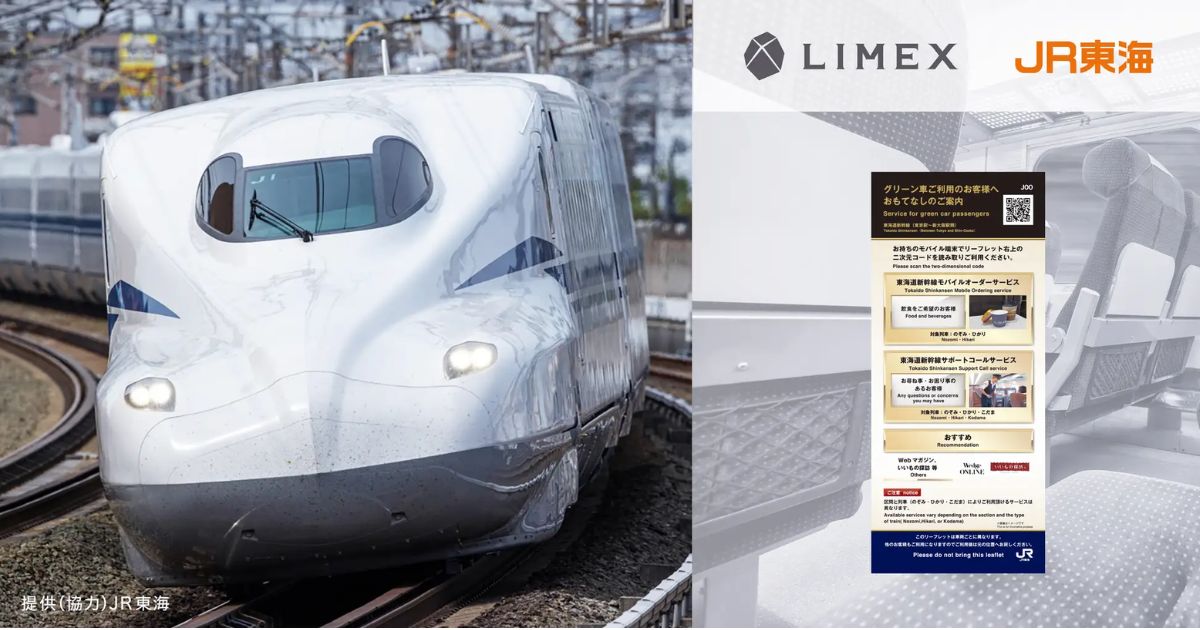
As part of its efforts to reduce the environmental impact inside Shinkansen trains, the main artery of intercity transportation, JR Tokai has been studying LIMEX Sheet as a new material to replace conventional laminated paper leaflets, focusing on its environmental performance that can contribute to water resource conservation.
Compared to paper, LIMEX Sheet reduces water consumption during production by approximately 941 TP3T* and does not use wood pulp as a raw material, thus contributing to the conservation of natural resources.
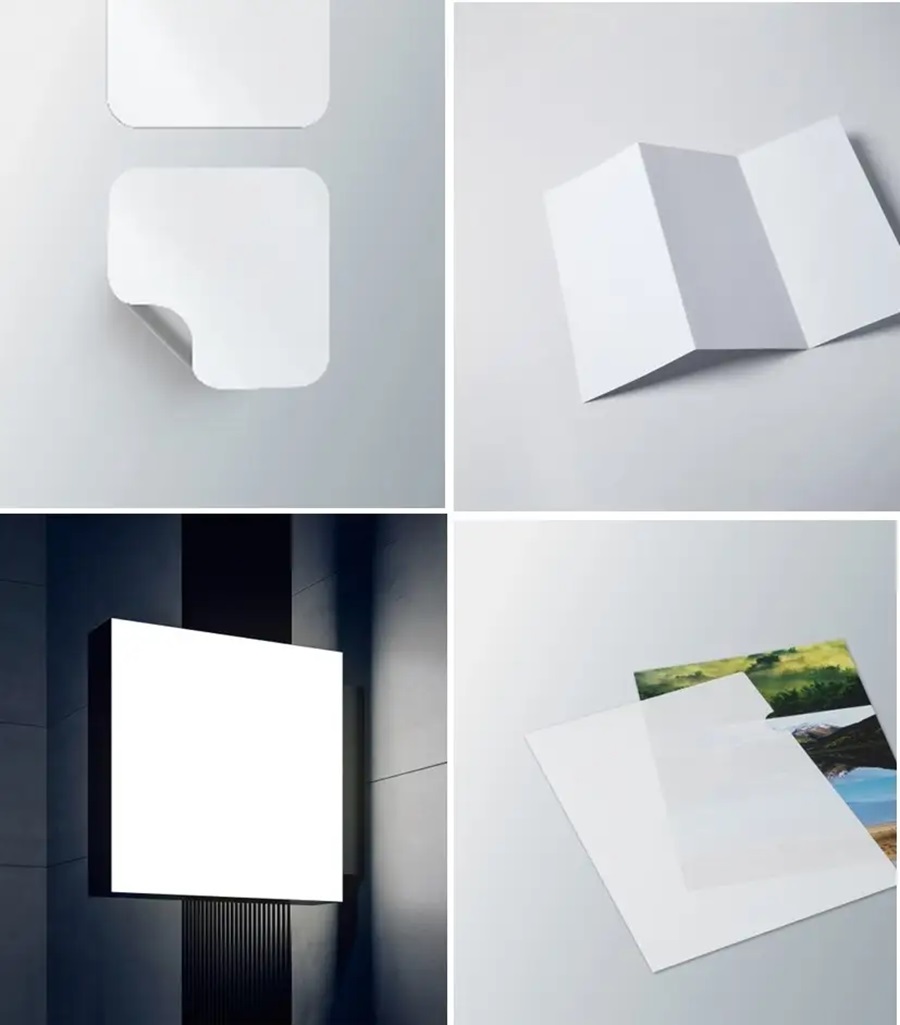
The company's own factory (Tagajo City, Miyagi Prefecture), which manufactures LIMEX Sheet, uses virtually "100% renewable energy" and "zero CO2 emission factor" electricity, and is expanding its product lineup for various applications including outdoor media, adhesive labels/stickers, and tapestries.
Leaflets using the new LIMEX Sheet will be used in Shinkansen green cars for several months to verify durability and replacement cycles after a certain period of time. Full-scale introduction is expected to be considered based on the verification results compared to conventional products.
*Water usage during LIMEX Sheet production is calculated based on actual data from TBM Tohoku LIMEX Mill. Water usage during paper production is based on the "Trends in new water use intensity per ton of paper and paperboard produced" by the Japan Paper Association. These are approximate values based on estimates and are not guaranteed values.
What is Global CityTech Bridge?
"Global CityTech Bridge" aims to create innovation and social implementation of CityTech (technologies related to large cities). The "Global CityTech Bridge" is jointly managed by the CIC Institute and Shimizu Corporation, and together with the Connected Places Catapult and social implementation partners, provides startups with matching opportunities with large companies, opportunities for demonstration projects, financial support for social implementation, support for overseas market development, and PR opportunities. and PR opportunities for startups.
The project aims to demonstrate and implement solutions related to smart cities, mobility, energy, decarbonization, resource recycling, disaster prevention and resilience, etc. in Tokyo, a city with advanced issues, and to expand overseas with examples of implementation in Tokyo.
For more information about Global CityTech Bridge, click here:https://jp.cic.com/tib-catapult/
What is TIB CATAPULT?
The Tokyo Metropolitan Government is promoting a diverse and comprehensive startup policy, including the establishment of the Tokyo Innovation Base, in order to realize the "world's most startup-friendly Tokyo.
As part of this effort, "TIB CATAPULT" was newly launched as a project to create a "cluster" of business companies that aim to solve global problems and produce globally active startups.
For more information on TIB CATAPULT, click here (Tokyo Metropolitan Government website):https://tibcatapult.metro.tokyo.lg.jp/

What is LIMEX Sheet?
This is an intermediate product made of LIMEX, an inorganic filler-dispersion composite material containing 501 TP3T or more (by weight) of calcium carbonate and other inorganic materials, processed into sheet form.
It can contribute to the conservation of resources such as oil, water, and forest resources used in the production of plastic and paper. Their environmental performance is calculated using the Life Cycle Assessment (LCA) method, which scientifically analyzes the environmental impact of a product throughout its life cycle, from procurement of raw materials to production, distribution, use, and disposal.
Reduction of petroleum-based plastics and CO2 emissions, and conservation of water and forest resources
Compared to conventional petroleum-derived plastic sheets and synthetic paper, the use of petroleum-derived plastics is reduced and greenhouse gas emissions, including CO2, are curbed. Compared to paper, wood pulp is not used as a raw material at all, and almost no water is used during production.
Excellent durability and water resistance
Its durability and water resistance allow it to be used in a variety of environments, including outdoors and around water.
Diverse applications by utilizing existing facilities
Existing printing and processing facilities can be utilized for a variety of applications such as posters, labels, maps, and files.
(Related site) About LIMEX Sheet:https://tb-m.com/products/products-sheet/
[For orders and inquiries, please contact]
If you are considering the use of LIMEX Sheet, or if you are considering environmental initiatives or a review of your current products, please contact us using the inquiry form (https://tb-m.com/contact/ Please contact us from
TBM Corporation
| name of company | TBM Corporation |
| Establishment | August 2011 |
| Location | 15F, 1-2-2 Yurakucho, Chiyoda-ku, Tokyo |
| representative | Atsuyoshi Yamazaki |
| Business Overview | Development of environmentally friendly materials, manufacture and sale of products, and businesses that promote resource recycling, etc. |
| uniform resouce locator | https://tb-m.com/ |





 JA
 EN
