


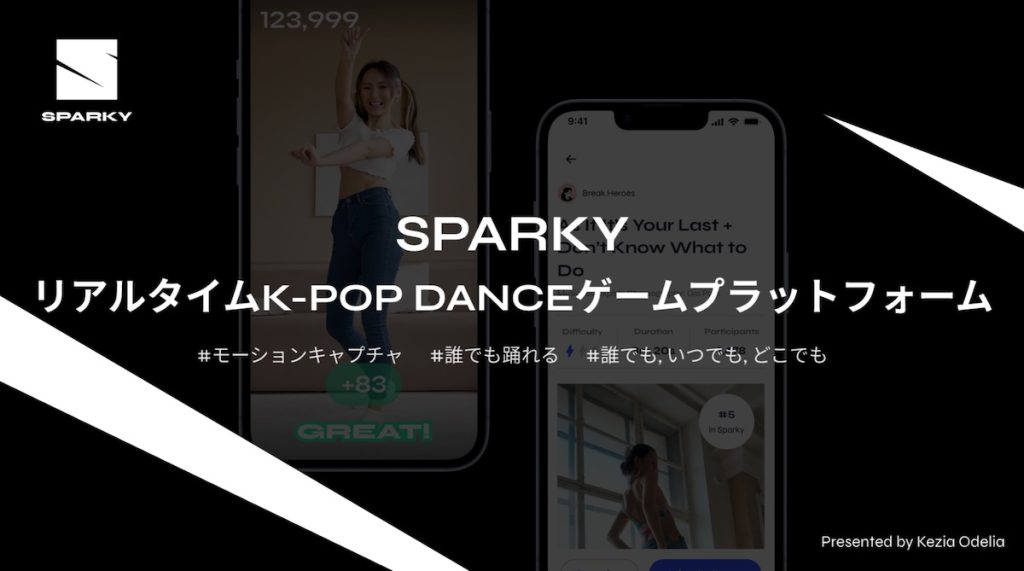
CASE 5, Debuan Limit|Dance Game Platform "SPARKY".
Industry: Patent applications and registrations for artificial intelligence and blockchain-related technologies
Industry sectors to collaborate: IT, tourism, music copyright, choreography copyright, etc.
We are the company behind SPARKY, a dance game platform that combines K-POP community and interactive games. The global growth rate of K-pop is growing at a high 44% per year, but due to a variety of problems, creators of content and users are all facing unsatisfactory situations.
For example, creators have difficulty monetizing the content they produce, users face high costs when trying to access interactive K-pop dance content, and the community is dispersed.
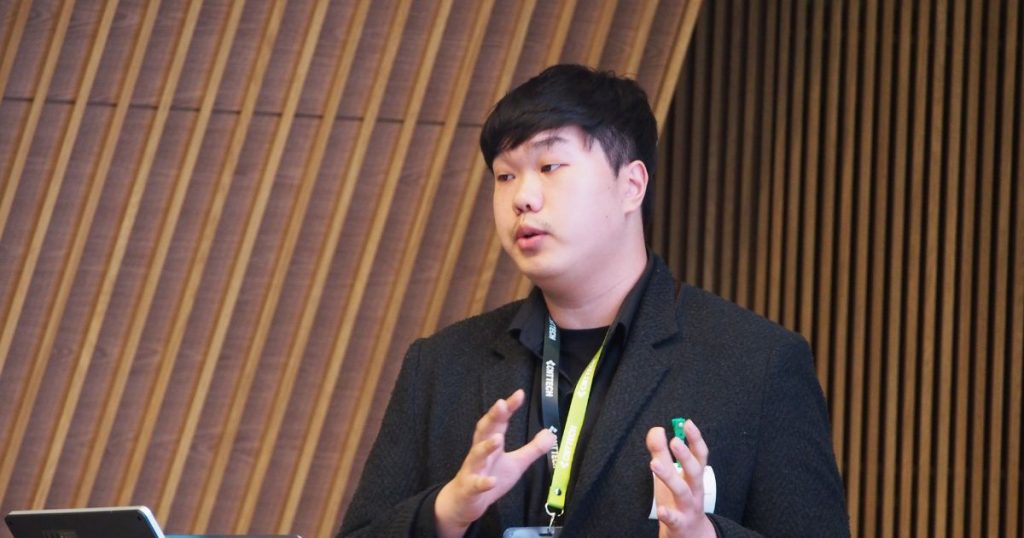
Therefore, we created "SPARKY" as a platform for real-time dance challenge games related to K-POP. Currently, there are 270,000 total users, with about 30% of all users distributed in Japan and 50% in Southeast Asia.
Users can play the Dance Challenge game for free up to twice a day, and if they want to use it an unlimited number of times, they choose a subscription. The revenue is split between the creators of the content and the platform.
The platform is based on AI technology and uses real-time motion tracking technology to evaluate the accuracy of the user's dance, so if the dance skills are recognized by an entertainment planning company, the user may be cast. In fact, a Korean entertainment company held auditions in July 2023.
SPRKY's competitor is a game called "Just Dance," but Just Dance requires an initial fee and generates only three contents per year. However, "SPARKY" requires no initial cost and generates over 12,000 contents per year, which are its major advantages.
Since we also cover creators' copyrights, we now have more than 2,000 active creators worldwide, and we are confident that we will have approximately 1 million users in the coming year.
Route Optimization + Dispatch Management Solution

Industry sectors: middle and last mile areas of travel and tourism, distribution, and logistics industries
Industry sectors to collaborate: tourism, finance
We have developed a location-based service called WimitPlace and have verified in the market the optimal location and routing technology using an iso-line-of-sight algorithm. We have developed a B-to-B solution that optimizes vehicle loads, driver work hours, and the number of units to be delivered in a day in seconds.
Diverse industries in Korea currently utilize the service, including subscription services for cleaning and janitorial services, optimization of travel for outside salespeople, and pickup of industrial waste. Taking into account the characteristics of each company, the service derives the optimal travel route in seconds for multiple purposes for multiple vehicles.

A feature of this system is that it can optimize the day's deliveries without having a distribution center. The system is operated so that orders received on a given day can be delivered on the same day while exchanging deliveries and other items between vehicles as needed. Specifically, the system issues orders for drivers to meet at specified points and times to exchange packages. Delivery, which used to be managed manually, is now digitalized, and drivers can drive without having to set up a navigation system.
This has resulted in a cost savings of 120,000 won per vehicle per month. We are currently growing at a very fast pace in Korea and plan to transplant and build this system in Singapore. In Singapore, we are preparing a logistics network that can make same-day deliveries using a minimum number of vehicles.
CASE7, Camerotech|Automated preparation system for Chinese herbal medicines

Industry sectors: green biotechnology, food tech, medical devices (digital healthcare)
Industry Sector to Collaborate: Herbal Medicine Industry
We are a company that develops and provides automated Chinese herbal medicine formulation systems that integrate the complex manufacturing process of Chinese herbal medicines. Due to the aging of the population worldwide, the market for complementary and alternative medicine such as Chinese herbal medicine is attracting attention from global investment companies, and the Korean herbal medicine market is worth 220 billion yen.
In addition, the need for Korean herbal medicines has been on the rise as they are now covered by health insurance, more so than Western medicines. At the same time, however, the distribution of bad herbal medicines and the lack of human resources to dispense and manufacture herbal medicines have also been highlighted as challenges. There are more than 300 processes involved in the manufacturing of herbal medicines, and the physical strain is so great that the turnover rate among herbal medicine clinics within one year is as high as 49%.
An even more serious problem is that manual dispensing ensures only minimum production quantities, so patients cannot receive their medicines immediately after their consultation. To solve these problems, the company has developed a technology to purchase only the best herbal medicines from a local government-operated herbal medicine distribution center in Korea, and to make them into 120 small tablets, each of which is hermetically sealed and stored in a cartridge.
Hospitals and pharmacies purchase cartridges of the required herbal medicine out of 120 different types of herbal medicines and attach them to the automatic dispensing system we have developed, and the herbal medicine is dispensed according to the medical record of each patient. Upon receiving a dispensing order from a kampo doctor or pharmacist, the automatic dispensing system automatically makes liquid kampo medicine from the cartridges according to the prescription and packs the medicine. Patients can now receive their herbal medicine on the same day they are examined.
The system also shows the remaining amount of cartridges in real time, so drugs that are running low can be easily purchased through the electronic medical record. Within two and a half years of developing this system, we conducted POC with seven university hospitals in Korea and succeeded in generating 300 million yen in sales. We were able to demonstrate the feasibility of the business. Currently, we have also received a 300 million yen investment from a South Korean investment institution and are working on upgrading the technology and downsizing the device.
Our business model is similar to the printer business, offering equipment and systems on a subscription basis and generating sustainable sales from drug cartridges. 150 reservations have already been received for the smaller equipment to be announced in March 2024, and we aim to supply over 3000 by 2028. The goal is to supply more than 3,000 units by 2028.
CASE 8, Aust|Semiconductor manufacturing equipment using plasma

Industry: Semiconductor and equipment field
Industrial fields we would like to collaborate with: semiconductor field, industrial field
We are a company that makes semiconductor manufacturing equipment using plasma, and we develop equipment for the core processes of making semiconductors: evaporation and etching. Semiconductors are gradually becoming smaller in size and their structure is changing from two-dimensional to three-dimensional.
When more devices are integrated on this small area, conventional etching processes have problems such as "low precision" and "difficulty in mass production application," so a new etching process specialized for multilayer semiconductors is needed.
We have developed a new etching process based on the ALE method, which enables process control at the nano-level and suppresses surface damage, making it possible to optimize etching for multilayer and multilayer semiconductors.

Major semiconductor manufacturing companies around the world are attempting to develop multilayer and multilayer semiconductors, but since they have not yet been mass-produced, our great advantage is that even a startup like us has the same level of technological capability. While conducting research to mass production, we are currently selling "RnD equipment" for universities, research institutes, and corporate laboratories.
In the future, we plan to sell "POC equipment," which is a scaled-up version of "RnD equipment," and further scaled-up "mass production equipment" for vendors. The company has a group of engineers with more than 10 years of experience, and is in the process of expanding while collaborating with LG Electronics and ULVAC. The company plans to achieve sales of 100 billion won within the next three years, and aims to grow to become Korea's top company in the field of plasma equipment technology and semiconductors.
editorial postscript
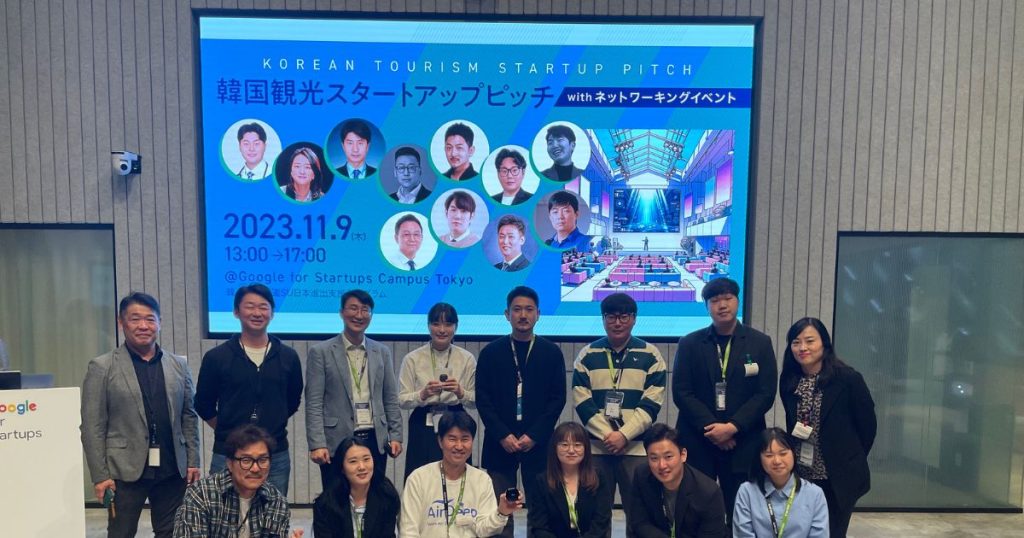
Creww is developing global business with various regions including South Korea and Taiwan, as well as Western countries, and has realized multiple investments, MOUs, and collaborations. We hope to contribute to the region, society, Japan, and the world by continuing our activities to connect global startups and Japanese companies.

About [Creww's Global Open Innovation].







 JA
 EN
