


*"Next generation" biodiesel fuel: Biodiesel fuel that is expected to replace 100% of diesel oil because its composition is almost the same as that of diesel oil.

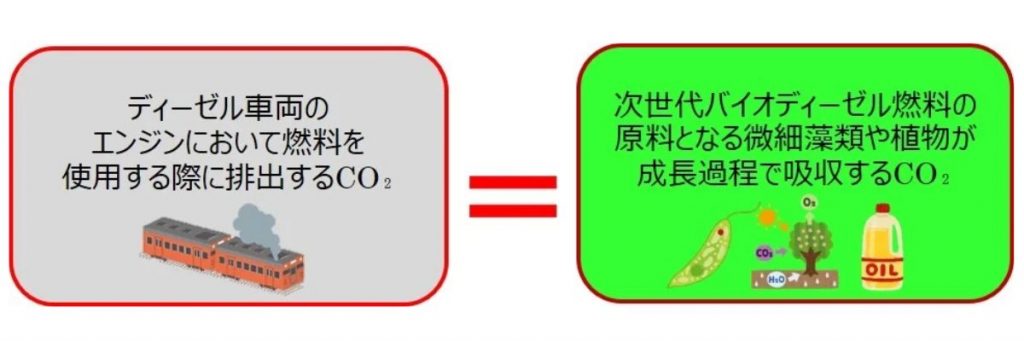
Concept of "virtually zero" CO₂ emissions from next-generation biodiesel fuel
Although diesel oil and next-generation biodiesel fuel have almost the same CO₂ emissions when used, the CO₂ emissions of next-generation biodiesel fuel are considered "virtually zero" because the CO₂ absorbed through photosynthesis in the growth process of plants and other raw materials and the CO₂ emitted during combustion are offset.
Details of the demonstration experiment (tentative)

(1) Outline
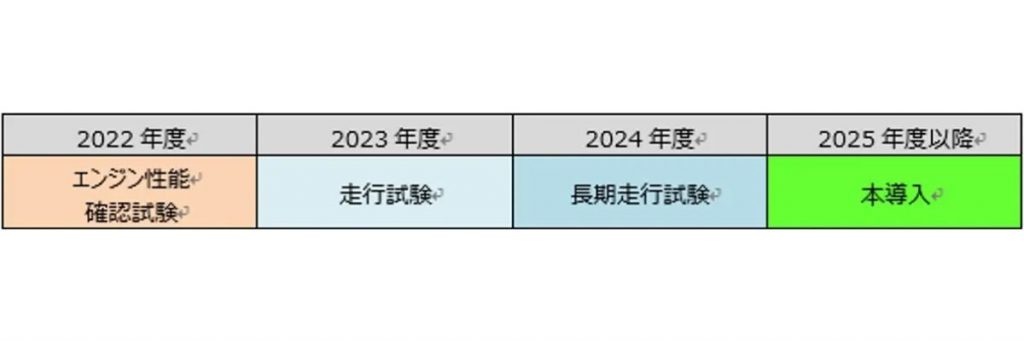
A) Engine performance verification test
Test on a stand-alone engine. Starting with a mixing ratio of 5% of diesel oil and next-generation biodiesel fuel, the ratio will be raised in stages to 100% to check the difference from the case where diesel oil is used.
B) Driving test
One round-trip test run per day using 100% next-generation biodiesel fuel for the test train. The test will be conducted for about one month each in the normal, summer, and winter seasons to check the effects of temperature.
C) Long-term running test
Use 100% next-generation biodiesel fuel in multiple commercial trains, traveling approximately 200 km per day per car. We will confirm changes in fuel consumption, quality levels, and whether safety and stability can be guaranteed for use in commercial trains.
(2) Vehicles to be used
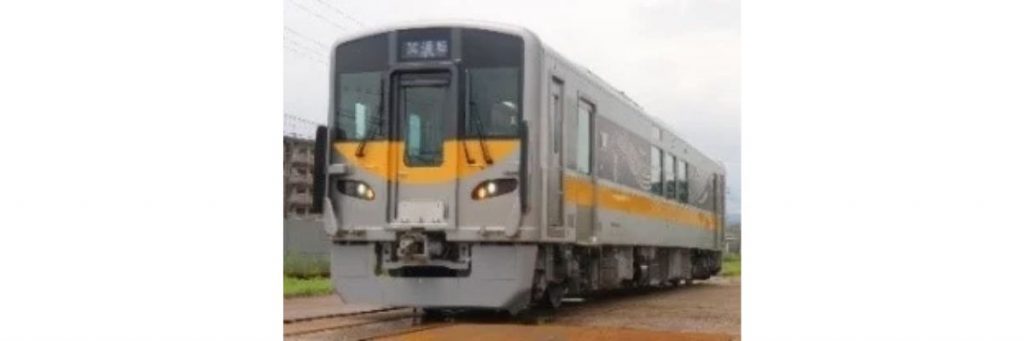
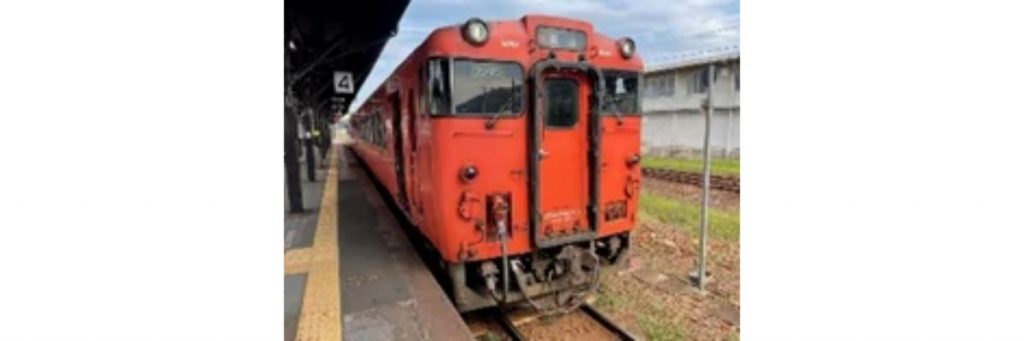
DEC700 or Kiha40, etc.
(3) Scheduled implementation line area
Considering implementation on San'in Line and other lines where diesel trains mainly run.
(4) Schedule
(5) Key points of this initiative
The goal is to replace 100% of our diesel fleet with next-generation biodiesel fuel and to verify its practicality.
The first railroad operator to conduct a long-term running test for full-scale implementation of 100% of next-generation biodiesel fuel at all times.
Anticipated Effects
emitted from diesel vehicles currently used by the Company (approximately 55,000 tons in FY2021) will be virtually eliminated.
The expansion of the use of next-generation biodiesel fuel in railcars, including those outside our company, as well as in vehicles and machinery that use diesel engines, is expected to further reduce CO A virtuous cycle is expected to be created in which the spread of next-generation biodiesel fuel and the reduction of CO
Note
(1) Long-term environmental target "JR West Group Zero Carbon 2050" (released on April 30, 2021)
We aim to achieve "virtually zero" CO₂ emissions for the entire JR-West Group by 2050, and to reduce CO₂ emissions by 461 TP3T (compared to fiscal 2013) by fiscal 2030.
In this context, as an environmental innovation for railroads using new technology, we have been studying the possibility of replacing diesel fuel with next-generation biodiesel fuel to achieve "virtually zero" CO₂ emissions for diesel trains.
*We will still consider converting to carbon-free next-generation vehicles in the future.
(2) System for Promotion of Railway Technology Development and Dissemination (from Ministry of Land, Infrastructure, Transport and Tourism press release dated June 10, 2022)
The purpose of this program is to promote the development and diffusion of technologies in which the government should take an active role, such as technologies that are needed by railroad operators but not developed by the private sector, technologies that are highly demanded by society and should be widely deployed in the railroad industry, and technologies that are especially needed to be introduced in regional railroads, where business conditions are severe. The government should take the initiative in the development and dissemination of these technologies.
| name of company | West Japan Railway Company |
| Establishment | April 1987 |
| Location | 2-4-24 Shibata, Kita-ku, Osaka-shi, Osaka |
| representative | Kazuaki Hasegawa |
| uniform resouce locator | https://www.westjr.co.jp/ |






 JA
 EN
