


*This article is reprinted from the April 11, 2022 edition of TOMORUBA, a community that shares information to revitalize businesses.
IBM Japan (IBM) has been working with startups on the IBM BlueHub, a co-creation program that aims to create innovative businesses originating in Japan. The final pitches for the Demo Day by companies selected for the 7th stage of the program are now underway.On the VR spacePublished in.
The IBM BlueHub, which began in 2014, has adopted about 30 startups in the past six programs and has produced various examples of co-creation, including business development through open innovation with companies and local governments.
For this year's seventh season, three application themes were set: "Solving social issues through technology," "Updating industries," and "Impacting corporate management through business innovation. The four startups selected from 96 entries last October have evolved their businesses and products through incubation and mentoring by IBM members with diverse expertise and experienced VC mentors.
Demo Day, in which the adopted companies present the results of the six-month period, will be held from this fiscal year.Held on a VR space.The final pitch of each company was also made available for viewing anytime, anywhere. The final pitch of each company was also made available for on-demand viewing anytime, anywhere, anytime.
■How to view the VR space
The 7th IBM BlueHub DemoDay
*Please view from a PC in the following environment.
OS: Windows, macOS
Browsers: The latest versions of Chrome, Firefox, and Safari are recommended.
At TOMORUBA, Mr. Yano of IBM, who has been leading the program, and four adopted startups (Tokyo Factory//mitsukaru (variety of cherry salmon, Oncorhynchus masou ishikawae)//KiZUKAI//speechiesWe interviewed the "Mere Old Man" (a.k.a. "The Man") and asked him in detail about the growth he has achieved through the six-month program and his thoughts on the Demo Day pitch.
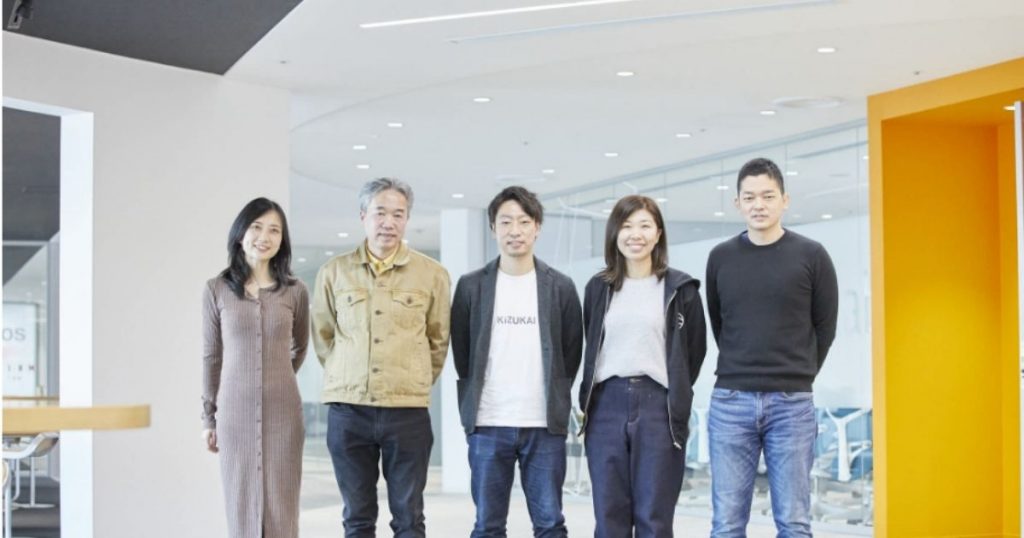
<Left to Right
Future Design Lab/IBM BlueHub Lead, IBM Japan, Ltd.
After joining IBM, he was engaged in marketing in the product, distribution, and automobile industries. Since the start of IBM BlueHub, he has experienced open innovation with various adopted companies as a support member of the business unit side. He has been in charge of leading the program as a whole since the 7th phase.
■Mr. Tomoaki Kasuga, Representative Director, SPEEDI'S Co.
Business: Development and operation of flexible, moving, life-size to tabletop robot figurines
Kozo Yamada, Representative Director and CEO, KiZUKAI Corporation
Business: Development and operation of "KiZUKAI," a data utilization tool to improve customer loyalty
■Sachi Inoue, Representative Director, Mitsukaru Corporation
Business: Development and operation of cloud service security check support SaaS "Conoris
Minoru Ike, Representative Director, Tokyo Factory Co.
Business: Development, operation, and sales of "Proceed Cloud," a SaaS product that supports DX at manufacturing sites
Four companies were selected for partnerships that will continue after the program ends.
--First, I would like to ask Mr. Yano, who is leading the program. You are currently holding a demo day using IBM's Solution Center as a virtual space. What was your focus for this 7th program and how was it different from past programs?
Mr. Yano, IBM :IBM BlueHub has adopted about 30 seed and early stage startups in the past six terms, and is currently working on a Co-Creation with Startup initiative to approach customers together with graduates whose businesses and products are growing steadily. We are currently promoting the Co-Creation with Startup initiative.
Since our incubation program does not involve a capital tie-up, we are looking for people with whom we can co-create and collaborate for a long time after the program ends. In the selection process, we placed emphasis on the viewpoint of "whether the applicant can become a business partner of IBM in the medium to long term.
In terms of incubation and mentoring during the past six months, we focused more than ever on establishing a system that allows direct collaboration between the adopted companies and IBM's business divisions. In addition to the establishment of a division manager-level owner for each theme, many IBM experts with knowledge in various fields, as well as younger employees, participated in the collaboration, and we believe that we were able to deepen interaction with the selected companies even more than before.
I feel that the program was very meaningful not only in working with the selected companies to scale their businesses and products, but also in fostering entrepreneurship among IBM employees.

--The 6th Demo Day in July 2020 was in the form of an online webinar, but this time it was held in a virtual space.
Mr. Yano, IBM :Normally, it would be best to hold the event in real life, but in light of the Corona Disaster situation, we chose to hold the event in a webinar format last time. However, while a very large number of people attended, we found that in some cases it was difficult for IBM to get between the adopting and participating companies to connect the two during the webinar-style demo day.
Therefore, we decided to hold the demo day in a VR space and release the pitches on demand, in order to increase opportunities for both parties to contact each other more flexibly, so that customers can watch the pitches and inquire at the best timing for them. We have created a VR venue as a future style of demo day, and we hope that many people, including those who are looking for new technologies and ideas and those who have a sense of challenges in their business or operations, will be able to view the event and learn about the great businesses and products of the four companies. In addition to the pitches, you will also be able to see examples of innovation initiatives with our customers.
Why did four selected startups choose IBM BlueHub?
--I would like to ask the four companies why they applied to the IBM BlueHub. What aspects of the program appealed to you and made you decide to participate?
Mr. Ike, Tokyo Factory:We have developed and marketed a SaaS product for the manufacturing industry, "Proceed Cloud," but since it is basically a product targeting enterprise customers, it was very time-consuming in terms of customer acquisition.
I applied for the IBM BlueHub because I wanted to learn from the know-how of IBMers who have extensive experience in business negotiations with large corporate clients, and because I was attracted by the opportunity to hear from and make proposals to IBM customers together with IBMers.
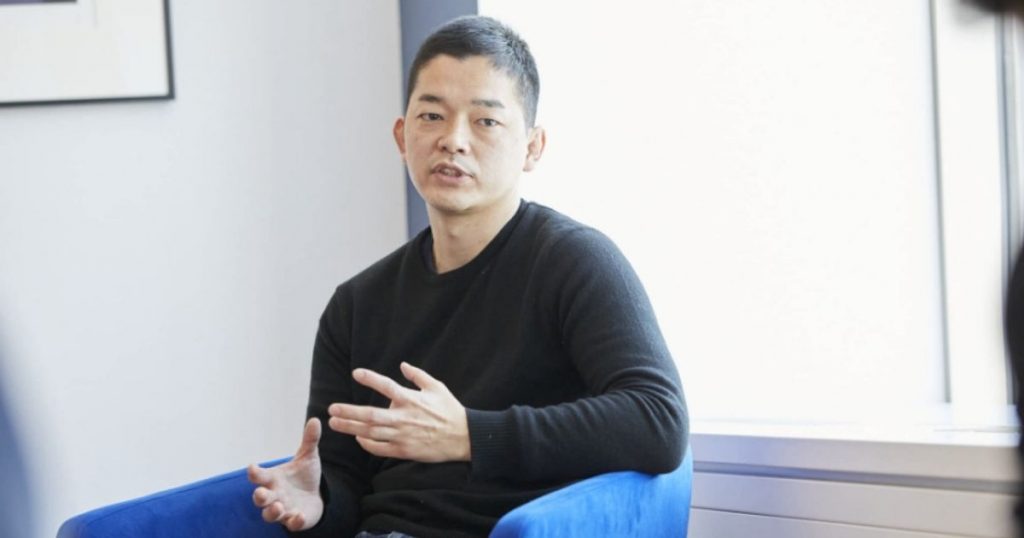
Mr. Yano, IBM :We adopted Tokyo Factory's "Proceed Cloud," a product that supports DX by accumulating on-site image data, because we thought it would be possible to collaborate in various ways with a view to AI utilization. Many of our customers in the manufacturing industry also have a hard time collecting data from the field, so we see great potential in the "Proceed Cloud," which can collect image data.
--IBM's go-to-market know-how and broad customer base were appealing to you. How about you, Mr. Mitsukaru?
Mitsukaru Inoue :When a company introduces a cloud service, it is required to fill out a checklist to verify its information management and security systems. Typically, 50 to 100 questions must be answered, and many companies spend an inordinate amount of time on this process. We offer a service called "Conoris" that solves such inefficiencies in communication and management related to the introduction of cloud services.
Companies that require a high level of operational management with respect to cloud services are inevitably large enterprises, and our services are targeted at companies with sales of 500 billion yen or more as a core target. There are only about 300 such large companies in Japan, which perfectly overlaps with IBM's customer base. Thus, the fact that our customer targets matched was the reason for our entry.
We also considered other accelerator programs, but many of them had a requirement to receive investment, so we were hesitant, but IBM BlueHub had no such restrictions. Our company is not yet at the stage where we would accept such capital (laughs).
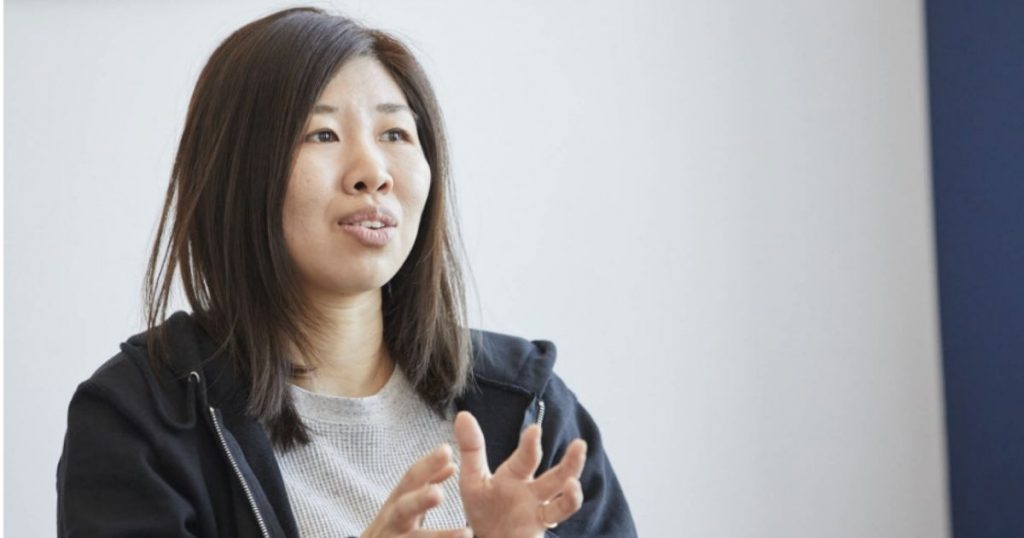
Mr. Yano, IBM :It was significant that Mitsukaru felt that there would always be a need for "Conoris," not to mention the fact that its customer base overlaps with that of IBM. As for the challenges in implementing cloud computing, they are so real that we can picture the faces of the people in charge who are struggling with them in the field. As a global company, IBM has provided a wide range of support for enterprise customers, from conceptualization to implementation of systems based on global standards, but there are of course areas that are out of our reach, such as operations based on local rules and customs. I believe this is a perfect example.
--I think we can collaborate in various ways because of the overlap in our clientele. Next, how about KiZUKAI?
Mr. Yamada, KiZUKAI :We develop and provide "KiZUKAI," a product that manages the area of customer experience known as CX. Japanese people are supposed to have a high ability of caring and hospitality, but they have not been able to demonstrate this ability in the area of online and corporate activities. We created this product in the hope of spreading the Japanese ability to care, which is second to none in the world, by designing operations.
We released our product about a year ago, but SaaS products need to be brushed up even after release. However, we were looking for an accelerator program that would allow us to brush up our product with an objective viewpoint, as we would lose our perspective if we only made improvements in-house.
I also wanted to find a partner with whom I could consult and collaborate on AI algorithms, since "KiZUKAI" includes AI. I decided to enter the company because I thought IBM was highly literate in AI and would be able to give me advice on company and business strategies.

Mr. Yano, IBM :When I used to be in charge of marketing for distribution, big data became popular and I had opportunities to discuss it with customers. I thought that if Japanese companies with strong front-line capabilities could properly utilize big data, they would have a great advantage when they go global. However, I also felt that there were high hurdles to actually making use of such data.
It was with this in mind that I was able to strongly empathize with KiZUKAI when I heard about it this time. I also thought that there were many things we could do together in the field of AI, so I decided to adopt the project.
--it seems that mutual sympathy was a major factor in the adoption of the proposal. Now, finally, please tell us the reason for your entry, Mr. Speeches.
Mr. Speeches Kasuga :We are a company that makes robots. I used to be a member of Sony's AIBO development team, and after retiring from Sony, I was developing robots for the toB market on contract for a while. However, that alone was not enough to keep the business afloat, so we started developing robots for the "toC" market.
However, having worked as an engineer for a long time, I had no idea about marketing when I tried to challenge the toC business. When I was feeling challenged by this, I learned about the IBM BlueHub and thought, "If I join, I might be able to learn about marketing," which led me to enter the program.
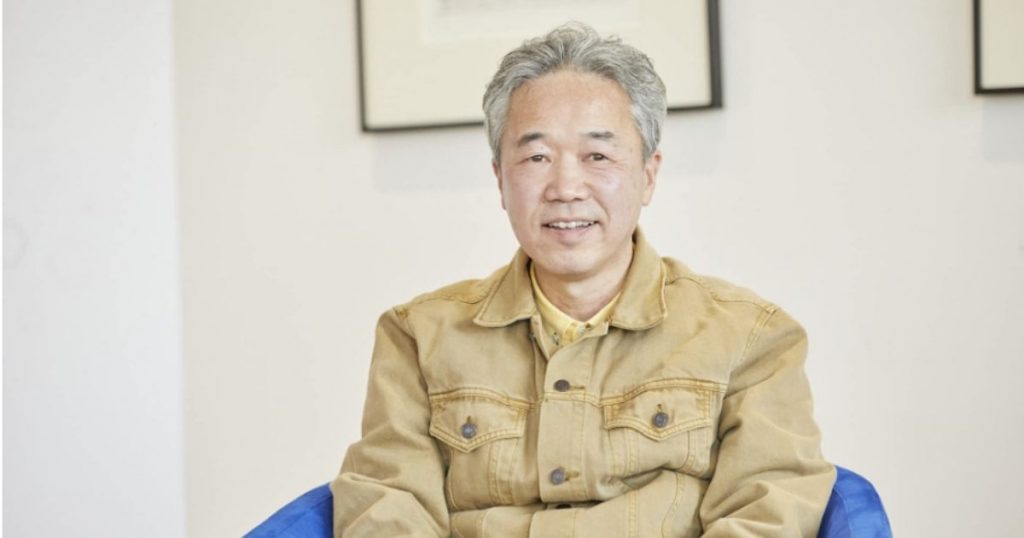
Mr. Yano, IBM :Since IBM does not have products such as robots and devices, we thought it would be easy to create synergy by combining AI and software and collaborating with Speece's. Robots have potential for development in the fields of nursing care and healthcare, and since robots like Speece's Smart Figure are a field in which Japan excels, we felt that it had the potential to become a global startup originating in Japan, and we selected it for the project.
Various layers of collaboration beyond the Accelerator Program
--What kind of incubation and mentoring did you receive and how did you grow in the six months starting with the kick-off camp in October 2021 and ending with Demo Day?
Mr. Ike, Tokyo Factory:We had regular discussions with IBM mentors and VC mentors, as well as with people from IBM's divisions responsible for manufacturing and construction, who gave us a variety of advice.
Our "Proceed Cloud" is a product that supports business improvement by creating a database through the collection of photos from the worksite, and by utilizing and applying that database, it is also possible to realize on-site technical succession and supply chain visualization.
At the beginning of the program, we were appealing all these features and values in parallel, but when we received mentoring from the VC mentors, they advised us to clarify who and what the product is for and to narrow down the appeal points.
This has allowed us to focus our sales and explanations on "visualizing the overseas supply chain" to enterprise customers. Currently, we are in the process of working with sales people from IBM's manufacturing sector to consider approaches to customers in the manufacturing and shipbuilding industries.
--I think we have a clear idea of how to present our products and how to approach the market. Next, how about you, Mr. Mitsukaru? What have you been working on with IBM in the past six months?
Mitsukaru Inoue :We received support in four major areas. First, we were introduced to three or four national clients that we could not have reached on our own. Since each client was in a different industry, we were able to learn about both the positive and risk aspects of "Conoris" that we could not have realized on our own.
Second, through regular MTGs held about once every two weeks, we were given the opportunity to share product proposal know-how with enterprise customers (experts), advice on future strategies for medium- to long-term upselling and cross-selling (VC mentors), and even wall-hunting on various issues (IBM manager in the cloud computing/security area). The third was the review of the product architecture. They provided us with a wide range of technical support.
The fourth and final point is that IBM's new graduate employees helped me prepare our company's proposal materials. Since I was too busy with various tasks to prepare our proposal materials, one of my mentors at IBM approached the new graduates and asked them if they would be willing to help us prepare our materials. In the end, four people came forward, and we had the luxury of choosing our materials in a competition format.
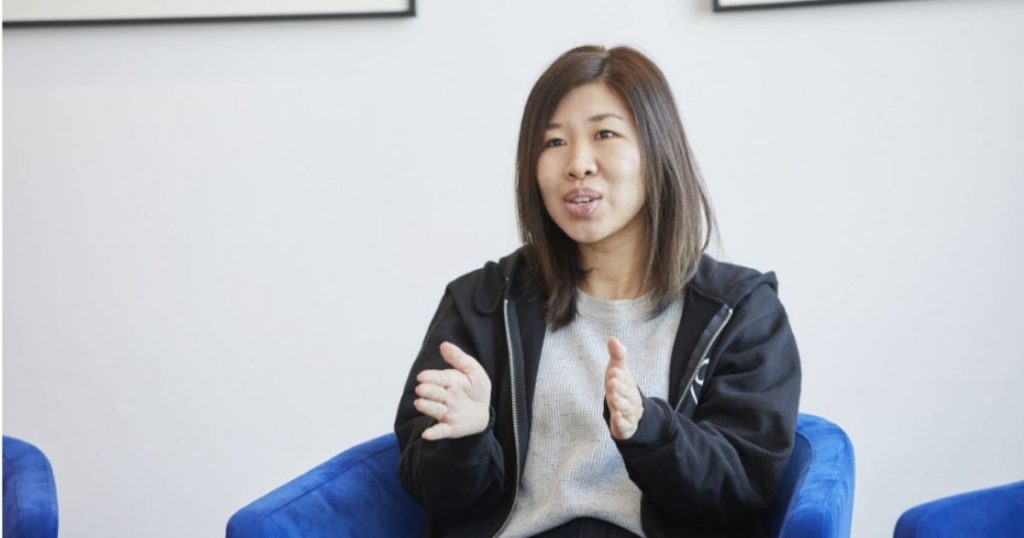
--This is a great collaboration that goes beyond the Accelerator Program.
Mitsukaru Inoue :Even though they are new graduates, they are people who normally work as ERP implementation consultants, so they are all surprisingly talented (laughs). (Laughs). For my part, it was not only helpful in terms of man-hours, but also in that it was difficult for me to objectively view some aspects of our business because I am usually involved in it all the time. I was surprised to learn that there was such a point of view," "I didn't know it was possible to summarize from such a point of view," and many other new discoveries.
Mr. Yano, IBM :This is truly a feature of the 7th term (laughs). In order to involve various people within IBM, we, the management side, have been working together with the business divisions this term, and IBM BlueHub has been gaining recognition and visibility within IBM. I feel that the number of employees who are willing to cooperate is increasing, even without a strong request from the management.
Young employees working on big projects such as mission-critical systems at IBM also tend to have the problem of "not being able to see the big picture and not knowing who their work is contributing to. By collaborating with startups through IBM BlueHub, such young employees can get the feeling that "my skills are directly contributing to management! They can get a real sense that "my skills are directly contributing to management! This is a great opportunity for us, and I think it was a very wonderful collaboration.
--That would be a great way to train young IBM employees. How about KiZUKAI next?
Mr. Yamada, KiZUKAI :Our company received support from three main aspects: the first is the strategic aspect, where we received advice on both the organization and the sales strategy. Regarding the organization, we were able to develop a corporate culture, including mission, vision, and values, which we believe we were able to shape to some extent during the six-month program period. Regarding the sales strategy, we were also able to design a pricing model that looks several years into the future, thanks to the insights provided by the VC mentors.
The second is the technological aspect. Our product uses AI to predict user behavior, and "how to interpret time-series data with technology" is an extremely important theme, and our data scientist went through a lot of trial and error. We had no one to consult within the company, but once the program started, we were able to solve many of our problems through discussions with IBM people, including technology and architecture.
The third is more of an initiative than support, but we invited young employees from IBM to participate in free discussions on a variety of themes. I feel that the flat exchange of opinions about business between young employees working in different environments, a large company and a start-up, stimulated employees from both companies and raised mutual motivation. We would like to continue this kind of initiative in the future.
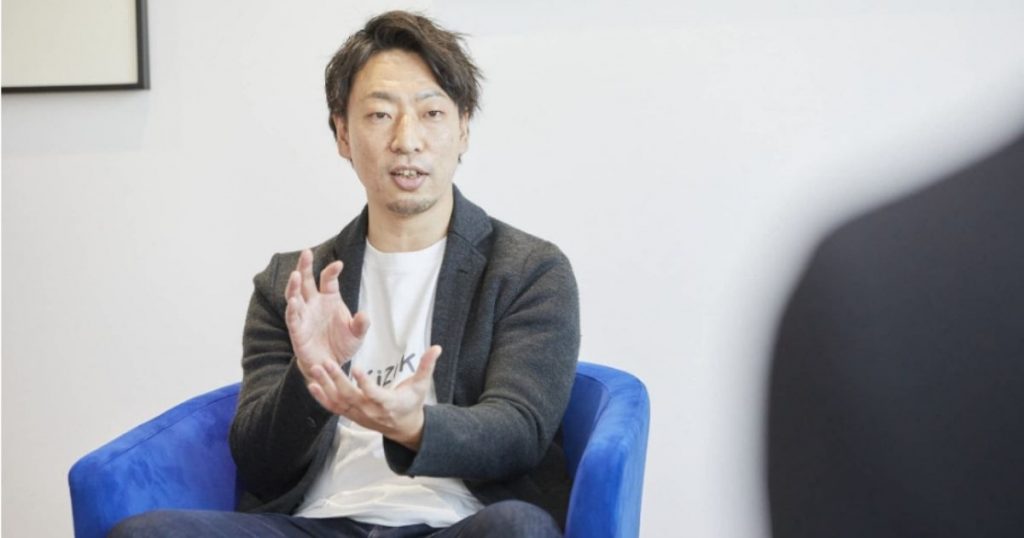
--Like Mitsukaru, KiZUKAI also seems to have had a positive effect by collaborating with young IBM employees. How about you, Mr. Speece?
Mr. Speeches Kasuga :I used to go to seminars to learn about marketing, but there were too many details and I didn't really understand the overall flow. By participating in the IBM BlueHub this time and having discussions with IBM, I feel that I was able to grasp the macro flow of marketing.
In addition, we asked IBM employees to gather and engage in design thinking to clarify concepts, targets, and business plans that had often been blurred until then, such as "What kind of product should our robot be? The project was able to clarify concepts, targets, and even business plans that had often been blurred.
This made it easier for us to find a designer for the robot that would fit our concept, to get a game composer to join our team, and to make friends to produce our robot, and we managed to produce a good prototype by the demo day.
Mr. Yano, IBM :IBM is, perhaps unsurprisingly, one of the world's leading companies with many designers, and we support our clients in designing products and services for a wide range of industries. In this case, we have adopted the IBM Design Thinking methodology to support our clients.
What four startups had to say in their Demo Day pitches
--Then, finally, what is your enthusiasm for the demo day pitch, and what message do you have for those who will be watching?
Mr. Ike, Tokyo Factory:For the past six months, we have been working with IBM and the VCs to continue to nurture the business and the product, and I would like you to see the results of our efforts. This overlaps with what I mentioned earlier, but we were able to brush up on the "for whom and what we are solving for," so I hope you will pay attention to that area as you watch the presentation.
Mitsukaru Inoue :Since we are developing products that solve niche issues, the pitch is a thick explanation of "what challenges exist in implementing cloud services" to begin with.
Although the issues we present are serious problems that hinder the promotion of DX in Japan, many people are unaware of them. Through this pitch, we hope to make many people aware that such issues exist and that there are ways to solve them.
Mr. Yamada, KiZUKAI :Along with explaining our business and products, we would like to deliver our company's desire to become a leading CX company. While weaving our efforts with IBM into our pitch, we would be happy if you could sense our desire to "co-create by meeting a variety of people" in the future as well.
Mr. Speeches Kasuga :Through my participation in the IBM BlueHub, I was able to clarify the concept of a product that had been floundering. Thanks to this, we were able to create a very cute robot in a short period of time, and I hope you will take the time to take a look at it.
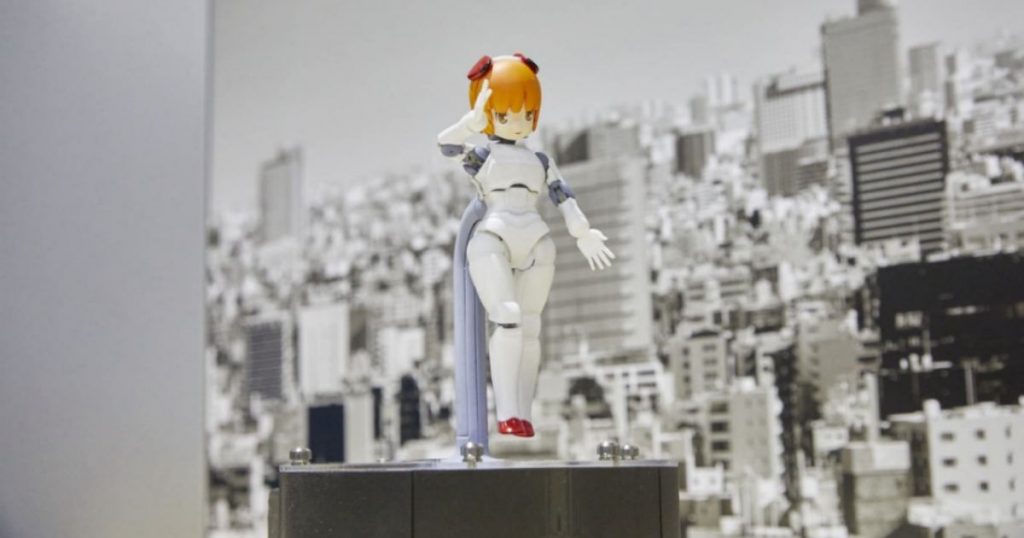
Robots being developed by ▲Speeds
afterword
Even before the application process for the 7th term began, we had heard that "this term we will strengthen tag-teaming with business units," but through this interview, we were surprised to see that the scope of tag-teaming has expanded to more layers than we had imagined. In particular, the episodes of various collaborations between adopted startups and IBM new graduates and young employees gave us the impression that a culture and environment that supports and co-creates startups on an "IBM All" basis is being fostered.
Having been selected for the IBM BlueHub, which continues to evolve beyond the boundaries of existing accelerator programs, the four companies have been strengthening their businesses and products over the past six months, and we wonder how they will present their achievements and growth in their pitches. If you are interested, please access the following link to view the pitch contents at the venue.
■How to view the VR space
The 7th IBM BlueHub DemoDay
*Please view from a PC in the following environment.
OS: Windows, macOS
Browsers: The latest versions of Chrome, Firefox, and Safari are recommended.
(Editing by Yukitake Sanada; Reporting and writing by Naoki Sato; Photography by Keita Saiki)
Source: TOMORUBA, a community that shares information that will light a fire in your heart and revitalize your business
https://tomoruba.eiicon.net/articles/3412





 JA
 EN
